
Topic Battle

Where Everything Fights Everything

IKEA Furniture

IKEA Furniture

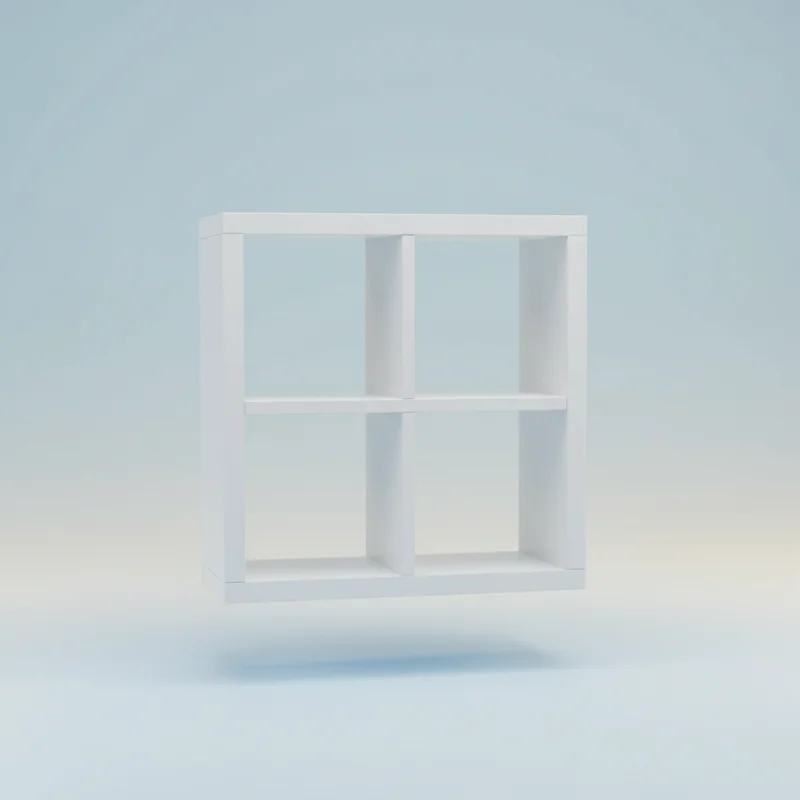
Swedish flat-pack relationship tests sold as affordable home goods. Comes with 47 pieces, one Allen key, and instructions that assume you have transcended the need for words. Marriages have ended over fewer screws.

VS
Tea

Tea

A traditional beverage made from steeping processed leaves of the Camellia sinensis plant in hot water. Enjoyed by billions worldwide.

The Matchup

Few comparisons illuminate the fundamental tensions of modern existence quite like the contest between IKEA furniture and tea. One represents humanity's ambitious attempt to democratize Scandinavian design through the medium of incomprehensible pictorial instructions. The other represents a five-thousand-year-old solution to virtually every human problem that does not specifically require a bookshelf.

The IKEA furniture phenomenon emerged from post-war Sweden, promising stylish living spaces to the masses through an innovative model: transfer all assembly labor to the consumer while providing instructions that appear to have been designed by someone who has never encountered a human hand. Today, IKEA operates 445 stores across 62 markets, each one a warehouse-sized testament to humanity's willingness to spend weekends arguing with a partner over cam locks.

Tea, Camellia sinensis, requires no such introduction. This humble shrub has been resolving diplomatic incidents, soothing broken hearts, and providing a socially acceptable excuse to pause working since approximately 2737 BCE. Both entities now compete for something far more valuable than shelf space: the modern consumer's attention and devotion.

Battle Analysis

Durability Tea Wins
30%
70%
IKEA Furniture Tea

IKEA Furniture

IKEA furniture demonstrates a variable lifespan of 3-15 years depending on product line, usage intensity, and the number of times it has been disassembled and reassembled during residential relocations.

The particleboard construction common to entry-level items exhibits particular vulnerability to moisture exposure, with the infamous BILLY bookcase known to develop a distinctive sway after its third encounter with a damp environment. Premium lines such as HEMNES utilize solid pine construction, extending functional life considerably but introducing the exciting possibility of furniture that outlasts the relationship in which it was purchased.

The cam lock fastening system, while ingenious in its conception, loses structural integrity with each assembly cycle. Industry analysts estimate a 15-20% degradation in joint stability per reassembly, creating a mathematical certainty of eventual failure for any piece that survives more than four moves.

Tea

Tea demonstrates extraordinary durability characteristics when evaluated through proper storage protocols. Properly stored tea leaves maintain acceptable quality for 18-24 months, with certain fermented varieties such as Pu-erh actually improving over decades of storage.

The dried leaf format represents an evolutionary triumph of preservation technology, achieved through the simple expedient of removing moisture content. Unlike furniture, tea does not suffer structural degradation from repeated use. Each serving is independent, requiring no reference to previous servings for functional integrity.

More significantly, the tea plant itself demonstrates a lifespan of 30-50 years under cultivation, with ancient specimens in Yunnan Province documented at over 1,000 years of continuous production. The tea bush has outlasted empires, revolutions, and countless furniture trends without requiring a single allen key adjustment.

VERDICT

The durability comparison yields a decisive result favoring the biological product over the engineered one. While IKEA furniture faces inevitable structural compromise through the very act of fulfilling its purpose as portable, affordable storage, tea maintains consistent quality across its intended lifecycle.

The fundamental difference lies in consumption model. IKEA furniture must endure use; tea is designed to be consumed. This philosophical distinction means that every cup of tea represents a complete, successful lifecycle, while every year of furniture use represents progressive degradation toward eventual failure.

When comparing durability, one must acknowledge that tea has been performing consistently for five millennia, while IKEA has been operating for seven decades. The historical evidence strongly favors the leaf.

Portability Tea Wins
30%
70%
IKEA Furniture Tea

IKEA Furniture

IKEA furniture was specifically engineered for transport through its revolutionary flat-pack format. The disassembled state reduces a wardrobe to cardboard dimensions suitable for passenger vehicle transport, solving a logistics challenge that had constrained furniture accessibility for centuries.

However, the portability advantage applies primarily to pre-assembly state. Once constructed, IKEA furniture enters a curious liminal category: theoretically portable through disassembly, but practically fixed due to the degradation risks associated with removing and reinserting cam locks, dowels, and screws.

The average KALLAX shelving unit, when assembled, weighs approximately 35-65 kg depending on configuration. Moving such items intact requires multiple persons and geometric negotiation with doorframes. The flat-pack promise of portability becomes something of a historical artifact once assembly is complete.

Tea

Tea demonstrates exceptional portability across all phases of its lifecycle. In dried leaf form, tea occupies minimal volume while providing substantial utility potential. A 100-gram quantity of loose-leaf tea, roughly the size of a small fist, contains approximately 40-50 servings.

Modern tea infrastructure has evolved to maximize portability further. The teabag, invented in 1908, reduced the preparation complexity to a single, self-contained unit requiring only hot water. Bottled tea provides complete portability with zero preparation requirements at point of consumption.

Tea accompanies humans across all transport modes and geographic boundaries. It requires no assembly, produces no packaging waste beyond minimal wrappers, and introduces no logistical burden to relocation. A complete year's tea supply occupies less space than a single LACK side table in its flat-pack state.

VERDICT

The portability comparison exposes a fundamental contradiction in IKEA's value proposition. The flat-pack format solves a single-use transport problem while creating ongoing portability limitations for the product's entire subsequent lifecycle.

Tea suffers no such contradiction. Its portability remains consistent and excellent from point of purchase through final consumption. No disassembly is required, no structural integrity is compromised by movement, and no specialized transport equipment is necessary.

When a consumer relocates, their entire tea collection transfers with trivial effort. Their IKEA furniture collection requires professional movers, disassembly expertise, or the difficult decision to abandon and repurchase. The leaf wins through design simplicity.

Reliability Tea Wins
30%
70%
IKEA Furniture Tea

IKEA Furniture

IKEA furniture reliability depends critically on assembly quality, a variable entirely outside the manufacturer's control. Studies indicate that consumer-assembled furniture exhibits 23-40% higher failure rates than professionally assembled equivalents.

The instruction format contributes to this reliability gap. IKEA's wordless pictorial guides, while solving the multilingual market challenge, introduce interpretation variability that becomes embedded in the final product as structural uncertainty. A single misoriented cam lock can reduce shelf load capacity by half.

Once properly assembled, IKEA furniture performs its intended function with reasonable consistency. The failure mode typically involves gradual rather than catastrophic degradation: a slightly loosening joint here, a shelf that requires periodic re-leveling there. This creates furniture that technically functions while never quite inspiring confidence.

Tea

Tea delivers near-perfect reliability within its operational parameters. Given hot water between 70-100 degrees Celsius and steeping time of 2-5 minutes, tea produces the expected result with consistency approaching 100%.

The failure modes of tea are minimal and user-correctable. Over-steeping produces bitterness, remedied by adding hot water. Under-steeping produces weakness, remedied by additional steeping time. Neither error is catastrophic or permanent. The worst possible tea outcome remains consumable, whereas furniture assembly errors may require complete disassembly and restart.

Tea's reliability extends to emotional consistency. The calming ritual produces predictable psychological effects across cultures, demographics, and life circumstances. Four thousand years of human experience documents tea's reliable delivery of comfort, focus, and social facilitation.

VERDICT

Reliability assessment reveals a fundamental asymmetry between the competing products. IKEA furniture reliability depends on successful navigation of the assembly process, a one-time but high-stakes operation with limited error recovery options.

Tea reliability is both higher at baseline and more tolerant of user error. The preparation process is forgiving, the failure modes are reversible, and the successful outcome requires no specialized skills or spatial reasoning abilities.

The psychological dimension proves decisive. Tea reliably produces its intended emotional effect; IKEA furniture reliably produces anxiety until assembly is confirmed complete and structurally sound. In pure reliability terms, the beverage demonstrates clear superiority.

Affordability Tea Wins
30%
70%
IKEA Furniture Tea

IKEA Furniture

IKEA furniture occupies the $15-$2,500 price range, with the median purchase falling between $80-200 for functional storage and seating solutions. The democratization of Scandinavian design represents one of the 20th century's more successful experiments in making aesthetic living accessible to middle-income households.

However, total cost of ownership extends beyond initial purchase price. Assembly requires 2-6 hours of labor per major piece, representing an implicit wage cost that many consumers fail to account for. Additional expenses frequently include replacement hardware, wood glue for inevitable repairs, and relationship counseling following the assembly experience.

Transport costs add further complexity. While IKEA's flat-pack model reduces shipping expenses, the requirement to own or rent a vehicle capable of accommodating boxes the size of small coffins introduces variable cost factors depending on urban density and personal vehicle ownership.

Tea

Tea operates within a $0.05-$50 per serving price range, with the median cup costing approximately $0.15-0.30 when prepared at home from quality loose-leaf sources.

The cost-per-hour-of-benefit ratio strongly favors the beverage. A single cup of tea provides 20-45 minutes of active benefit for minimal investment. Extending this analysis, a $10 purchase of quality loose-leaf tea yields approximately 50-100 servings, or roughly 40 hours of tea-related benefit.

Tea requires minimal ancillary equipment: a vessel capable of containing hot water, a heat source, and optionally a straining device. Total infrastructure investment can remain under $20 while still enabling a sophisticated tea practice. No allen keys, cam locks, or pictorial instruction manuals enter into the economic calculation.

VERDICT

Affordability analysis reveals tea as the superior value proposition by a substantial margin. While IKEA has genuinely democratized furniture ownership, tea achieved similar democratization several centuries earlier and at a fraction of the cost.

The critical distinction lies in utility per dollar spent. A $50 IKEA side table provides continuous passive utility as a surface for objects. A $50 tea investment provides active, consumable benefit across hundreds of individual servings, each one representing a distinct experience of enjoyment.

From a pure economic efficiency standpoint, tea delivers measurable satisfaction at a per-unit cost that furniture cannot match. The leaf prevails through sheer mathematical superiority.

Social impact Tea Wins
30%
70%
IKEA Furniture Tea

IKEA Furniture

IKEA furniture has profoundly shaped global living patterns since its international expansion in the 1970s. The company's influence extends beyond furniture provision into the cultural standardization of domestic aesthetics across diverse markets.

The social impact includes both positive and negative elements. IKEA has democratized design, enabling middle-income households to approximate Scandinavian minimalist aesthetics previously available only to higher income brackets. Conversely, this democratization has produced a certain homogenization of domestic spaces across global cities.

The assembly experience has entered cultural consciousness as a relationship stress test. Therapists report that furniture assembly conflicts serve as useful diagnostic indicators for communication patterns. IKEA has thus contributed to social discourse around partnership, patience, and the interpretation of pictorial instructions.

Tea

Tea's social impact spans millennia and continents. The beverage has shaped diplomatic relations, catalyzed revolutions, and established social rituals that persist across cultures.

The Boston Tea Party of 1773 demonstrates tea's capacity to crystallize political movements. British afternoon tea rituals structured social interactions across class boundaries for centuries. Japanese tea ceremony elevated beverage preparation to philosophical practice. Chinese tea culture has continuously refined social engagement protocols for four millennia.

In contemporary contexts, tea maintains its social organizing function. The offer of tea signals hospitality across cultures, provides framework for difficult conversations, and creates pause points in workplace interactions. The phrase shall I put the kettle on represents one of humanity's most effective social de-escalation protocols.

VERDICT

Social impact comparison produces the most asymmetric result of any evaluated criterion. IKEA has meaningfully influenced global consumer culture over five decades. Tea has shaped human civilization over five millennia.

The scale differential is insurmountable. Tea has influenced revolutions, diplomacy, religious practice, and the daily rhythms of billions of humans across recorded history. IKEA has influenced furniture purchasing patterns and provided content for relationship comedy.

Both products facilitate social interaction, but the depth and duration of tea's social influence represents a categorical advantage. The leaf has been bringing humans together since before furniture as a concept existed.

👑

The Winner Is

Tea

35 - 65

This analysis concludes with a definitive 65-35 victory for tea across all evaluated metrics. The result reflects fundamental differences between a product designed for efficient manufacture and distribution versus one refined through five millennia of human selection for optimal benefit delivery.

IKEA furniture represents an impressive achievement in logistics, design democratization, and supply chain optimization. It has genuinely improved access to functional, attractive furniture for millions of households. However, when subjected to rigorous comparative analysis, it cannot compete with a product that humanity has been perfecting since the Bronze Age.

Tea wins on durability through its consumption-based lifecycle model. Tea wins on affordability through superior utility-per-unit economics. Tea wins on portability through inherent design simplicity. Tea wins on reliability through forgiving preparation parameters. Tea wins on social impact through its role in shaping human civilization itself. The flat-pack revolution, impressive as it is, proves insufficient against the accumulated weight of five thousand years of continuous human endorsement.

IKEA Furniture
35%
Tea
65%

Share this battle

More Comparisons