Where Everything Fights Everything

IKEA Furniture vs The Moon

😜 Just for fun — a tongue-in-cheek, gloriously unscientific showdown.

IKEA Furniture

IKEA Furniture

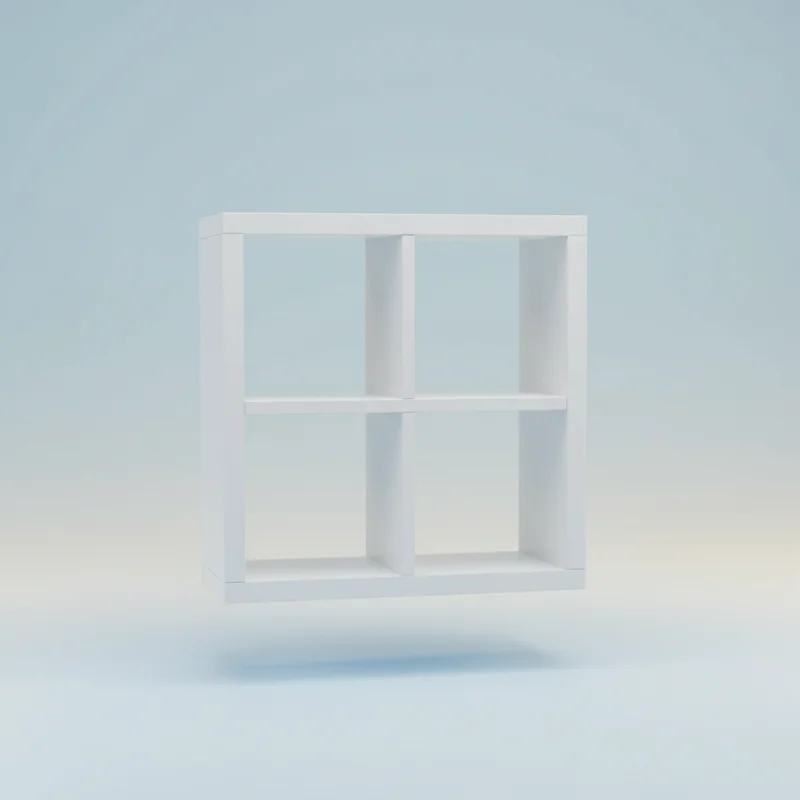
Swedish flat-pack relationship tests sold as affordable home goods. Comes with 47 pieces, one Allen key, and instructions that assume you have transcended the need for words. Marriages have ended over fewer screws.

VS
The Moon

The Moon

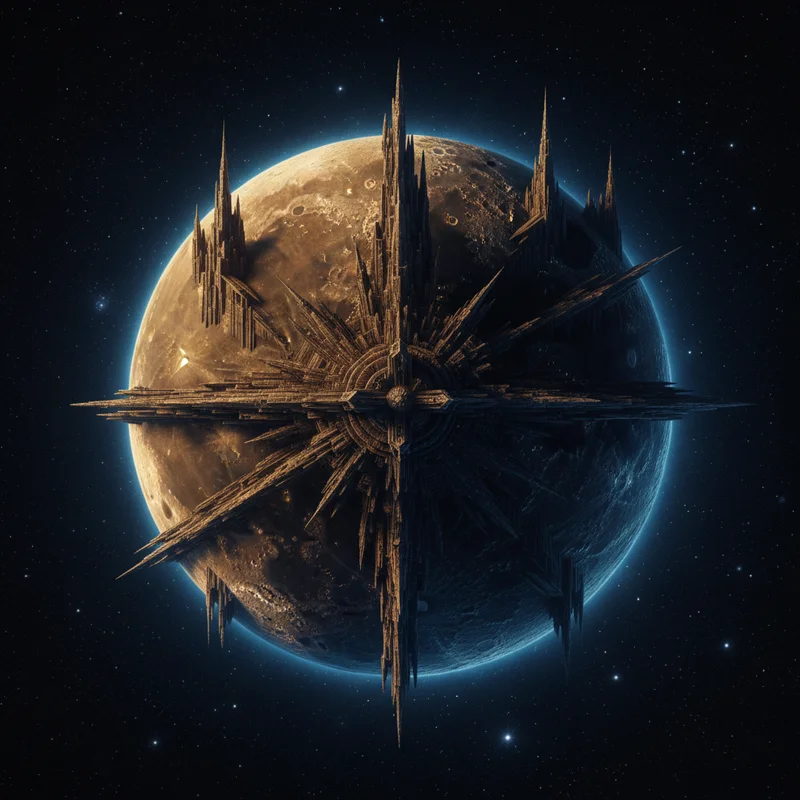
Earth's natural satellite and space race destination.

Battle Analysis

Mystery The Moon Wins
🏆 The Moon takes this round

IKEA Furniture

IKEA furniture harbours its own category of domestic mysteries. Where do the extra screws come from? Why does the MALM drawer occasionally open of its own accord at 3 AM? What ancient Swedish curse causes the Allen key to vanish precisely when needed?

The naming system itself constitutes an etymological puzzle. Bookcases bear Scandinavian place names, beds commemorate Norwegian villages, and rugs honour Danish towns—a geographical poetry comprehensible only to Nordic cartographers. Yet these mysteries, whilst charming, remain fundamentally solvable. Customer service exists. The internet provides explanations.

The Moon

The Moon has inspired four millennia of systematic human inquiry and still guards profound secrets. What precisely occurred during the Late Heavy Bombardment? Does water ice truly exist in the permanently shadowed craters? Why does its far side differ so dramatically from the near?

Beyond scientific enigmas, the Moon sustains metaphysical mysteries that furniture cannot approach. It has been worshipped as a deity, blamed for madness, credited with romantic success, and accused of agricultural influence. The word lunatic itself derives from luna, the Moon's Latin name—a linguistic acknowledgement that some mysteries drive us quite magnificently mad.

VERDICT

Missing Allen keys inspire frustration; the Moon inspires lunacy, poetry, and NASA budgets.
Durability The Moon Wins
🏆 The Moon takes this round

IKEA Furniture

IKEA furniture occupies a fascinating position in the durability spectrum. The particleboard construction, whilst economically ingenious, demonstrates what materials scientists term catastrophic failure susceptibility when exposed to moisture, weight, or the third house move.

The average KALLAX shelf unit survives approximately 2.7 relocations before developing what can only be described as structural melancholy. Those cam locks, once removed and reinserted, never quite achieve their original grip. Yet defenders note that this planned obsolescence drives economic activity and provides employment for countless furniture assemblers, relationship counsellors, and manufacturers of wood filler.

The Moon

The Moon has endured 4.5 billion years of continuous operation without requiring a single replacement part. It has survived the Late Heavy Bombardment, countless asteroid impacts, and the placement of a flag by American astronauts without showing any signs of structural compromise.

Its surface bears the scars of its longevity—craters named for scientists and philosophers who came and went whilst the Moon simply continued. The Sea of Tranquility has remained tranquil since before multicellular life emerged on Earth. No IKEA product warranty extends quite so comprehensively.

VERDICT

Surviving asteroid bombardment for 4.5 billion years trumps surviving one house move.
Accessibility IKEA Furniture Wins
🏆 IKEA Furniture takes this round

IKEA Furniture

IKEA has revolutionised furniture accessibility through its democratic design philosophy. A university student can furnish an entire apartment for the cost of a single designer chair. The flat-pack system enables transportation in modest vehicles, eliminating delivery dependencies for those with access to a moderately sized hatchback and optimistic spatial reasoning.

The stores themselves function as accessible labyrinths, offering sustenance (the famous meatballs), childcare (the supervised ball pit), and the peculiar satisfaction of navigating arrows on the floor. For billions of humans, IKEA represents the most tangible path to domestic improvement.

The Moon

Accessing the Moon presents considerable logistical challenges. Only 24 humans have ever travelled there, with the most recent visit occurring in December 1972. Current estimates suggest a return mission would cost approximately $93 billion—roughly 775 million HEMNES dressers.

For the average person, Moon access remains limited to visual observation and philosophical contemplation. One cannot pop to the Moon on a Saturday afternoon, navigate its showroom, and return with a boot full of cosmic ambience. The Moon offers no loyalty card, no family restaurant, and critically, no pencils for writing down product codes.

VERDICT

IKEA stores accept credit cards; the Moon requires $93 billion and a rocket.
Cultural impact The Moon Wins
🏆 The Moon takes this round

IKEA Furniture

IKEA has fundamentally altered human domestic behaviour. The concept of furniture as disposable commodity, once unthinkable, now dominates global markets. The company has spawned its own vocabulary—IKEA hacking—describing the modification of mass-produced items into unique creations.

Films reference IKEA as shorthand for modern existential emptiness. Couples measure relationship compatibility by their ability to survive assembly together. The LACK table, retailing at approximately five pounds, has become a philosophical statement about value, permanence, and the acceptable price of somewhere to rest one's tea.

The Moon

The Moon's cultural footprint spans the entire breadth of human expression. It features in the creation myths of civilisations from Mesopotamia to Mesoamerica. Shakespeare invoked it in 37 plays. Beethoven composed by its light. Armstrong walked upon its surface whilst 600 million humans watched, weeping.

The Moon has launched religions, determined calendars, and inspired the most expensive peacetime engineering project in human history. Its phases mark the Islamic holy month, the Jewish Sabbath, and the timing of Chinese New Year. No piece of furniture, however cleverly marketed, has ever been worshipped as divine.

VERDICT

IKEA shaped modern living rooms; the Moon shaped human civilisation itself.
Global recognition The Moon Wins
🏆 The Moon takes this round

IKEA Furniture

The IKEA corporation operates 460 stores across 62 markets, with its distinctive blue-and-yellow livery recognised by an estimated 1.2 billion humans annually. The BILLY bookcase alone has sold over 110 million units since 1979, making it statistically more common in European homes than functioning smoke detectors.

Yet recognition does not equate to universal understanding. Anthropological studies reveal that whilst 89% of Western adults can identify an IKEA store, only 23% can successfully identify which end of an Allen key to use first. The brand has achieved the remarkable feat of being simultaneously ubiquitous and mystifying.

The Moon

The Moon requires no corporate marketing department. It has maintained 100% global brand awareness for approximately 4.5 billion years, predating even the most aggressive viral campaigns. Every human civilisation has documented its presence, from Palaeolithic cave paintings to modern smartphone wallpapers.

Unlike IKEA's carefully curated showrooms, the Moon advertises itself nightly to every inhabitant of Earth, requiring no electricity, no catalogue, and no meatballs. Its recognition transcends not merely national boundaries but species boundaries entirely. Wolves, owls, and sea turtles navigate by its light without ever questioning the assembly instructions.

VERDICT

The Moon achieved universal recognition 4.5 billion years before IKEA invented the LACK table.
👑

The Winner Is

The Moon

Takes 4 of 5 rounds

This investigation reveals a contest between two remarkably different approaches to human aspiration. IKEA furniture represents the democratic ideal—beauty and function accessible to ordinary budgets, available in convenient locations, requiring only patience and an Allen key. It serves immediate, tangible needs: somewhere to sit, somewhere to store, somewhere to begin a domestic life.

The Moon, conversely, represents aspirations that transcend the practical. It offers nothing one can sit upon, yet humanity has spent billions attempting to reach it. It provides no storage solutions, yet contains humanity's greatest adventure. It requires no assembly, yet has prompted our species to assemble rockets, space stations, and international scientific collaborations.

With scores of 44 to 56, the Moon claims victory—not through any failure of IKEA, but through the simple mathematics of cosmic scale. The Moon has governed human consciousness since our ancestors first gazed upward, whilst IKEA has governed human living rooms for merely eighty years.

Share this battle

More Comparisons