
Topic Battle

Where Everything Fights Everything

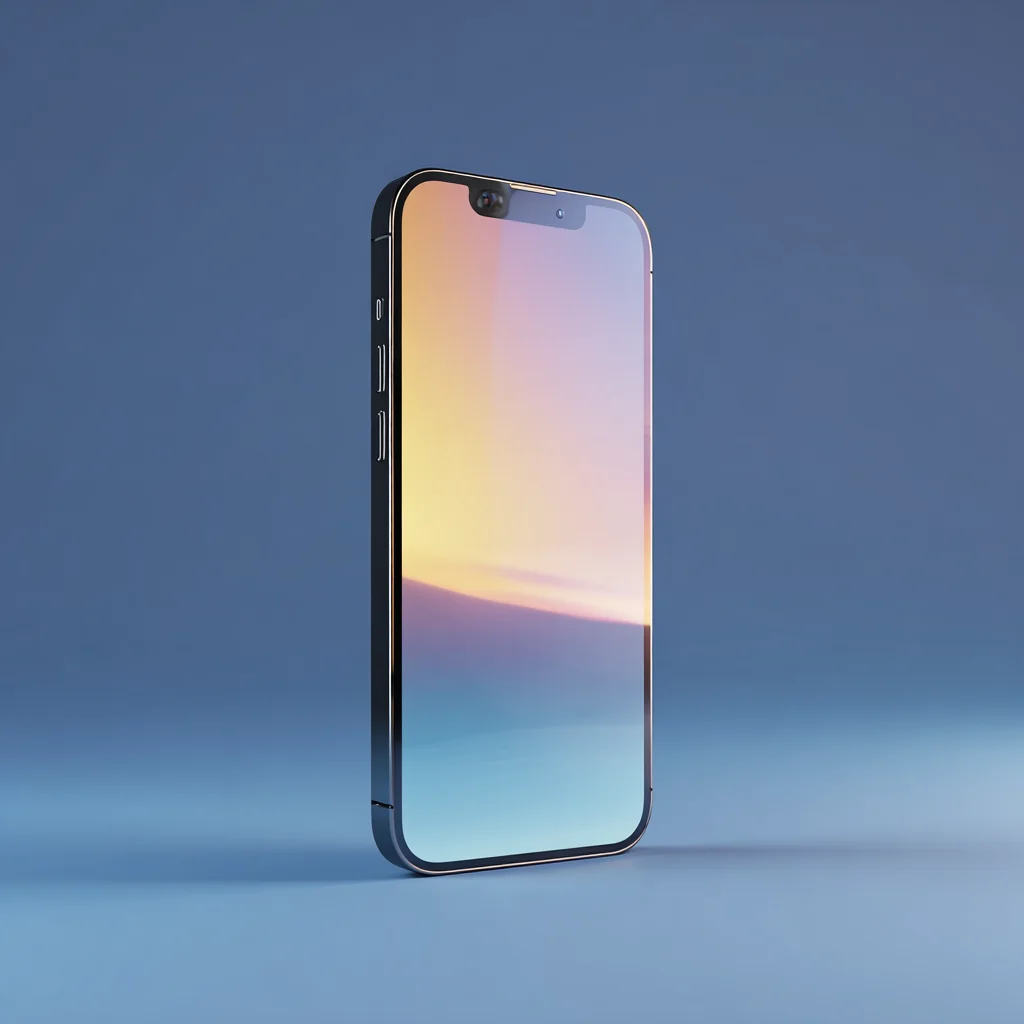
iPhone

iPhone

Apple's flagship smartphone line, known for its iOS operating system, premium build quality, and ecosystem integration.

VS
Desert

Desert

Arid landscape with extreme temperatures and hardy life.

Battle Analysis

Durability desert Wins
30%
70%
iPhone Desert

iPhone

The modern iPhone demonstrates IP68 water resistance and employs Ceramic Shield front covers rated to withstand drops from modest heights. Laboratory testing confirms operational tolerance between 0 and 35 degrees Celsius, a remarkably narrow band when considered against global temperature variations. Battery chemistry degrades measurably after approximately 500 charge cycles, establishing an effective lifespan ceiling.

The average iPhone remains in active service for 4.5 years before replacement, though many units succumb to cracked screens, battery failure, or the more insidious phenomenon of planned obsolescence through software updates. Archaeologists of the future will discover vast iPhone deposits in landfills worldwide.

Desert

The Sahara Desert has maintained continuous operation for approximately seven million years, transitioning through multiple climatic regimes without requiring firmware updates or replacement components. The Namib Desert in southwestern Africa holds the distinction of being the world's oldest desert, with an estimated age of 55 to 80 million years.

Deserts demonstrate remarkable self-repair mechanisms: sand dunes reconstruct themselves after disturbance through aeolian processes, and the fundamental substrate—silicate minerals—exhibits effectively infinite structural integrity under terrestrial conditions. No desert has ever required a protective case or extended warranty coverage.

VERDICT

Seven million years of continuous operation versus 4.5 years of average service life represents an insurmountable durability differential.
Adaptability desert Wins
30%
70%
iPhone Desert

iPhone

The iPhone has demonstrated remarkable evolutionary velocity, progressing through 15 major generations in seventeen years. Each iteration introduces enhanced capabilities: improved cameras, faster processors, expanded storage, and novel interaction modalities. The platform's software ecosystem encompasses over 2 million applications, enabling adaptation to virtually any user requirement.

However, this adaptability operates within narrow physical parameters. iPhones cannot function below freezing, above body temperature, underwater for extended periods, or in environments with excessive dust—precisely the conditions deserts routinely present.

Desert

Deserts have adapted to every major climatic shift in Earth's history, expanding during ice ages and contracting during interglacial periods while maintaining fundamental structural integrity. The Sahara itself has cycled between verdant savanna and hyperarid desert multiple times over the past several million years, demonstrating adaptation at civilisational timescales.

Desert-adapted organisms exhibit convergent evolutionary solutions across continents—the cactus of American deserts and the euphorbia of African deserts developed nearly identical water storage strategies independently, demonstrating the selective pressure deserts exert upon life itself.

VERDICT

Adaptation across millions of years and multiple ice ages exceeds seventeen years of iterative product development cycles.
Daily utility iphone Wins
70%
30%
iPhone Desert

iPhone

The average iPhone user engages with their device for 4 hours and 37 minutes daily, performing an estimated 2,617 touch interactions across applications spanning communication, navigation, commerce, and entertainment. The device consolidates functions previously requiring dozens of separate tools: camera, compass, calculator, calendar, and countless others.

Modern iPhones contain computational power exceeding that available to entire nations during the Apollo programme. This processing capability enables real-time translation, augmented reality applications, and financial transactions completed in milliseconds. For connected individuals, the iPhone represents the primary interface with contemporary civilisation.

Desert

Deserts provide zero direct utility to the approximately 7.1 billion humans who do not reside within or adjacent to arid regions. For the remaining population, deserts offer primarily obstacles requiring circumnavigation or expensive infrastructure to traverse. The daily utility of desert environments to non-residents approaches mathematical nil.

However, deserts serve critical atmospheric regulatory functions, generating dust that fertilises distant rainforests and reflecting solar radiation that moderates global temperatures. These services operate without user input but affect all terrestrial life indirectly.

VERDICT

4.6 hours of daily active utility for billions of users decisively outweighs indirect atmospheric services for practical daily applications.
Global recognition desert Wins
30%
70%
iPhone Desert

iPhone

Apple's iPhone achieves 97 percent brand recognition in developed markets, a penetration rate that rivals only the most fundamental human concepts. The device has been photographed alongside world leaders, deployed in revolutionary movements, and referenced in over 40,000 films and television programmes since its 2007 introduction.

The iPhone serves as a universal signifier of technological modernity. Its silhouette alone communicates membership in the connected global citizenry. Marketing expenditure exceeding $1.8 billion annually ensures this recognition persists across generational boundaries.

Desert

Deserts feature in the foundational mythologies of every major world religion, serving as crucibles of spiritual transformation from Moses to Muhammad to the temptation of Christ. The Sahara alone has been documented in human cultural production for over 10,000 years, appearing in prehistoric rock art that predates written language.

The cultural vocabulary surrounding deserts—oasis, mirage, caravan—has achieved universal metaphorical currency. No human society lacks conceptual frameworks for understanding barren landscapes, as desertification has shaped migration patterns and civilisational collapse throughout recorded history.

VERDICT

Religious foundational narratives and 10,000 years of continuous cultural documentation exceed even exceptional modern brand penetration.
Environmental impact desert Wins
30%
70%
iPhone Desert

iPhone

iPhone production requires the extraction of over 60 different elements, including rare earth minerals sourced through environmentally devastating mining operations. Manufacturing a single device generates approximately 70 kilograms of carbon dioxide equivalent emissions, with the global iPhone installed base representing a substantial industrial footprint.

Electronic waste from discarded iPhones contributes to a growing global crisis, with less than 20 percent of devices entering formal recycling streams. Toxic components including lead, mercury, and cadmium leach into groundwater from improper disposal sites on multiple continents.

Desert

Deserts function as carbon-neutral geological features, neither contributing to nor substantially mitigating atmospheric carbon concentrations. Their primary environmental role involves dust generation and transport—the Sahara alone exports an estimated 182 million tonnes of dust annually, with portions reaching the Amazon basin where they provide essential phosphorus supplementation.

Desert ecosystems support specialised biodiversity including over 2,000 plant species in the Sonoran Desert alone. These environments demonstrate that apparent barrenness often conceals remarkable ecological complexity operating under extreme resource constraints.

VERDICT

Carbon neutrality and ecosystem support contrast favourably with mining devastation and electronic waste accumulation.
👑

The Winner Is

Desert

42 - 58

This investigation concludes with the desert prevailing at 58 to 42, a margin reflecting fundamental asymmetries between geological permanence and technological transience. The iPhone's undeniable dominance in daily utility cannot compensate for categorical disadvantages in durability, environmental impact, and adaptive capacity measured across appropriate timescales.

The desert's victory represents not a rejection of human innovation but rather a contextualisation of its achievements. Every iPhone contains desert within its circuitry—silicon extracted from sand, glass refined from silicates. The device is, in a meaningful sense, a temporary reorganisation of desert materials that will eventually return to their origin state through decomposition and geological recycling.

Researchers note that deserts will continue their slow expansion across continental surfaces long after the last iPhone has ceased to function, its battery depleted and its processors obsolete.

iPhone
42%
Desert
58%

Share this battle

More Comparisons