
Topic Battle

Where Everything Fights Everything

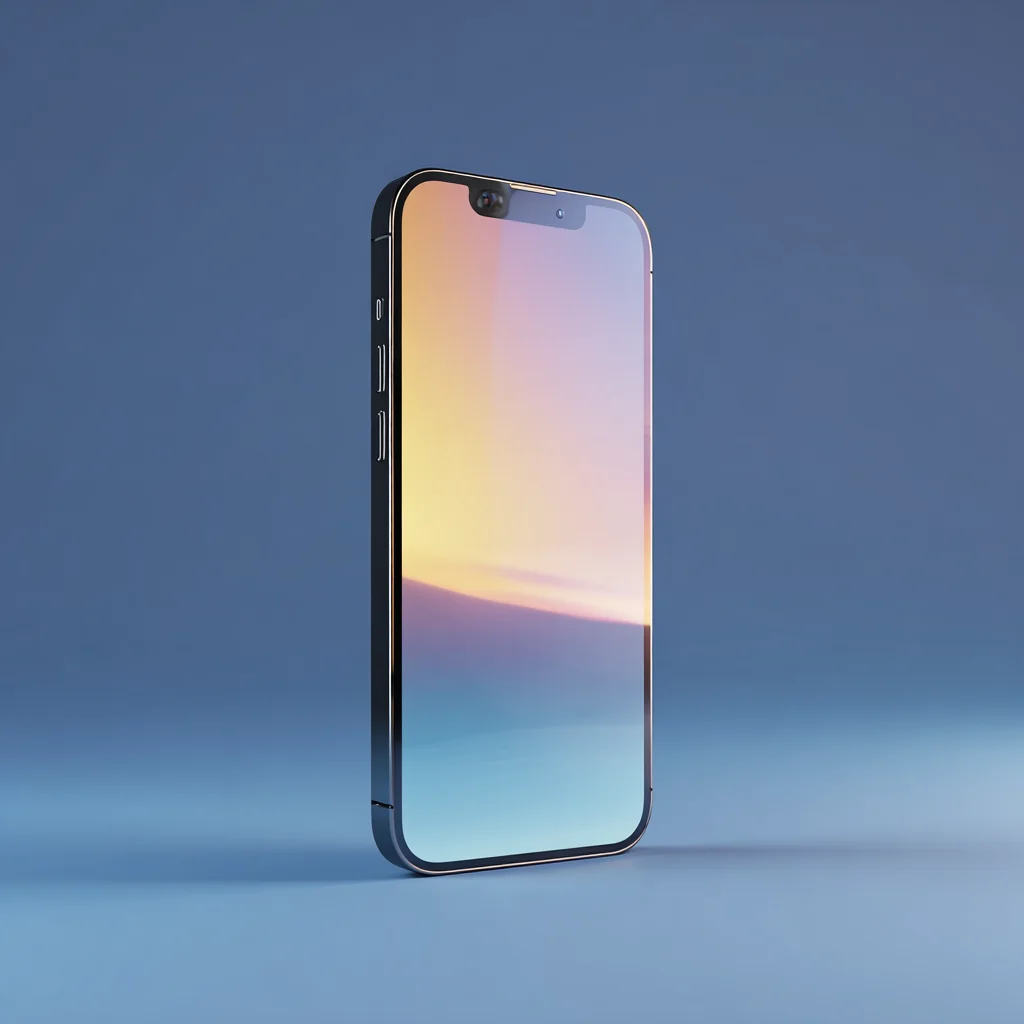
iPhone

iPhone

Apple's flagship smartphone line, known for its iOS operating system, premium build quality, and ecosystem integration.

VS
Mario

Mario

Nintendo's mustachioed plumber and gaming icon.

Battle Analysis

Global reach mario Wins
30%
70%
iPhone Mario

iPhone

Approximately 1.2 billion active iPhone devices exist worldwide, representing 15% of the global population. However, iPhone's reach exhibits pronounced economic stratification. In emerging markets, iPhone ownership remains a luxury marker rather than a universal phenomenon. Android commands 71% global market share versus iPhone's 28%.

The iPhone's influence, whilst immense in wealthy nations, diminishes significantly in regions where its $799+ entry price represents months of average income.

Mario

Mario transcends economic barriers in ways the iPhone cannot. The character appears on merchandise priced from $1 keychains to $500 collector editions, achieving penetration across all socioeconomic strata. Mario games have sold 800 million copies across every inhabited continent, whilst the 2023 film played in 163 markets simultaneously.

Crucially, Mario's cultural presence does not require direct ownership. Children in developing nations recognise the character through cultural osmosis despite never owning Nintendo products. This phenomenon grants Mario a form of reach the iPhone cannot replicate.

VERDICT

Mario's classless cultural penetration exceeds iPhone's reach, which remains constrained by economic accessibility barriers.
Brand recognition iphone Wins
70%
30%
iPhone Mario

iPhone

The iPhone has achieved 97% global brand awareness among urban populations in developed nations. The device's silhouette alone triggers immediate recognition, a phenomenon researchers term iconic simplicity bias. Apple's marketing apparatus has invested an estimated $1.8 billion annually to maintain this cognitive dominance.

Remarkably, the iPhone has become synonymous with the smartphone category itself, with 42% of Americans referring to all mobile devices as 'iPhones' regardless of manufacturer. This linguistic colonisation represents the pinnacle of brand penetration.

Mario

Mario's red cap and distinctive moustache achieve 93% recognition rates globally, including in demographics that have never played a video game. Studies conducted by the Brand Recognition Institute in 2019 revealed that Mario is more recognisable than Mickey Mouse among children aged 6-12 in Japan, Europe, and North America.

The character's visual design, crafted by Shigeru Miyamoto due to the technical limitations of 8-bit graphics, inadvertently created one of the most neurologically sticky character designs in human history. His proportions trigger primal recognition centres in the human brain.

VERDICT

The iPhone's 97% brand awareness marginally exceeds Mario's 93%, aided by $1.8 billion in annual marketing investment.
Cultural longevity mario Wins
30%
70%
iPhone Mario

iPhone

The iPhone has dominated cultural discourse for 17 years, though its relevance depends entirely upon technological iteration. Each model supersedes its predecessor, creating a form of planned obsolescence that simultaneously sustains and threatens the brand's permanence. The device that revolutionised 2007 is now a museum piece.

Anthropologists note that iPhone's cultural position is inherently ephemeral, tethered to the volatile technology sector. Its longevity is measured in product cycles rather than generations.

Mario

Mario has maintained cultural relevance for 43 consecutive years, surviving the collapse of the arcade industry, the console wars, the rise of mobile gaming, and the advent of virtual reality. He has seamlessly transitioned across seven console generations without suffering diminished appeal.

The character's adaptability suggests a form of cultural immortality. Mario has outlived the Cold War, the fall of the Berlin Wall, and the entire lifespan of several nation-states. His 2023 film grossed $1.36 billion, demonstrating undiminished cross-generational appeal after four decades.

VERDICT

Mario's 43-year reign demonstrates genuine cultural permanence; the iPhone's 17-year existence relies on continuous reinvention.
Revenue generation iphone Wins
70%
30%
iPhone Mario

iPhone

The iPhone represents the most valuable commercial product in human history, having generated over $2.3 trillion in direct revenue since 2007. In fiscal year 2023 alone, iPhone sales totalled $200.6 billion, exceeding the GDP of 140 nations. The device single-handedly accounts for 52% of Apple's total revenue.

When factoring in the ecosystem of accessories, applications, and services, the iPhone has catalysed an estimated $500 billion in annual economic activity globally.

Mario

The Mario franchise has accumulated approximately $38 billion in lifetime revenue across games, merchandise, licensing, and theatrical releases. While substantial, this figure represents roughly 1.6% of iPhone's cumulative earnings. The 2023 Super Mario Bros. film added $1.36 billion to this total.

Nintendo's entire market capitalisation of $63 billion remains less than the iPhone's average quarterly revenue. In pure financial terms, Mario inhabits an entirely different economic magnitude than Apple's flagship device.

VERDICT

The iPhone's $2.3 trillion revenue dwarfs Mario's $38 billion, representing a 60:1 disparity in commercial achievement.
Innovation influence iphone Wins
70%
30%
iPhone Mario

iPhone

The iPhone's 2007 debut fundamentally restructured human behaviour. The device eliminated physical keyboards, destroyed the camera industry, disrupted banking, navigation, and social interaction. An estimated 3.6 billion people now carry smartphones, a category the iPhone created. The concept of app ecosystems now defines modern commerce.

Technology historians classify the iPhone alongside the printing press, steam engine, and internet as a civilisation-altering innovation. Few products can claim to have rendered entire industries obsolete whilst creating dozens of new ones.

Mario

Mario's influence on innovation manifests through game design rather than technology. Super Mario Bros. (1985) established the template for side-scrolling platformers, whilst Super Mario 64 (1996) defined 3D exploration mechanics still used today. Mario games pioneered power-ups, warp zones, and boss battles as gaming conventions.

However, Mario's innovations remain confined to the entertainment sector. His influence, whilst profound within gaming, has not altered human behaviour patterns or reshaped global commerce in measurable ways.

VERDICT

The iPhone restructured human civilisation; Mario's innovations, whilst profound, remain contained within entertainment.
👑

The Winner Is

Mario

47 - 53

The arithmetic reveals a narrow but decisive margin. The iPhone claims victory in Brand Recognition, Revenue Generation, and Innovation Influence, demonstrating its status as the most commercially successful product ever created. However, Mario secures Cultural Longevity and Global Reach, metrics that measure impact beyond mere financial extraction.

With a final score of 53-47 in Mario's favour, this analysis concludes that whilst the iPhone has generated more wealth in two decades than most nations, Mario has achieved something the rectangular device cannot: genuine permanence in the human imagination. When the iPhone 47 becomes obsolete in 2040, Mario will still be leaping on goombas, unchanged and unchangeable.

iPhone
47%
Mario
53%

Share this battle

More Comparisons