Topic Battle

Where Everything Fights Everything

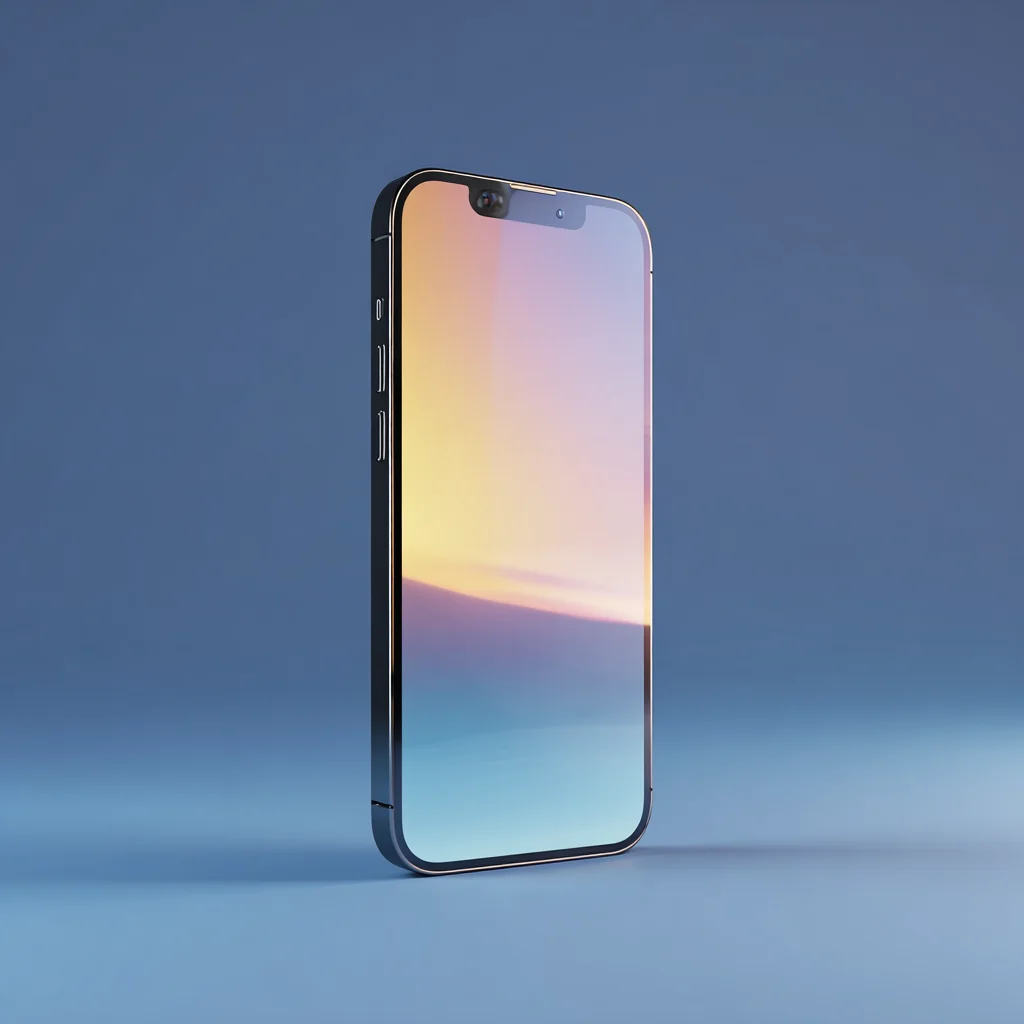
iPhone

iPhone

Apple's flagship smartphone line, known for its iOS operating system, premium build quality, and ecosystem integration.

VS
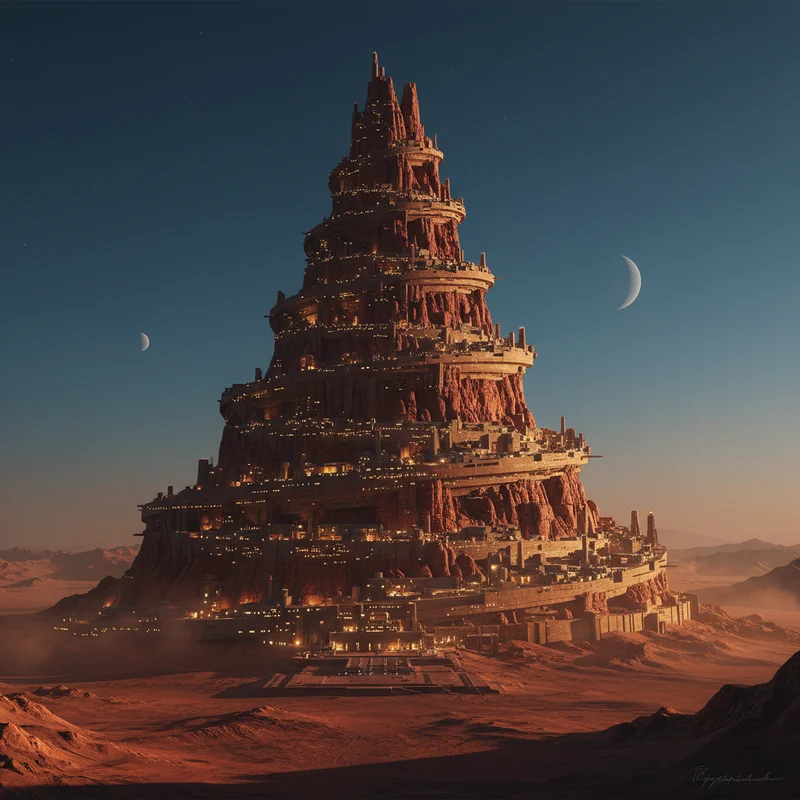
Mars

Mars

Red planet and humanity's next frontier.

Battle Analysis

Longevity mars Wins
30%
70%
iPhone Mars

iPhone

The average iPhone endures approximately four years before obsolescence claims it—either through battery degradation, software abandonment, or the irresistible pull of newer models. Apple's planned obsolescence strategy ensures a perpetual cycle of replacement, with billions of defunct devices accumulating in drawers worldwide.

Even the concept of the iPhone itself may prove temporary. Technological evolution suggests touchscreen devices will eventually yield to neural interfaces, augmented reality, or communication methods not yet conceived. The iPhone, for all its influence, represents a transitional form in human technological development.

Mars

Mars has maintained structural integrity for 4.603 billion years, a duration so vast it reduces all human timescales to statistical insignificance. The planet witnessed the formation of Earth's oceans, the emergence of life, and the entire arc of human civilisation while barely completing a single orbital wobble in relative terms.

Projections suggest Mars will persist for another five billion years until solar expansion renders the inner solar system uninhabitable. This longevity operates on scales that human cognition struggles to meaningfully process, making the iPhone's four-year lifespan appear almost comically ephemeral.

VERDICT

Billions of years of existence cannot be matched by consumer electronics cycles.
Accessibility iphone Wins
70%
30%
iPhone Mars

iPhone

Acquiring an iPhone requires a credit card, retail outlet, and approximately $800-1,500 USD depending on configuration. Distribution networks span 175 countries, with authorised retailers and carrier partnerships ensuring availability within reasonable travel distances for most global citizens. Same-day delivery options exist in major metropolitan areas.

The iPhone actively invites interaction. Its user interface was designed specifically to lower barriers to technological engagement, enabling grandparents and toddlers alike to navigate its features. Physical possession grants immediate, tactile access to its capabilities.

Mars

Visiting Mars currently requires resources exceeding $2 billion per mission, approximately eighteen months of travel time, and acceptance of a radiation exposure equivalent to 300 chest X-rays. No commercial booking systems exist, and the waiting list consists entirely of government agencies and one particularly ambitious billionaire.

Visual access to Mars proves considerably easier—a modest telescope and clear skies suffice. However, meaningful interaction with the planet's surface remains restricted to an exclusive club of robotic rovers, making Mars perhaps the least accessible entity in this comparison by several orders of magnitude.

VERDICT

Physical accessibility and interaction remain exclusive to the device that fits in one's hand.
Daily utility iphone Wins
70%
30%
iPhone Mars

iPhone

The iPhone's utility in daily life borders on the indispensable. Communication, navigation, photography, banking, entertainment, and health monitoring converge in a device weighing approximately 206 grams. The average user engages with their iPhone for four hours daily, making it humanity's most intimate technological companion.

Tasks that once required multiple devices, institutions, and physical journeys now resolve themselves through gentle screen taps. The iPhone has effectively compressed vast swathes of human infrastructure into a pocket-sized rectangle, fundamentally restructuring how modern humans navigate existence.

Mars

Mars provides precisely zero direct utility to the average human's daily routine. One cannot check emails on Mars, nor can Mars remind you of appointments, calculate tips, or provide turn-by-turn directions to the nearest coffee establishment. The planet remains stubbornly unresponsive to all user inputs.

However, Mars does provide indirect utility as a gravitational stabiliser within the solar system and as a focal point for human aspiration. Its presence in the night sky has inspired countless individuals to pursue careers in science and engineering, creating ripple effects of innovation that eventually produce devices like the iPhone.

VERDICT

Functional integration into daily human existence remains unmatched by celestial objects.
Global recognition mars Wins
30%
70%
iPhone Mars

iPhone

The iPhone enjoys near-universal recognition across developed and developing nations alike. With over 2.2 billion active devices distributed globally, the device has achieved a penetration rate that most empires could only dream of accomplishing. Its distinctive silhouette is identifiable from Beijing to Buenos Aires.

Marketing expenditure exceeding billions annually ensures the iPhone remains lodged firmly in collective consciousness. Children recognise the Apple logo before they can read. The device has become synonymous with modernity itself, a shorthand for technological advancement that transcends language barriers.

Mars

Mars possesses name recognition spanning millennia, having been observed and documented by ancient Babylonian astronomers as early as 400 BCE. The planet's distinctive reddish hue earned it associations with war gods across multiple civilisations—Nergal, Ares, and Mars himself providing the nomenclature we use today.

Unlike the iPhone, Mars requires no marketing budget. Its presence in the night sky serves as a perpetual advertisement for cosmic wonder. Every culture with access to clear skies has developed mythology around this rust-coloured wanderer, ensuring recognition that predates written history by considerable margins.

VERDICT

Historical recognition spanning millennia outweighs decades of marketing brilliance.
Environmental impact mars Wins
30%
70%
iPhone Mars

iPhone

iPhone production contributes approximately 70 kg of carbon emissions per device, with mining operations for rare earth elements creating environmental degradation across multiple continents. The device's lithium-ion battery contains materials extracted through processes that contaminate groundwater and generate toxic waste.

Electronic waste from discarded iPhones represents a growing crisis, with only 17% of e-waste properly recycled globally. Each device contains arsenic, lead, and mercury in trace quantities, distributing these elements across landfills worldwide as upgrade cycles continue unabated.

Mars

Mars maintains a carbon-neutral existence, having generated precisely zero emissions throughout its 4.6 billion year lifespan. The planet neither consumes resources nor produces waste, existing in a state of environmental equilibrium that sustainable development advocates can only dream of achieving.

Indeed, Mars serves as a potential solution to environmental impact rather than a contributor. Terraforming proposals suggest the planet could eventually absorb excess human population, reducing strain on Earth's ecosystems. Mars represents possibility rather than burden in environmental calculations.

VERDICT

Billions of years of carbon neutrality establishes an unassailable environmental record.
👑

The Winner Is

Mars

45 - 55

The confrontation between iPhone and Mars ultimately illuminates the tension between immediate utility and cosmic significance. The iPhone dominates human daily experience with an intimacy that Mars cannot approach—it knows our messages, our movements, our moments of vulnerability captured in late-night searches. Mars, meanwhile, simply exists, indifferent to human concerns yet foundational to human dreams.

What Mars lacks in touchscreen responsiveness, it compensates for in sheer magnitude of being. The planet offers something no smartphone can provide: the promise of elsewhere, of expansion beyond terrestrial constraints, of species survival beyond a single fragile world. This potential, however unrealised, carries weight that quarterly earnings reports cannot capture.

The iPhone represents humanity's mastery of the small—the compression of civilisation into portable form. Mars represents the challenge of the large—the expansion of civilisation into forms not yet imagined. Both are essential to understanding where we are and where we might go. Yet in the final accounting, permanence and possibility outweigh convenience and connectivity.

iPhone
45%
Mars
55%

Share this battle

More Comparisons