Topic Battle

Where Everything Fights Everything

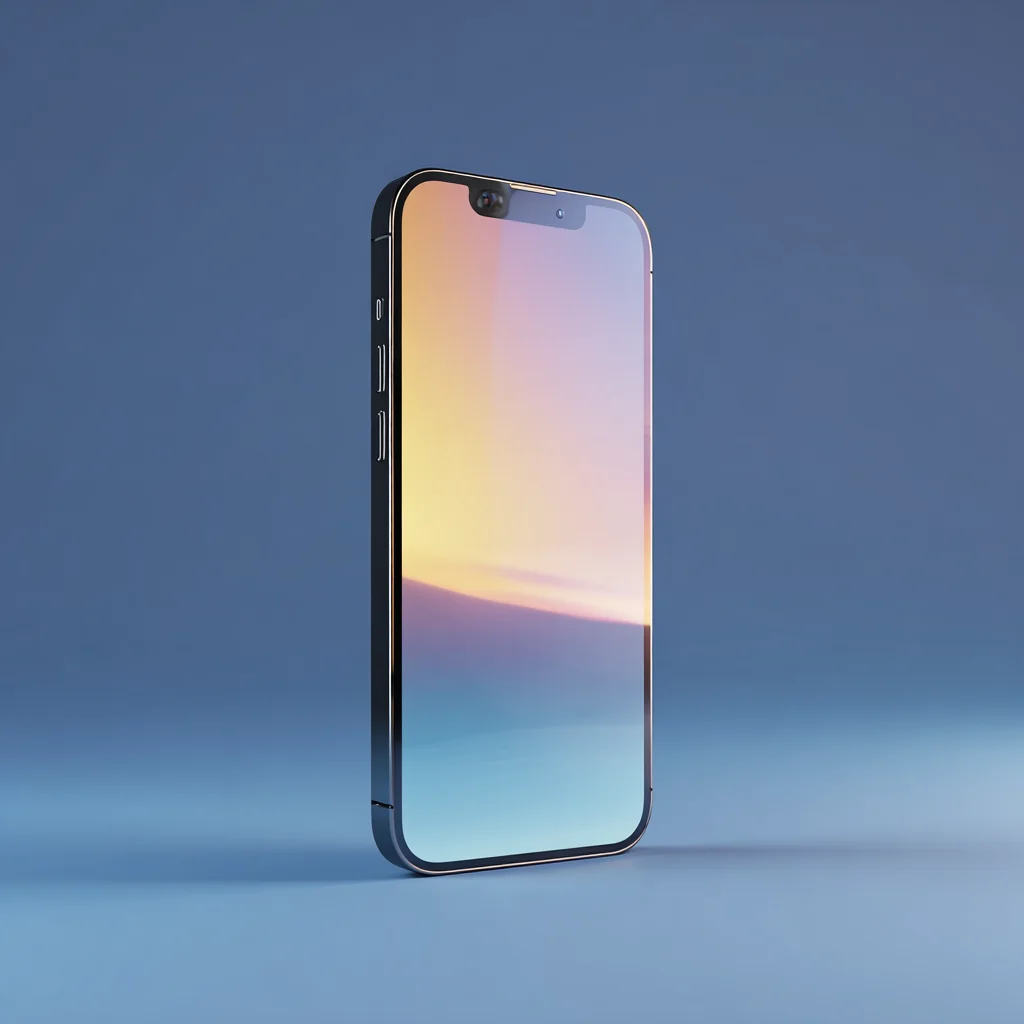
iPhone

iPhone

Apple's flagship smartphone line, known for its iOS operating system, premium build quality, and ecosystem integration.

VS
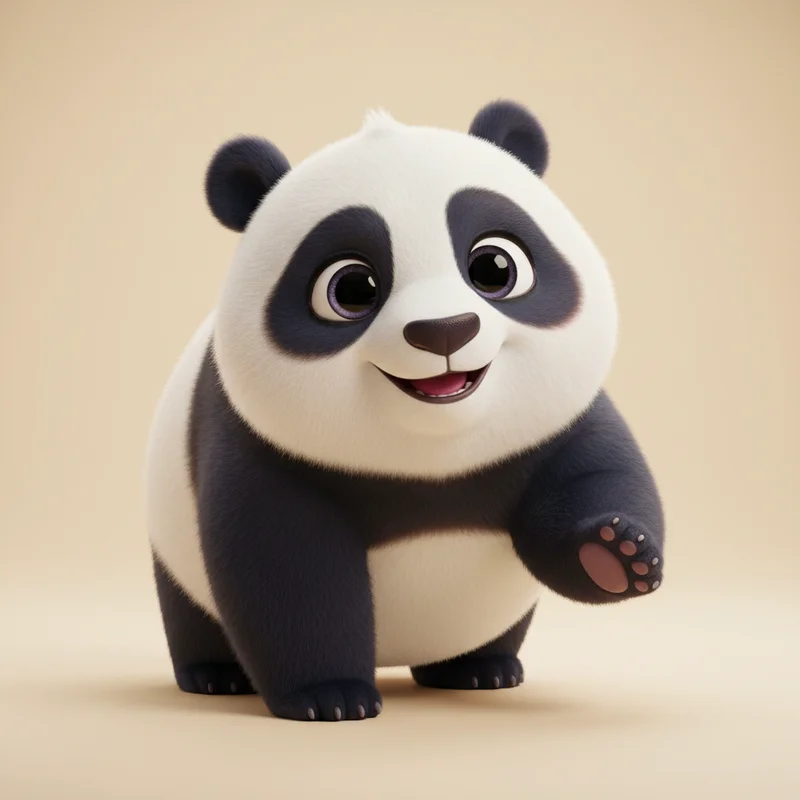
Panda

Panda

Beloved bamboo-eating bear from China, famous for black-and-white coloring and conservation symbolism.

Battle Analysis

Speed iphone Wins
70%
30%
iPhone Panda

iPhone

The iPhone 15 Pro operates on Apple's A17 Pro chip, featuring a 6-core CPU capable of executing 17 billion transistor operations simultaneously. Processing speeds approach 2 trillion operations per second for neural engine tasks, enabling real-time language translation, computational photography, and what Apple engineers term instantaneous contextual awareness. The device transitions between applications in approximately 0.3 milliseconds, a duration imperceptible to human cognition.

Network capabilities further enhance this velocity. The iPhone supports 5G connectivity at theoretical download speeds exceeding 4 gigabits per second, though real-world performance typically ranges between 200-700 megabits per second depending upon infrastructure. A full-length film can be downloaded in under thirty seconds. The device's ability to process, retrieve, and display information has effectively collapsed the temporal dimension of knowledge acquisition for its 1.2 billion active users worldwide.

Panda

The Giant Panda demonstrates what locomotion researchers diplomatically term deliberate ambulatory pacing. Maximum recorded panda velocity reaches approximately 32 kilometres per hour in short bursts, though such exertion is rarely observed outside threat responses. The species' typical movement speed ranges between 0.5 and 2 kilometres per hour, a pace dictated by the metabolic constraints of bamboo digestion. Pandas spend approximately 55% of their waking hours stationary whilst eating, rendering speed largely irrelevant to their ecological strategy.

Reproductive speed presents an even more striking contrast. Female pandas experience fertility windows of merely 24 to 36 hours annually, and gestation periods average 135 days. Cubs require 18 months of maternal care before independence. The panda's reproductive velocity, by any measure, ranks among the slowest of large mammals. This unhurried approach to procreation has contributed significantly to the species' precarious conservation status and the $10 billion investment required to sustain viable populations.

VERDICT

The iPhone's trillion-operation-per-second processing and instantaneous global connectivity represent a fundamentally different relationship with time than the panda's deliberate 2km/h lifestyle.
Durability panda Wins
30%
70%
iPhone Panda

iPhone

The iPhone's physical durability has improved substantially across generations, with the iPhone 15 series featuring Ceramic Shield front glass rated at four times the drop resistance of standard smartphone glass. The device achieves IP68 water resistance, surviving submersion to 6 metres for 30 minutes. Aluminium and titanium chassis constructions provide structural integrity under considerable mechanical stress.

Yet the iPhone's functional lifespan reveals fundamental limitations. Apple provides software support for approximately 5-7 years from release, after which devices become progressively less secure and capable. Battery degradation averages 20% capacity loss after 500 charge cycles, typically occurring within two years. The average iPhone replacement cycle stands at 3.5 years in developed markets. The device, for all its sophistication, operates on an explicitly finite timeline designed to encourage repeat purchase rather than multigenerational inheritance.

Panda

The Giant Panda demonstrates remarkable physiological durability within its ecological niche. Wild pandas achieve lifespans of 20 to 25 years, whilst captive specimens regularly exceed 30 years, with the record holder, Jia Jia of Hong Kong, reaching 38 years before her death in 2016. The species has survived for approximately 8 million years as a distinct evolutionary lineage, persisting through ice ages, habitat transformation, and dramatic climate shifts that eliminated countless contemporaneous species.

The panda's commitment to bamboo, whilst nutritionally inefficient, has provided a form of durability through dietary consistency. Bamboo forests regenerate rapidly and have proven more resilient to climate variation than many alternative food sources. The panda has essentially outsourced its durability to an ecosystem, trading individual metabolic efficiency for species-level persistence. This strategy, whilst requiring vast territorial ranges, has proven surprisingly robust across geological timescales that make smartphone generations appear as flickering instants.

VERDICT

The panda's 8-million-year species persistence and 25-year individual lifespan substantially exceed the iPhone's 3.5-year replacement cycle and 7-year software support window.
Global reach iphone Wins
70%
30%
iPhone Panda

iPhone

The iPhone operates in 175 countries and territories, with active devices exceeding 1.2 billion units worldwide. Apple maintains 529 retail stores across 26 countries, whilst authorised resellers extend availability to virtually every inhabited region. The App Store processes over $85 billion in annual transactions, creating an economic ecosystem that employs millions of developers, designers, and accessory manufacturers globally.

The device's cultural penetration extends beyond mere availability. The iPhone serves as the primary computing device for approximately 27% of global smartphone users, with market share exceeding 50% in wealthy nations including the United States, Japan, and the United Kingdom. The iPhone has become synonymous with smartphones themselves in many markets, achieving what brand researchers term categorical ownership: the conflation of product and product category in consumer consciousness. Its influence on design, interface conventions, and consumer expectations has reshaped industries far beyond telecommunications.

Panda

The Giant Panda's natural range has contracted to approximately 20 isolated mountain regions across China's Sichuan, Shaanxi, and Gansu provinces, encompassing roughly 5,400 square kilometres of suitable habitat. This geographic constraint stands in stark contrast to the species' ancestral range, which once extended across much of eastern China, northern Myanmar, and Vietnam. Human development has reduced panda territory by an estimated 80% over the past two centuries.

Yet the panda's symbolic reach transcends its physical limitations entirely. The species serves as logo and mascot for the World Wildlife Fund, appearing on materials distributed across 100 countries. Pandas reside on loan in zoos across 27 nations, each placement representing significant diplomatic investment. Recognition studies indicate that the panda achieves identification rates exceeding 95% among urban populations worldwide, regardless of whether respondents have ever encountered the species directly. The panda's global reach operates through imagery and symbolism rather than physical presence, yet achieves penetration rates that rival any consumer product.

VERDICT

With 1.2 billion active devices across 175 territories versus 1,900 wild pandas confined to Chinese mountain reserves, the iPhone's physical global reach operates on an incomparably larger scale.
Cultural impact iphone Wins
70%
30%
iPhone Panda

iPhone

The iPhone has fundamentally restructured human social behaviour, attention patterns, and information consumption. The average iPhone user touches their device 2,617 times daily, according to research by Dscout, whilst screen time averages exceed four hours. The device has created what sociologists term the permanent present: a state of continuous partial attention in which users remain perpetually accessible to information flows and social obligations.

The iPhone's influence on cultural production rivals its impact on consumption. Instagram, now hosting 2 billion monthly users, was designed specifically for iPhone photography and remains optimised for mobile-first visual culture. TikTok's vertical video format emerged from smartphone viewing habits. The democratisation of high-quality photography and video production has transformed journalism, art, and documentation. The iPhone has become what media theorists describe as the primary instrument of cultural creation for the first generation to achieve adulthood in the smartphone era.

Panda

The Giant Panda has achieved cultural penetration that transcends the boundaries typically applicable to wildlife species. China has deployed panda diplomacy since the 1950s, with panda loans signalling diplomatic favour to recipient nations and panda recalls marking deteriorating relations. The species has become perhaps the only animal capable of influencing international relations at the highest levels, with panda-related negotiations occurring between heads of state.

Beyond diplomacy, the panda has colonised popular culture with remarkable thoroughness. Kung Fu Panda (2008) and its sequels grossed over $1.8 billion globally, whilst panda-themed merchandise generates billions annually. The species serves as mascot for conservation movements worldwide, with the WWF logo achieving recognition rates exceeding 97% in developed nations. The panda has become symbolic of endangered species preservation itself, embodying hopes for environmental redemption in an era of ecological anxiety. Few species have achieved such comprehensive cultural saturation across entertainment, commerce, and moral discourse.

VERDICT

While the panda commands extraordinary symbolic power, the iPhone's restructuring of daily behaviour, social interaction, and cultural production represents more pervasive cultural transformation.
Evolutionary success panda Wins
30%
70%
iPhone Panda

iPhone

The iPhone represents what technology historians term punctuated evolutionary acceleration. From the original 2007 model to the iPhone 15 Pro, the device has undergone 17 major generational iterations, each introducing capabilities that would have seemed implausible to previous generations. Processing power has increased approximately 100-fold, camera resolution by a factor of 12, and storage capacity by a factor of 256. This rate of change exceeds any biological evolutionary process by orders of magnitude.

Yet the iPhone's evolutionary model contains inherent fragility. The device depends upon global supply chains involving 43 countries, rare earth elements with constrained availability, and manufacturing processes that require unprecedented precision. Disruption at any node threatens production entirely. The iPhone has evolved for current conditions with minimal redundancy, optimising for performance over resilience. Its evolutionary strategy resembles that of highly specialised species: extraordinarily successful within narrow parameters, potentially vulnerable to environmental disruption.

Panda

The Giant Panda's evolutionary trajectory presents a paradox that has fascinated biologists for decades. The species diverged from other bears approximately 8 million years ago, developing an increasingly specialised bamboo-dependent lifestyle. This specialisation required the evolution of the famous pseudo-thumb, an enlarged sesamoid bone enabling bamboo manipulation, along with enlarged jaw muscles and flattened molars optimised for plant matter processing.

Critics have characterised the panda's evolutionary choices as spectacularly ill-advised: a carnivore's digestive system devoted to processing low-nutrient vegetation, reproductive rates barely above replacement level, and habitat requirements that demand vast undisturbed forests. Yet the species has persisted for 8 million years, surviving ice ages and climate fluctuations that eliminated more apparently robust species. The panda's evolutionary strategy, whilst inefficient by contemporary metrics, has demonstrated extraordinary long-term viability. What appears as evolutionary failure may instead represent a form of success incompatible with human planning horizons.

VERDICT

The panda's 8-million-year persistence through dramatic environmental changes demonstrates proven evolutionary durability that the iPhone's 17-year existence cannot yet match.
👑

The Winner Is

iPhone

55 - 45

This investigation has examined two entities that have achieved remarkable prominence through radically different mechanisms. The Giant Panda has leveraged biological rarity, aesthetic appeal, and symbolic potency to command attention and resources vastly disproportionate to its numerical presence. With fewer than 1,900 individuals in the wild, the panda has nonetheless achieved recognition rates exceeding 95% globally and secured conservation investments exceeding $10 billion. The species has demonstrated that scarcity, properly managed, generates value that abundance cannot replicate.

The iPhone, by contrast, has achieved dominance through ubiquity, capability, and continuous reinvention. With 1.2 billion active devices, the iPhone has become humanity's primary interface with digital existence, restructuring attention patterns, social behaviour, and cultural production. Its 17-year evolution has delivered capability improvements that compress centuries of technological development into annual release cycles. The iPhone does not ask to be protected; it demands to be used, upgraded, and replaced according to schedules that serve commercial rather than conservation imperatives.

The final assessment must acknowledge that these entities operate according to incommensurable logics of value. The panda represents what remains precious precisely because it might disappear; the iPhone represents what becomes indispensable precisely because it continuously improves. Yet when forced to determine which entity has more thoroughly captured human attention, resources, and behaviour, the evidence favours the device. The iPhone achieves a final score of 55% to the panda's 45%, claiming victory not through emotional resonance but through the sheer integration of its presence into daily existence. Billions of humans touch their iPhones thousands of times daily; the panda remains a symbol glimpsed through screens, beautiful but fundamentally inaccessible.

iPhone
55%
Panda
45%

Share this battle

More Comparisons