Where Everything Fights Everything

iPhone vs The Moon

😜 Just for fun — a tongue-in-cheek, gloriously unscientific showdown.

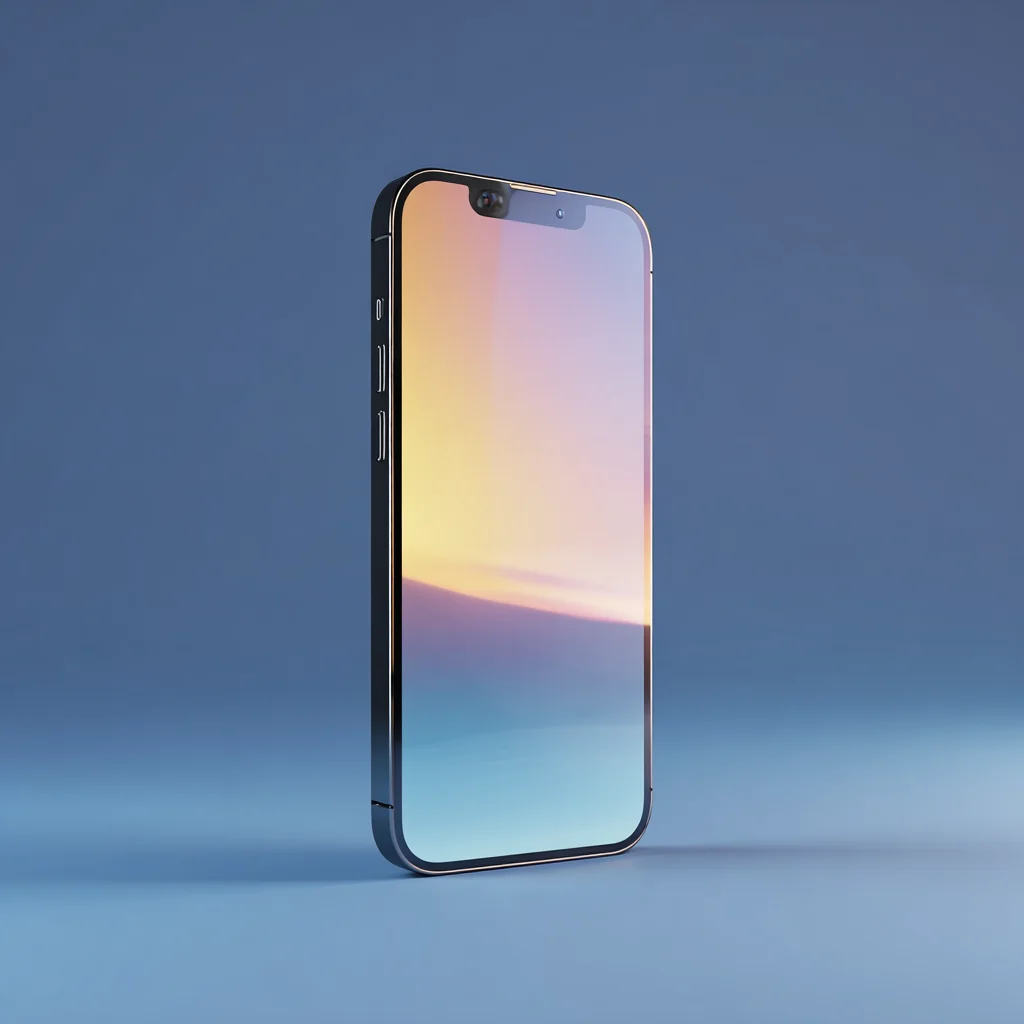
iPhone

iPhone

Apple's flagship smartphone line, known for its iOS operating system, premium build quality, and ecosystem integration.

VS
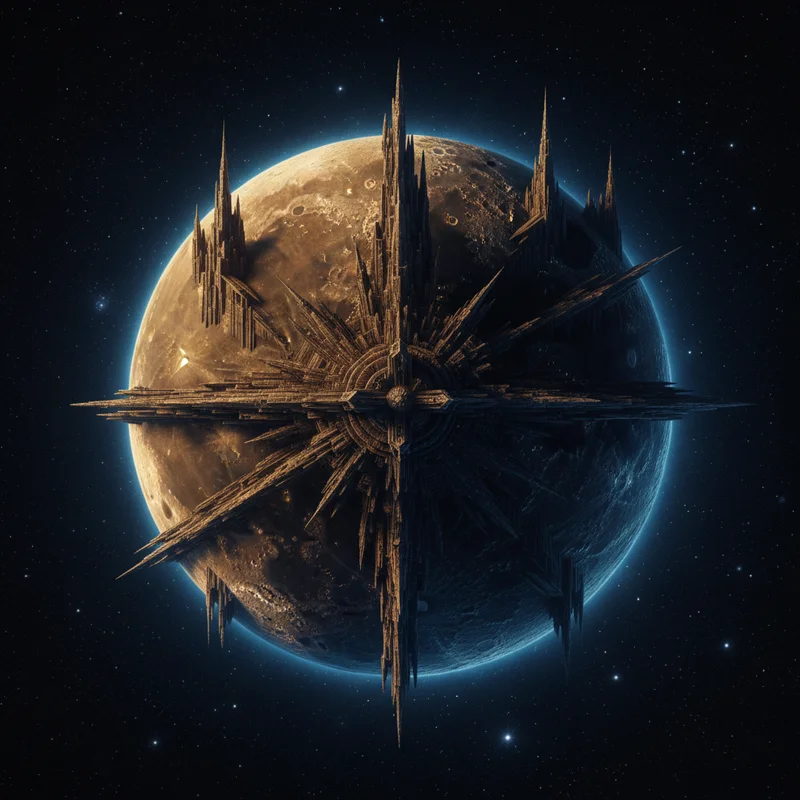
The Moon

The Moon

Earth's natural satellite and space race destination.

Battle Analysis

Size The Moon Wins
🏆 The Moon takes this round

iPhone

The iPhone 15 Pro measures 146.6 x 70.6 x 8.25 millimetres and weighs 187 grams. Apple's engineering teams have devoted considerable resources to minimising these dimensions whilst maximising internal componentry. The device's form factor represents decades of miniaturisation research.

In volumetric terms, one could theoretically fit approximately 2.56 x 10^26 iPhones inside the Moon's volume. Apple's current manufacturing capacity would require roughly 1.28 x 10^18 years to produce this quantity.

The Moon

The Moon presents a diameter of 3,474 kilometres, roughly one-quarter of Earth's diameter. Its surface area spans 37.9 million square kilometres, slightly larger than the African continent. The lunar volume amounts to 2.2 x 10^10 cubic kilometres of primarily basaltic rock and iron core.

The Moon is sufficiently large to be visible from everywhere on Earth without optical assistance, a marketing achievement no consumer product has replicated. Its apparent size in Earth's sky almost precisely matches the Sun's, enabling the phenomenon of total solar eclipses.

VERDICT

A diameter 23 billion times greater than the iPhone's length constitutes a decisive size advantage
Global influence The Moon Wins
🏆 The Moon takes this round

iPhone

Apple has sold over 2.3 billion iPhones since 2007, fundamentally restructuring human communication, commerce, and social interaction. The device has created an $800 billion annual app economy and employs millions worldwide in related industries. The iPhone has been credited with ending careers, launching revolutions, and enabling an estimated 1.4 trillion photographs annually.

Approximately 1.2 billion people currently use an iPhone as their primary computing device, granting Apple unprecedented influence over global information flow and digital behaviour patterns.

The Moon

The Moon's gravitational influence extends to every oceanic body on Earth, generating two high tides daily across all coastal regions. This tidal action has shaped evolutionary history itself, driving the transition of life from sea to land. Without lunar tides, Earth's rotation would have remained at approximately 6 hours per day, rendering complex life potentially impossible.

The Moon has influenced every human civilisation in recorded history, governing calendars, religious observances, agricultural cycles, and navigational systems. Its gravitational stabilisation of Earth's axial tilt has maintained the climatic conditions necessary for civilisation itself.

VERDICT

Controlling Earth's tides and enabling complex life exceeds restructuring smartphone market dynamics
Age and longevity The Moon Wins
🏆 The Moon takes this round

iPhone

The iPhone lineage began on 29 June 2007, when Steve Jobs unveiled what he described as a revolutionary device. In the subsequent seventeen years, Apple has released over forty distinct models, each rendering its predecessor obsolete within approximately twelve months. The average iPhone lifespan before replacement stands at 3-4 years.

From a geological perspective, the entire iPhone era represents less than 0.0000004% of the Moon's existence. The device's planned obsolescence stands in stark contrast to the Moon's remarkable staying power in Earth's orbit.

The Moon

The Moon formed approximately 4.5 billion years ago, likely from debris ejected during a catastrophic collision between Earth and a Mars-sized body named Theia. It has maintained its orbital vigil for 99.9999996% of the solar system's entire existence. Scientists project it will continue orbiting Earth for at least another 5 billion years.

The Moon's longevity is not merely a function of durability but of fundamental physics. Unlike consumer electronics, celestial bodies do not require software updates, battery replacements, or AppleCare+ subscriptions to remain functional.

VERDICT

4.5 billion years of continuous service versus 17 years of iterative product releases presents no contest
Gravitational pull The Moon Wins
🏆 The Moon takes this round

iPhone

The iPhone generates a gravitational field of approximately 1.25 x 10^-8 m/s^2, sufficient to attract a dust particle from a distance of several centimetres over geological timescales. In practical terms, this gravitational influence is entirely negligible. No tide has ever been attributed to iPhone gravity.

However, the iPhone's metaphorical gravitational pull proves considerably stronger. Studies indicate users check their devices an average of 144 times daily, demonstrating a psychological attraction that physics cannot fully explain.

The Moon

The Moon exerts a gravitational acceleration of 1.62 m/s^2 at its surface and influences Earth with sufficient force to raise ocean levels by up to 16 metres in extreme tidal configurations. This gravitational relationship causes Earth's rotation to slow by approximately 1.4 milliseconds per century, gradually lengthening our days.

The Moon's gravitational influence has been harnessed for slingshot manoeuvres by spacecraft seeking to reach distant solar system destinations. Its pull is felt not merely on Earth but throughout the inner solar system's orbital mechanics.

VERDICT

The ability to move trillions of tonnes of seawater daily decisively outperforms 1.25 x 10^-8 m/s^2
Cultural significance The Moon Wins
🏆 The Moon takes this round

iPhone

The iPhone has generated its own lexicon: selfie, swipe right, doom scrolling. It has appeared in countless films, songs, and artworks, typically symbolising modernity, connectivity, or social alienation. The device launch events have become cultural phenomena, with queues forming days in advance at Apple stores worldwide.

The iPhone's cultural penetration has proven so thorough that its absence now carries significance. A character without a smartphone in contemporary fiction immediately signals temporal displacement or deliberate rejection of modernity.

The Moon

The Moon has inspired artistic and spiritual devotion across every recorded human culture. From the Mesopotamian moon god Sin to the Greek goddess Selene, from Chinese Mid-Autumn festivals to Islamic calendar systems, lunar symbolism permeates human consciousness. Shakespeare referenced the Moon in 37 of his plays. The 1969 Moon landing remains humanity's most-watched television broadcast.

The Moon serves as universal shorthand for aspiration, romance, madness, and the eternal. The English word lunatic derives from the belief that the Moon influenced mental states, a testament to its psychological grip on human imagination.

VERDICT

Thousands of years of religious, artistic, and linguistic influence across all civilisations surpasses 17 years of consumer culture
👑

The Winner Is

The Moon

Takes 5 of 5 rounds

The comparison between iPhone and Moon reveals the profound absurdity of measuring human timescales against cosmic ones. The iPhone, despite its revolutionary impact on modern society, represents a fleeting moment in geological terms. Its influence, whilst genuinely transformative, operates within a framework of planned obsolescence and iterative improvement that the Moon's eternal presence renders almost quaint.

The Moon's victory across four of five criteria should not diminish appreciation for Apple's engineering achievements. That a pocket-sized device can compete meaningfully against a celestial body in any category represents a remarkable testament to human ingenuity. The iPhone's cultural influence, though brief, has been genuinely profound.

Final score: The Moon 58, iPhone 42. The cosmos maintains its dominion, though the margin has narrowed more than ancient astronomers might have predicted.

Share this battle

More Comparisons