Topic Battle

Where Everything Fights Everything

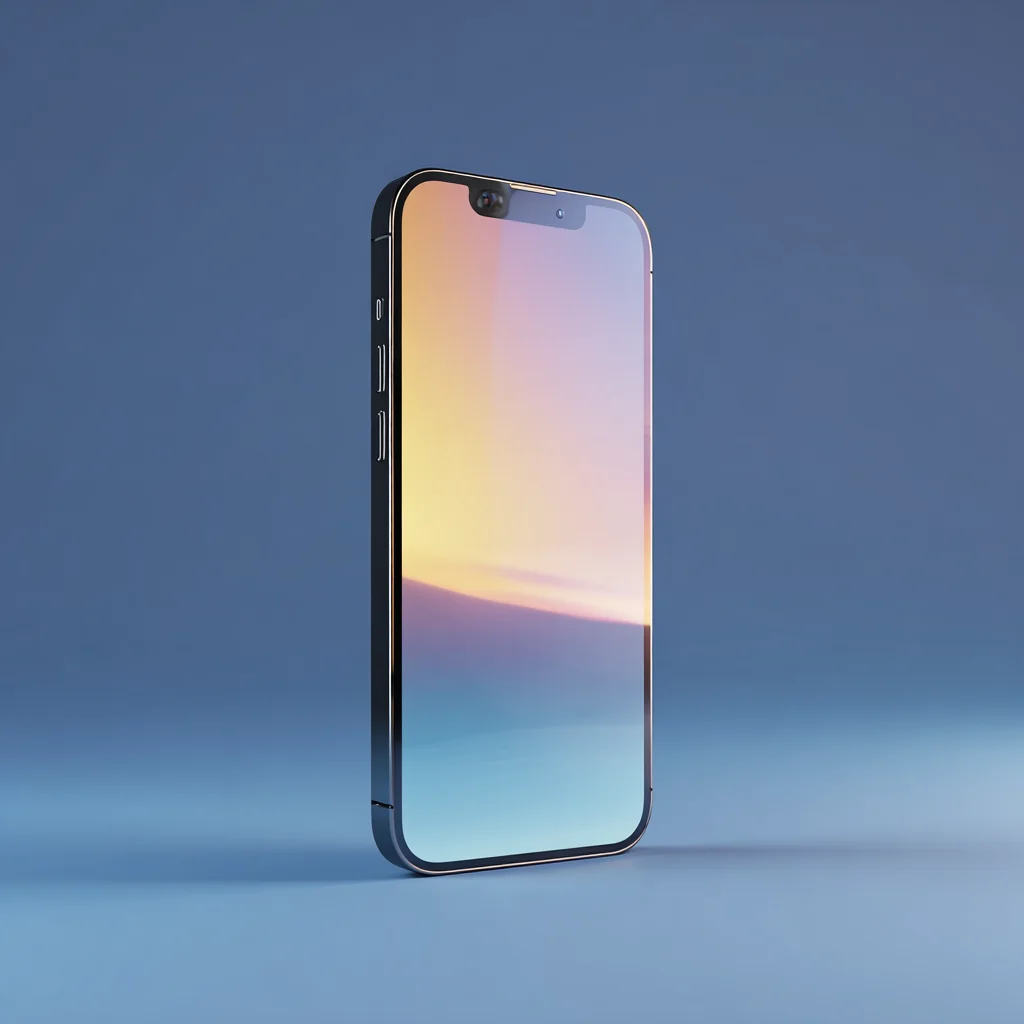
iPhone

iPhone

Apple's flagship smartphone line, known for its iOS operating system, premium build quality, and ecosystem integration.

VS
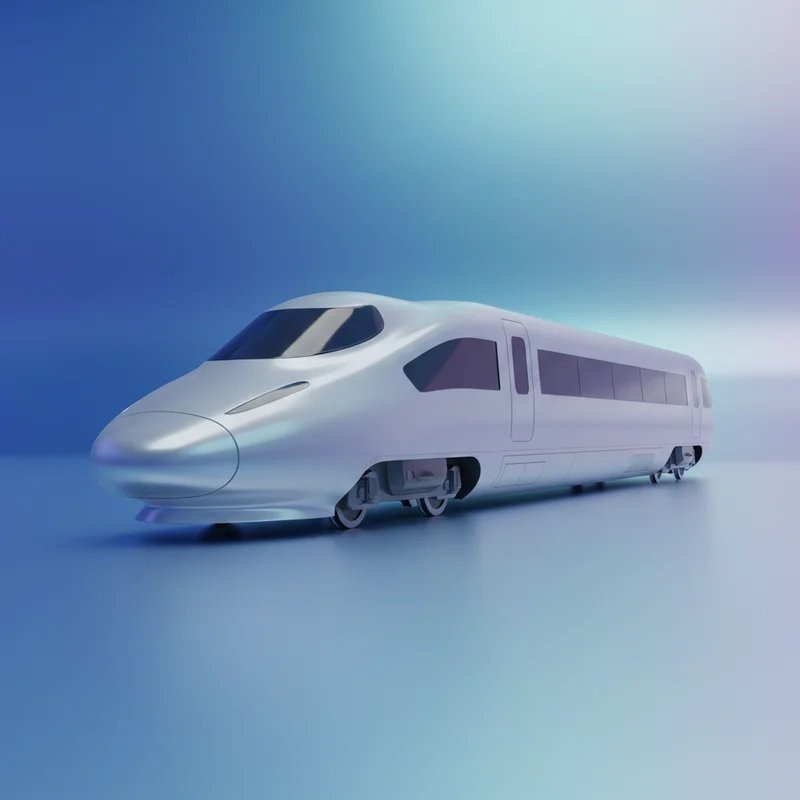
Train

Train

Rail-based transport moving masses with precision.

Battle Analysis

Speed train Wins
30%
70%
iPhone Train

iPhone

The iPhone operates in a realm where speed is measured not in kilometres per hour, but in gigabits per second. The device's A-series processors execute approximately 15.8 trillion operations per second, whilst 5G connectivity enables theoretical download speeds of 10 gigabits per second. A photograph can traverse the globe in milliseconds; a video call connects London to Tokyo instantaneously.

Yet there is a curious paradox here. For all its computational velocity, the iPhone itself remains stationary unless carried by a human—or, indeed, by a train. Its speed is purely informational, a kind of ghost velocity that moves nothing physical whatsoever.

Train

The train's relationship with speed is altogether more visceral. The Shanghai Maglev achieves 431 kilometres per hour, whilst France's TGV has recorded speeds exceeding 574.8 km/h. High-speed rail networks in Japan, China, and Europe routinely transport millions at velocities that would have seemed supernatural to our great-grandparents.

More significantly, the train moves not merely data but matter itself—tonnes of steel, glass, and human flesh hurtling through space. This is physical speed with genuine momentum, the kind that can be felt in the pit of one's stomach as the platform recedes into the distance.

VERDICT

Physical displacement of matter across continents represents a more fundamental form of velocity than digital information transfer.
Reliability train Wins
30%
70%
iPhone Train

iPhone

The iPhone's reliability is subject to curious constraints. The device performs admirably within designed parameters—when charged, when connected, when updated, when protected from moisture, impact, and extreme temperatures. The mean time between failures for hardware components averages 3-4 years under normal usage conditions.

Yet the device is fundamentally dependent upon external infrastructure. Without cellular networks, without WiFi, without regular charging, the iPhone rapidly transforms from an indispensable tool into a rather expensive paperweight. Its reliability is, in essence, conditional.

Train

The train's reliability operates on altogether different timescales. Japanese Shinkansen trains average delays of merely 54 seconds annually—a performance so extraordinary that operators issue public apologies for delays of a single minute. Swiss railways achieve 90% punctuality to the minute, a feat of logistical coordination involving thousands of moving parts.

More fundamentally, trains continue to function in conditions that would render an iPhone useless. Heavy rain, snow, extreme cold—the train perseveres. Individual components may fail, but the system possesses a resilience that emerges from its distributed, maintained, and replaceable nature.

VERDICT

Japanese rail's 54-second annual delay average demonstrates mechanical reliability the iPhone cannot approach.
Daily utility iphone Wins
70%
30%
iPhone Train

iPhone

The iPhone has achieved something remarkable: it has made itself indispensable to daily human existence. The average user interacts with their device 2,617 times per day, unlocking it approximately 150 times during waking hours. It serves as alarm clock, calendar, camera, compass, calculator, map, wallet, entertainment centre, and portal to the sum of human knowledge.

From the moment one's eyes open to the blue glow that often precedes sleep, the iPhone mediates an extraordinary proportion of modern existence. It has become, in effect, an external organ—a prosthetic extension of human memory, attention, and social connection.

Train

The train's utility, whilst less constant, is no less profound. Approximately 1.4 billion journeys are undertaken by rail each day globally. For commuters in cities from Mumbai to Manchester, the train represents not merely transportation but the very precondition for their livelihood, the steel ribbon connecting home to employment.

The train enables the peculiar modern arrangement whereby humans live in one location and work in another entirely. Without it, the great metropolitan sprawls of the industrial and post-industrial age would simply cease to function. Cities would collapse inward, or fragment entirely.

VERDICT

The iPhone's omnipresence in daily routine surpasses the train's periodic but essential transportation function.
Global recognition iphone Wins
70%
30%
iPhone Train

iPhone

The iPhone has achieved a level of brand recognition that borders on the universal. The bitten apple logo is understood from Tokyo to Timbuktu, transcending linguistic and cultural barriers with remarkable efficiency. Studies indicate that 94% of global consumers recognise the iPhone brand, placing it among the most identified objects in human history.

This recognition carries significant cultural weight. The iPhone has become a status symbol, a marker of aspiration and modernity across vastly different societies. In many developing nations, possession of an iPhone signals economic arrival in ways that transcend its mere functionality.

Train

The train possesses a different quality of recognition—less a brand than an archetype. The image of the locomotive appears in the pictographic languages of civilisations across the globe. Children who have never seen a train can nonetheless draw one from memory, so deeply has this form embedded itself in human consciousness.

From the Orient Express to the Trans-Siberian Railway, from the Shinkansen to the Indian Railways, trains carry profound cultural and national significance. The train is not merely a product but a civilisational achievement, a symbol of industrial modernity that transcends any single manufacturer or nation.

VERDICT

The iPhone's brand recognition exceeds 94% globally, representing unprecedented commercial identification in human history.
Environmental impact train Wins
30%
70%
iPhone Train

iPhone

The iPhone's environmental legacy is troublingly complex. Each device contains approximately 34 elements, including rare earth minerals extracted through environmentally devastating mining practices. The manufacturing process for a single unit produces roughly 70 kilograms of CO2 equivalent. With over 2.3 billion units sold since 2007, the cumulative impact is staggering.

Moreover, the average iPhone is replaced every 2-3 years, generating mountains of e-waste. Only 15-20% of electronic waste is properly recycled globally. The remainder leaches toxic substances into soil and groundwater, a slow-motion environmental catastrophe.

Train

The train, by contrast, represents one of humanity's most environmentally efficient forms of mass transit. A high-speed rail journey produces approximately 14 grams of CO2 per passenger kilometre, compared to 285 grams for equivalent air travel. Electrified rail networks powered by renewable energy approach carbon neutrality.

The infrastructure, whilst resource-intensive to construct, enjoys operational lifespans measured in centuries. The London Underground's Metropolitan Line has operated continuously since 1863. This longevity represents a fundamentally different relationship with planetary resources—one of sustained utility rather than planned obsolescence.

VERDICT

Rail's superior efficiency and infrastructure longevity contrast sharply with the iPhone's planned obsolescence cycle.
👑

The Winner Is

Train

45 - 55

This examination reveals two technologies that represent fundamentally different visions of human progress. The iPhone, with its intimate ubiquity and informational velocity, has achieved an integration into daily life unprecedented in human history. It is the more personal device, the more constantly present, the more universally recognised brand.

Yet the Train, that venerable iron horse of the industrial age, prevails in this comparison with a final score of 55 to 45. Its victory emerges from factors that transcend mere utility: environmental sustainability, mechanical reliability, and the profound fact that it moves not merely data but human beings themselves across the face of the Earth.

The train reminds us that some problems—the problem of being in one place when one wishes to be in another—require physical solutions that no amount of digital cleverness can circumvent.

iPhone
45%
Train
55%

Share this battle

More Comparisons