
Where Everything Fights Everything

James Bond vs Mickey Mouse

😜 Just for fun — a tongue-in-cheek, gloriously unscientific showdown.

James Bond

James Bond

British spy with a license to kill and order martinis.

VS
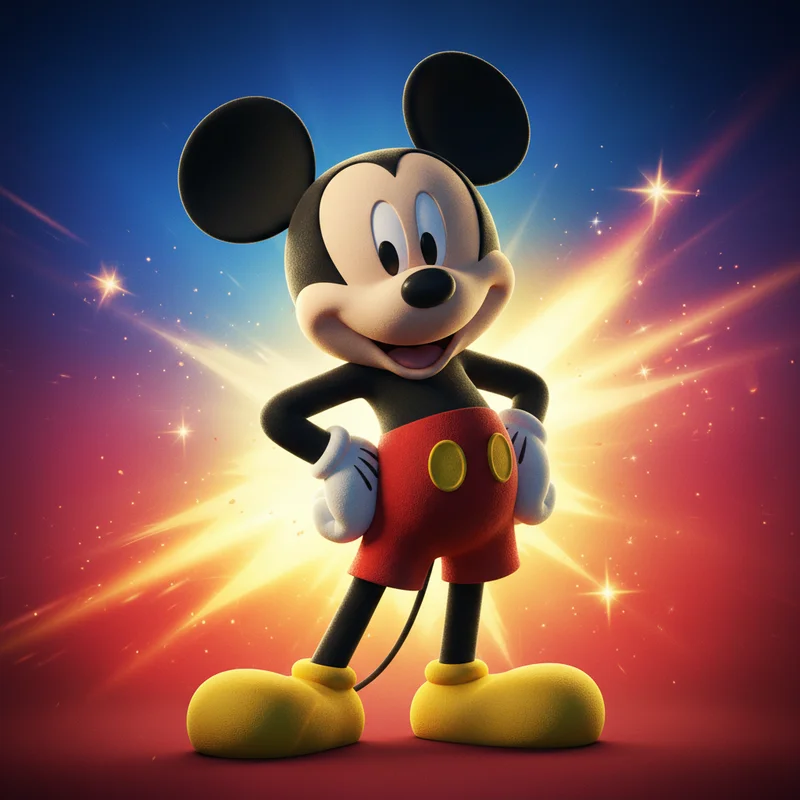
Mickey Mouse

Mickey Mouse

Disney's original mascot and corporate icon.

Battle Analysis

Global reach Mickey Mouse Wins
🏆 Mickey Mouse takes this round

James Bond

The Bond franchise has achieved theatrical distribution in virtually every nation operating commercial cinemas. The films have been translated into over forty languages, with certain markets developing cult followings that exceed those of the originating nation. In Japan, Bond merchandise commands premium prices typically reserved for domestic properties.

However, the spy's global presence remains fundamentally tied to cinema release schedules. Between films, Bond's visibility diminishes. The franchise lacks the continuous presence that modern brand theory demands for maximum cultural penetration.

Mickey Mouse

The Mouse operates through what can only be termed infrastructural omnipresence. Twelve Disney theme parks across four continents receive over 150 million annual visitors. The Disney Channel broadcasts to over 100 million households in thirty-four languages. Mickey's face appears on products in every retail category imaginable, from infant clothing to luxury watches.

This penetration extends to surprising domains. Disney English language schools in China feature the rodent prominently, positioning him as a gateway to Western education. The Mouse has achieved something Bond cannot claim: permanent residency in daily commerce rather than periodic cultural events.

VERDICT

Theme parks, merchandise, and continuous media presence create penetration that biennial film releases cannot match.
Economic impact Mickey Mouse Wins
🏆 Mickey Mouse takes this round

James Bond

The Bond franchise has generated documented revenue exceeding $20 billion across film, merchandise, and licensing over its sixty-year history. Individual productions routinely cross the billion-dollar threshold, with Skyfall (2012) achieving $1.1 billion in global theatrical revenue alone.

Yet Bond's economic impact remains concentrated in entertainment verticals. The franchise has not achieved the category expansion that characterises modern intellectual property exploitation. There are no Bond theme parks, no Bond cruise lines, no Bond residential developments. The spy generates wealth but does not compound it.

Mickey Mouse

The Mouse anchors an enterprise generating annual revenues exceeding $85 billion across The Walt Disney Company's various divisions. While Mickey personally appears on merchandise generating approximately $3 billion annually, his role as corporate symbol magnifies his economic significance immeasurably.

Disney's acquisitions of Pixar, Marvel, Lucasfilm, and 21st Century Fox have created an entertainment conglomerate in which Mickey serves as spiritual figurehead. The rodent's economic impact extends to real estate development, hospitality, cruise operations, and media infrastructure. His indirect influence on global entertainment economics is essentially incalculable.

VERDICT

Corporate symbol of an $85 billion annual revenue empire surpasses the cumulative earnings of any film franchise.
Cultural longevity Mickey Mouse Wins
🏆 Mickey Mouse takes this round

James Bond

Commander Bond represents a remarkably consistent cultural presence spanning seven decades. The franchise has survived the Cold War that birthed it, adapted to post-Soviet geopolitics, and navigated the treacherous waters of twenty-first-century gender politics. Each era has produced a Bond suited to its moment, from Connery's casual brutality to Craig's wounded vulnerability.

Yet Bond's longevity carries asterisks. The character has required periodic reinvention to remain culturally acceptable. Behaviours celebrated in 1962 now require extensive rehabilitation. The spy's survival depends upon continuous adaptation, a process that risks eroding the very qualities that defined him.

Mickey Mouse

The Mouse has maintained cultural relevance for ninety-six years, a span that encompasses the Great Depression, World War II, the Cold War, and the digital revolution. His fundamental design, those circular ears recognisable from any angle, has remained essentially unchanged since 1928. This design conservatism has paradoxically enabled longevity.

Disney's strategic deployment of the rodent has evolved from animation protagonist to corporate symbol to theme park mascot to streaming service anchor. Each role has extended his reach without requiring fundamental character alteration. The Mouse's emotional neutrality, that permanent smile, has proven infinitely adaptable to changing cultural contexts.

VERDICT

Ninety-six years of continuous relevance without requiring fundamental character reinvention edges past Bond's adaptive survival.
Psychological influence Mickey Mouse Wins
🏆 Mickey Mouse takes this round

James Bond

Bond has shaped masculine identity construction across multiple generations. The character's combination of physical capability, emotional detachment, and aesthetic refinement created a template that men worldwide have attempted to emulate. Sales of Omega watches, Aston Martin vehicles, and Tom Ford suits correlate demonstrably with Bond film releases.

Yet Bond's psychological influence carries ambiguous moral implications. The character models behaviours, particularly regarding relationships and violence, that contemporary society increasingly questions. His influence on masculine psychology may prove a diminishing asset as cultural values evolve.

Mickey Mouse

The Mouse operates on deeper psychological strata. Exposure typically begins in infancy, establishing emotional associations before critical faculties develop. Disney's strategic deployment across children's media creates what marketers term brand imprinting, forming attachments that persist into adulthood and influence parenting choices.

This early intervention creates generational cycles. Adults who loved Mickey provide Mickey to their children, who provide Mickey to their children. The rodent has achieved something approaching hereditary brand loyalty, a psychological colonisation that operates below conscious awareness.

VERDICT

Infant-onset brand imprinting creating generational loyalty cycles operates at deeper psychological levels than aspirational adult identification.
Sophistication quotient James Bond Wins
🏆 James Bond takes this round

James Bond

Bond represents the apex of aspirational sophistication in popular culture. The character's knowledge of fine wines, bespoke tailoring, and luxury automobiles has educated generations in the semiotics of refinement. The phrase shaken, not stirred has entered global vocabulary as shorthand for discriminating taste, however technically incorrect it may be.

The spy's sophistication extends to his adversaries. Bond villains typically display cultivated intelligence, operating from architecturally significant lairs whilst executing plans of philosophical complexity. The franchise elevates villainy itself to an art form, suggesting that evil, properly executed, requires taste.

Mickey Mouse

The Mouse operates in a register deliberately stripped of sophistication. His vocabulary is limited, his emotions simplistic, his conflicts resolved through earnest effort rather than cunning. This is by design. Disney's strategic positioning requires accessibility across all educational and cultural demographics.

Yet one might argue this represents sophisticated understanding of mass markets. The Mouse's simplicity is not naive but calculated. Every design element, from those circular ears to that falsetto voice, has been engineered for maximum memorability and minimum cultural friction. This is sophistication disguised as simplicity.

VERDICT

Genuine cultivation of refined taste and aesthetic standards outweighs calculated deployment of manufactured innocence.
👑

The Winner Is

Mickey Mouse

Takes 4 of 5 rounds

This investigation reveals two fundamentally different strategies for cultural domination, each successful within its parameters. James Bond represents the European tradition of quality over quantity, producing carefully crafted cultural artifacts at measured intervals. Mickey Mouse embodies the American model of market saturation, achieving victory through omnipresence rather than excellence.

By the narrowest of margins, the Mouse prevails. His ninety-six years of continuous relevance, his infrastructural omnipresence through theme parks and merchandise, his role as corporate symbol of an entertainment empire, and his psychological colonisation of successive generations through infant exposure create a cumulative advantage that the spy's sophistication cannot overcome.

Yet this verdict carries significant caveats. Bond's influence on adult aspiration, on notions of refinement and masculine capability, operates in territories the Mouse cannot reach. The spy shapes who we wish to become; the Mouse shapes who we were before we knew to wish for anything. Both, in their fashion, have conquered the human imagination through methods their creators could scarcely have anticipated.

Share this battle

More Comparisons