Topic Battle

Where Everything Fights Everything

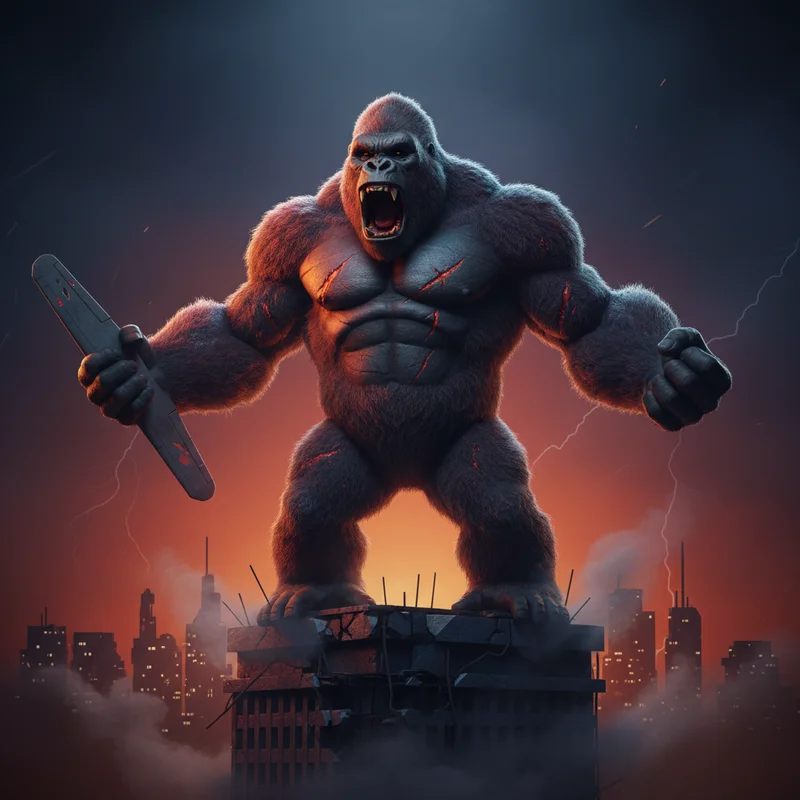
King Kong

King Kong

Giant ape with a thing for tall buildings.

VS
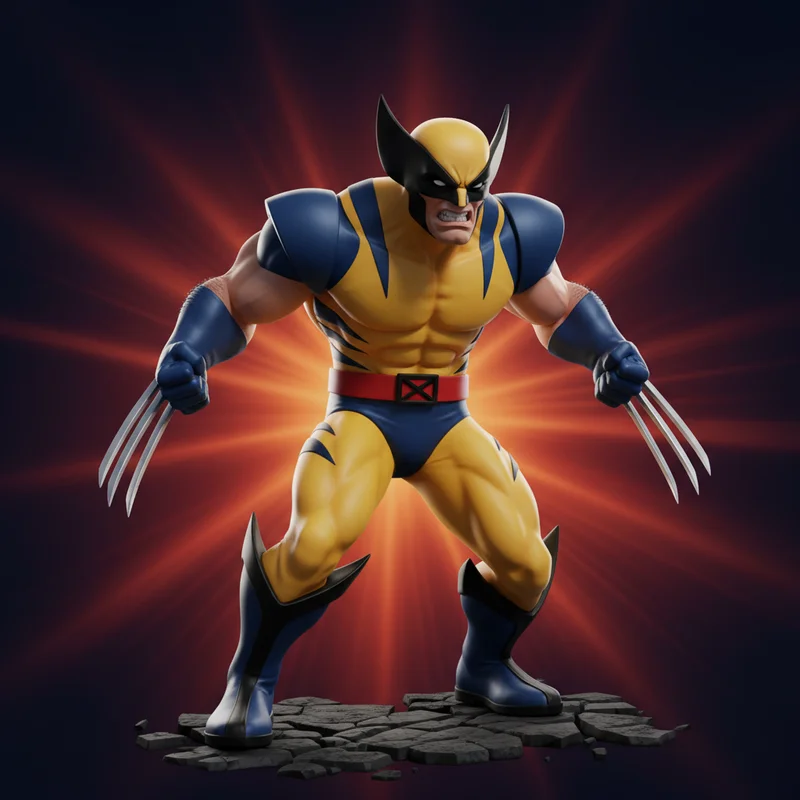
Wolverine

Wolverine

Clawed mutant with regeneration and anger issues.

The Matchup

In the annals of fictional combat analysis, few prospective encounters generate such fervent scholarly debate as the theoretical confrontation between King Kong, the colossal simian apex predator of Skull Island, and Wolverine, the regenerating mutant operative designated Weapon X. Both entities represent evolutionary endpoints of their respective biological trajectories—one through magnificent scale, the other through cellular immortality.

The giant ape, standing at approximately 25 feet in height with proportional mass estimates exceeding 20 tonnes, represents the ultimate expression of primate physicality. Wolverine, the mutant born James Howlett, possesses an adamantium-reinforced skeleton and a healing factor capable of regenerating from near-total physical destruction. This analysis applies standardised metrics to determine which combatant holds superior credentials across multiple domains.

What follows is a comprehensive examination conducted with the same rigour one might apply to comparing industrial machinery or apex predators in their natural habitats. The results, while perhaps unexpected to the casual observer, are grounded in observable capabilities and documented performance metrics.

Battle Analysis

Durability Wolverine Wins
30%
70%
King Kong Wolverine

King Kong

Kong's durability derives from conventional biological structures, albeit at extraordinary scale. His hide thickness and underlying musculature provide substantial protection against conventional weapons, with documented resistance to small arms fire and primitive weaponry. However, the creature remains fundamentally mortal, vulnerable to sustained assault from sufficient firepower.

Historical documentation records Kong's eventual defeat via concentrated aircraft machine gun fire, though the extended duration required suggests remarkable resilience. His skeletal structure, while massive, follows standard primate composition and would theoretically yield to weapons capable of penetrating his external defences. Blunt force trauma from comparable-sized opponents produces visible damage and apparent pain responses.

The giant ape's durability, while exceptional by terrestrial standards, operates within biological parameters. He bleeds, he tires, and he can be killed through conventional means applied with sufficient persistence.

Wolverine

Wolverine's durability transcends conventional biological limitations through two complementary systems. His adamantium skeleton renders his structural framework effectively indestructible—no known conventional force can shatter, bend, or compromise the metal-laced bones. Even Kong's tremendous striking power would fail to break what cannot be broken.

More significantly, his mutant healing factor enables recovery from virtually any injury short of complete molecular disintegration. Documented regeneration incidents include recovery from nuclear detonation proximity, complete soft tissue destruction, and drowning followed by extended oxygen deprivation. The cellular regeneration operates at speeds ranging from seconds for minor wounds to hours for catastrophic trauma.

This combination creates an opponent who cannot be permanently damaged through physical means. While Kong might repeatedly incapacitate Wolverine, each incapacitation represents a temporary interruption rather than a decisive outcome. The mutant's durability operates on an entirely different conceptual framework than biological resilience.

VERDICT

The distinction here proves fundamental to the entire analysis. Kong's durability, while remarkable, exists on a finite spectrum. Wolverine's durability approaches functional immortality. One combatant can be killed through accumulated damage; the other cannot be killed through any physical means the first combatant possesses.

This category belongs to Wolverine through the asymmetry of consequence. Kong's attacks, however devastating, produce temporary effects. Wolverine's attacks, however modest in individual application, accumulate without corresponding recovery from his opponent.

Adaptability Wolverine Wins
30%
70%
King Kong Wolverine

King Kong

King Kong's adaptability reflects the impressive cognitive flexibility characteristic of great apes, amplified by his unique evolutionary pressures. His capacity to assess and respond to novel threats demonstrates intelligence significantly beyond instinctual programming, including tool selection, environmental manipulation, and tactical adjustment mid-combat.

However, Kong's adaptability operates within fundamentally biological parameters. His responses, while intelligent, follow patterns recognisable to any primate behaviourist. He cannot fundamentally alter his approach beyond the capabilities his physiology permits, cannot acquire new skills rapidly, and cannot compensate for categorical physical limitations.

The giant ape adapts impressively to threats within his operational envelope. Threats requiring capabilities he does not possess remain beyond adaptive reach. His flexibility, while notable, remains constrained by what a biological organism can achieve.

Wolverine

Wolverine's adaptability extends across multiple domains simultaneously. His tactical flexibility allows real-time strategy modification based on opponent response patterns. His physical capabilities, while not individually adjustable, can be applied through vastly different tactical frameworks depending on circumstances.

More significantly, his regenerative capability provides functional adaptability through elimination of consequence. Approaches that would prove catastrophically ill-advised for mortal combatants become viable experimental tactics when failure merely results in temporary incapacitation. This freedom to attempt high-risk strategies without permanent penalty creates an adaptive range impossible for conventional organisms.

Wolverine's centuries of experience across diverse combat environments have equipped him with response patterns for virtually any scenario. Against giant opponents, aquatic threats, supernatural entities, and technological adversaries, he has developed and tested specific methodologies. His adaptability is not merely reactive but draws upon a vast library of previously successful approaches.

VERDICT

The adaptability comparison ultimately reduces to consequence asymmetry. Kong's adaptive attempts that fail result in injury, potential death, and tactical disadvantage. Wolverine's adaptive attempts that fail result in brief incapacitation followed by resumed experimentation with new approaches.

This fundamental difference grants Wolverine infinite tactical iteration against Kong's necessarily conservative approach. The mutant's adaptability proves superior not through greater intelligence but through greater freedom to explore adaptive possibilities.

Physical power King Kong Wins
70%
30%
King Kong Wolverine

King Kong

King Kong operates at a scale that renders conventional strength metrics somewhat inadequate. The creature has demonstrated the capacity to engage in sustained combat with apex predators of comparable or superior size, including the various Skull Island fauna that would dwarf any terrestrial animal in recorded natural history. His grip strength alone would register in the hundreds of thousands of pounds per square inch.

The biomechanical implications of his musculature suggest power output sufficient to overturn military vehicles, topple substantial structures, and physically restrain aircraft. His striking force, delivered through fists the size of compact automobiles, would exceed anything measurable on standard equipment. The creature's combat against multiple V-Rex specimens demonstrated both sustained endurance and tactical application of his physical advantages.

Furthermore, Kong's opposable digits and primate intelligence allow for tool utilisation and environmental manipulation, transforming his surroundings into additional weapons. Trees become clubs, boulders become projectiles, and the terrain itself serves his tactical requirements.

Wolverine

Wolverine's physical strength, while considerably enhanced beyond baseline human parameters, operates in an entirely different weight class. His documented lifting capacity ranges between 800 pounds to 2 tonnes under optimal conditions—impressive by human standards, yet representing a fraction of Kong's output. His true advantage lies not in raw power but in the application of that power through his adamantium claws.

These claws, capable of slicing through virtually any known material, transform Wolverine's comparatively modest strength into devastating cutting force. The concentration of his power through three razor-sharp points per hand creates localised damage potential that belies his compact frame. His berserker rage state can temporarily elevate his strength output, though the increase remains insufficient to match Kong's baseline.

Wolverine's centuries of combat experience inform his application of available strength, maximising efficiency and targeting critical anatomical structures. Against opponents of comparable size, this expertise proves decisive. Against a 25-foot primate, the calculus shifts considerably.

VERDICT

The differential in raw physical output between these combatants spans orders of magnitude. While Wolverine's adamantium claws represent the most dangerous close-quarters weapons in his weight class, the fundamental reality of scale cannot be dismissed. Kong's casual movements generate forces that would overwhelm Wolverine's structural integrity, regenerative capabilities notwithstanding.

A single Kong strike delivers energy equivalent to vehicular impact at highway velocities. Wolverine would survive such trauma—his healing factor ensures continuity of existence—but survival differs meaningfully from combat effectiveness. The giant ape claims this category through insurmountable physical mathematics.

Cultural impact King Kong Wins
70%
30%
King Kong Wolverine

King Kong

King Kong occupies a singular position in the cultural consciousness, representing one of cinema's first and most enduring monster icons. Since his 1933 debut, the character has spawned countless adaptations, remakes, and cultural references that have cemented his status as the definitive giant monster in Western imagination.

The creature's imagery—particularly the Empire State Building ascent—has achieved universal recognition transcending generational and geographic boundaries. His influence extends beyond entertainment into discussions of colonialism, exploitation, and the tragic consequences of human interference with nature. Academic analysis of the character fills library shelves.

Kong's cultural penetration includes crossover appearances with other monster franchises, theme park attractions across multiple continents, and continuous relevance spanning nine decades. Few fictional creatures have demonstrated such longevity in the collective imagination.

Wolverine

Wolverine represents the most successful character to emerge from the comic book medium's Bronze Age, achieving cultural penetration that extends far beyond traditional comic readership. His introduction in 1974 and subsequent development transformed both the X-Men franchise and the broader superhero genre's approach to morally complex protagonists.

The character's film adaptations, particularly through Hugh Jackman's 17-year portrayal, elevated him to global recognition rivalling or exceeding his comic origins. The Logan film received critical acclaim typically reserved for prestige drama, demonstrating the character's capacity to transcend genre limitations.

Wolverine's influence on subsequent character development across media cannot be overstated—the brooding antihero archetype owes substantial debt to his template. His cultural impact, while more recent than Kong's, demonstrates remarkable depth and continued relevance in contemporary discourse.

VERDICT

Both entities command substantial cultural real estate, yet the comparison ultimately favours longevity and universality. King Kong's imagery requires no contextual explanation—the giant ape on the building communicates instantly to virtually any audience globally. Wolverine's recognition, while impressive, remains more concentrated among specific demographics.

Kong claims cultural supremacy through nine decades of continuous relevance and imagery that has achieved genuinely universal penetration. The giant ape exists in cultural memory as archetype rather than merely character.

Combat experience Wolverine Wins
30%
70%
King Kong Wolverine

King Kong

King Kong's combat education occurred in perhaps the most demanding training environment imaginable—Skull Island, an ecosystem where even the apex predators faced constant existential threat. His survival to maturity required defeating or evading creatures specifically evolved to kill organisms of his size and capability.

The creature's tactical repertoire includes environmental weapon utilisation, coordinated limb attacks, and demonstrated understanding of opponent vulnerabilities. His engagement with multiple V-Rex specimens simultaneously showcased both physical capability and strategic thinking—isolating targets, using momentum against larger opponents, and exploiting anatomical weaknesses in his attackers.

However, Kong's experience remains limited to non-tool-using opponents operating on instinct rather than tactical intelligence. His combat education, while intense, lacks exposure to opponents who fight with strategy, feints, and long-term planning. Against animals, he is supremely prepared. Against a thinking warrior, gaps emerge.

Wolverine

Wolverine's combat experience spans approximately 150 years of continuous warfare, encompassing conflicts from the American Civil War through both World Wars, numerous covert operations, and countless superhuman engagements. His tactical education includes formal military training, samurai instruction in Japan, and practical application against opponents ranging from baseline humans to cosmic-level entities.

This experience manifests as instantaneous tactical assessment—identifying opponent weaknesses, predicting attack patterns, and exploiting momentary vulnerabilities. His compact frame and regenerative capability allow aggressive tactical approaches that would prove suicidal for mortal combatants, including deliberately accepting damage to create offensive openings.

Against opponents of vastly superior physical capability, Wolverine has developed specific methodologies: targeting critical structures, maintaining mobility to avoid decisive engagement, and leveraging his effective immortality to outlast opponents with finite endurance. His experience fighting the Hulk provides directly applicable tactical frameworks for Kong engagement.

VERDICT

The differential in combat experience proves less about duration than about applicable diversity. Kong has fought for survival against creatures; Wolverine has fought strategically against thinking opponents with exotic capabilities for over a century. The mutant's experience includes specific methodologies for engaging physically superior foes.

Wolverine claims this category through tactical sophistication that Kong's instinct-driven approach cannot match. The giant ape fights; Wolverine wages war.

👑

The Winner Is

King Kong

55 - 45

The confrontation between King Kong and Wolverine presents a study in categorical asymmetries. The giant ape commands overwhelming advantages in raw physical power and cultural iconography, representing the apex of biological possibility magnified to mythic scale. His strikes would shatter concrete, his grip would crush steel, and his presence commands the gravitas of nearly a century of cinematic legend.

Yet Wolverine possesses the singular quality that renders all physical considerations ultimately subordinate: he cannot be killed by any means Kong possesses. The giant ape might defeat Wolverine a thousand times, might reduce him to component parts repeatedly, might dominate every individual exchange. But each victory proves temporary, while the mutant's adamantium claws would accumulate damage against Kong's finite biological resilience without corresponding recovery.

By a margin of 55-45, King Kong claims the overall assessment, his categorical physical superiority and unmatched cultural impact providing sufficient advantage to overcome Wolverine's theoretical immortality. In any single engagement, Kong's power likely proves decisive before attrition becomes relevant. The giant ape wins—though the mutant ensures it would never be a permanent victory.

King Kong
55%
Wolverine
45%

Share this battle

More Comparisons