Topic Battle

Where Everything Fights Everything

Lego

Lego

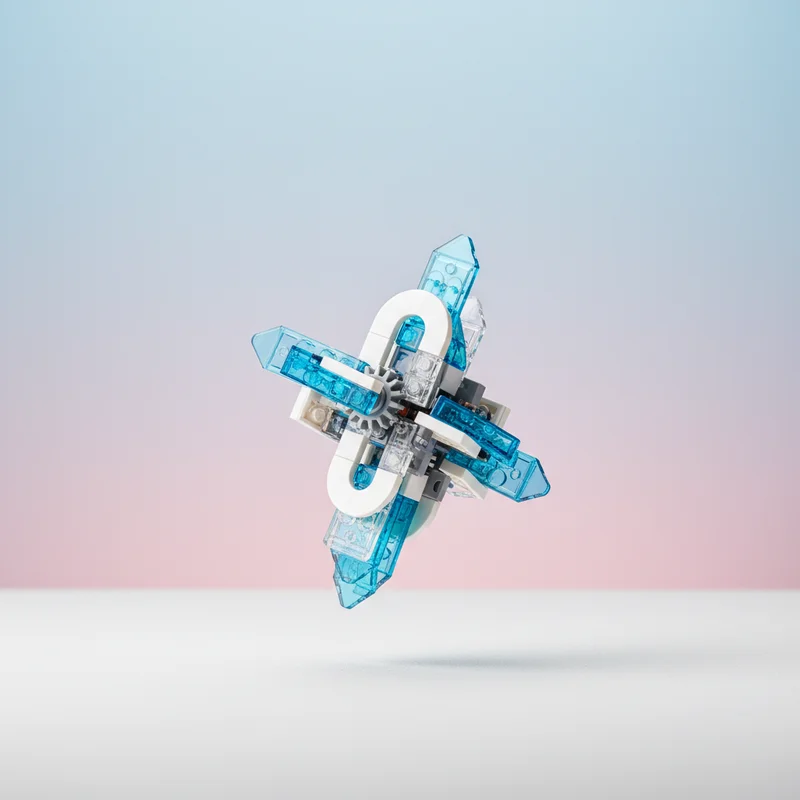
Interlocking plastic bricks and barefoot landmines.

VS
Mars

Mars

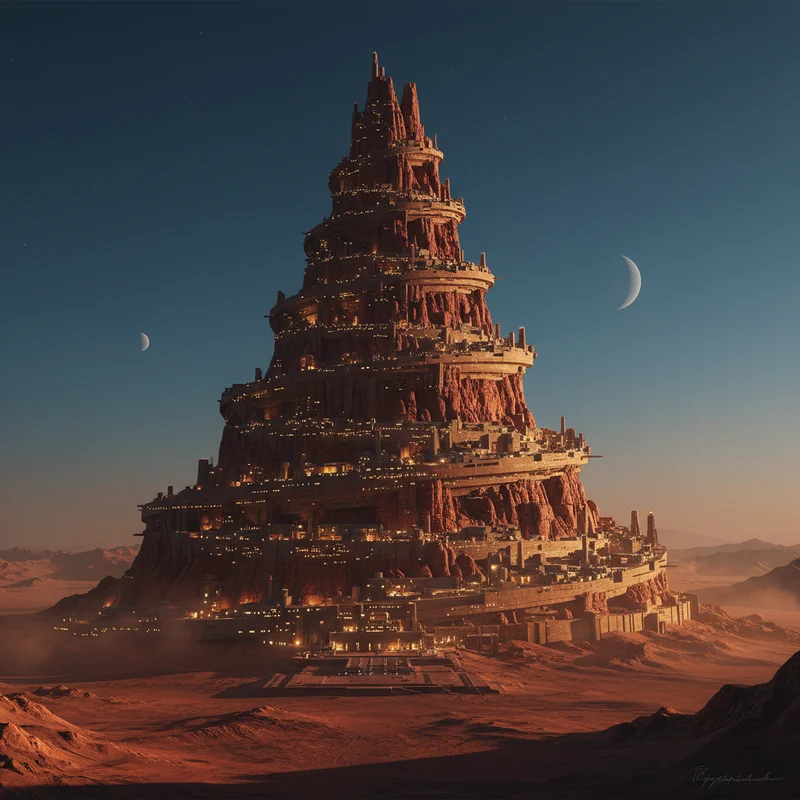
Red planet and humanity's next frontier.

Battle Analysis

Accessibility Lego Wins
70%
30%
Lego Mars

Lego

A child in virtually any nation can acquire Lego within days, if not hours. The product occupies shelf space in 130 countries. Pricing ranges from pocket-money sets to elaborate collector editions, ensuring economic accessibility across demographics. No special training, equipment, or atmospheric conditions are required for engagement. The barrier to entry consists solely of opposable thumbs and basic motor function. Even digital accessibility has been achieved through Lego video games, virtual building platforms, and augmented reality applications. The company has systematically eliminated every conceivable obstacle between consumer and product.

Mars

Reaching Mars requires solving problems that have bankrupted nations. The journey demands 7 months of space travel, radiation shielding, life support systems, and approximately $2.7 billion per mission at current costs. To date, precisely zero humans have accessed Mars. The planet entertains no visitors, accepts no tourists, and offers no day-trip packages. Even robotic access proves challenging - roughly 50% of Mars missions have failed. The Red Planet maintains perhaps the most exclusive velvet rope in the solar system, admitting only the most sophisticated mechanical emissaries after extensive vetting by planetary scientists.

VERDICT

Lego welcomes billions annually; Mars has admitted zero human visitors
Cultural penetration Lego Wins
70%
30%
Lego Mars

Lego

Few brands achieve the cultural ubiquity of Lego. The company has transcended mere toy status to become a creative institution. The Lego Movie franchise has grossed over $1 billion worldwide. Legoland theme parks span four continents. Academic institutions offer courses in 'Lego Serious Play' methodology for corporate strategy development. The brand name itself has entered common parlance - 'Lego' now functions as both noun and verb across multiple languages. Most remarkably, Lego has achieved the near-impossible: genuine cross-generational appeal, equally cherished by toddlers and middle-aged collectors who prefer the term 'Adult Fans of Lego'.

Mars

Mars has influenced human culture for millennia, serving as deity, omen, and endless source of speculation. The Romans named their god of war after its blood-red appearance. H.G. Wells terrified Victorian England with Martian invaders. David Bowie questioned whether life existed there. Modern culture remains obsessed - Matt Damon's survival drama, Elon Musk's colonial ambitions, and countless science fiction narratives all orbit this rusty sphere. Yet crucially, Mars influences culture passively, through human projection rather than active engagement. The planet itself contributes nothing; humans merely imagine what might be.

VERDICT

Lego actively shapes culture; Mars merely receives human projections
Construction potential Lego Wins
70%
30%
Lego Mars

Lego

The Lego brick represents perhaps humanity's most democratised construction system. With precisely 915,103,765 unique building combinations possible from just six standard 2x4 bricks, the creative potential approaches the infinite. The system's genius lies in its universal compatibility - a brick manufactured in 1958 interlocks perfectly with one produced yesterday. This engineering consistency has enabled constructions ranging from life-sized automobiles to functional prosthetic limbs. The Lego Architecture series alone has recreated humanity's greatest structures, from the Taj Mahal to the Sydney Opera House, in miniature perfection.

Mars

Mars presents construction challenges that make even ambitious terrestrial projects seem trivial. The planet's surface material, primarily iron oxide regolith, proves remarkably unsuitable for conventional building. NASA estimates that constructing a single habitable structure would require either importing materials across 225 million kilometres or developing entirely novel in-situ resource utilisation techniques. The Martian atmosphere, at merely 1% of Earth's density, offers no protection from cosmic radiation, demanding structures of unprecedented shielding capacity. To date, zero permanent structures exist on Mars - a rather disappointing construction record for a 4.6 billion-year-old planet.

VERDICT

Lego has enabled billions of constructions; Mars has hosted precisely none
Inspirational capacity Mars Wins
30%
70%
Lego Mars

Lego

Lego has inspired generations of engineers, architects, and artists. NASA engineers credit childhood Lego experiences with sparking their aerospace careers. The system teaches fundamental principles of structural integrity, spatial reasoning, and iterative design. Lego Mindstorms has introduced millions to robotics and programming. Art galleries worldwide display Lego sculptures as legitimate creative works. The brand has transformed countless consumers into creators, democratising design thinking on an unprecedented scale. Most powerfully, Lego proves that extraordinary things emerge from simple, standardised components - a philosophy applicable to virtually every human endeavour.

Mars

Mars represents humanity's ultimate aspirational frontier. The planet embodies our species' most ambitious dreams - interplanetary colonisation, the search for extraterrestrial life, the expansion of consciousness beyond Earth. Mars has inspired the entire discipline of astrobiology, countless careers in planetary science, and engineering challenges that push technological boundaries. The prospect of Martian settlement drives innovation in sustainable systems, closed-loop life support, and radiation protection. Mars asks humanity's most profound question: are we alone, and can we spread beyond our birthplace?

VERDICT

Mars inspires humanity's grandest ambitions; Lego inspires excellent engineering
Longevity and durability Mars Wins
30%
70%
Lego Mars

Lego

The Lego brick endures with remarkable tenacity. Studies estimate that a standard ABS plastic brick could persist in landfill for up to 1,300 years before degrading - a figure that simultaneously impresses and horrifies environmentalists. Pieces from the 1960s remain functionally identical to new production. The company has maintained manufacturing tolerances of 2 micrometres for decades, ensuring eternal compatibility. Lego discovered at archaeological sites from the 1970s still connects perfectly with contemporary sets. This durability, whilst environmentally problematic, represents engineering excellence of the highest order.

Mars

Mars has existed for 4.6 billion years and shows every indication of continuing indefinitely. The planet has survived asteroid bombardments, solar radiation, and the complete loss of its magnetic field and atmosphere. Its geological features include Olympus Mons, a volcano three times Everest's height that has stood for billions of years. Valles Marineris, its canyon system, would stretch across the entire United States. In cosmic terms, Mars demonstrates absolute permanence. Even when the Sun eventually expands into a red giant, Mars will persist whilst Earth is consumed.

VERDICT

Lego's 1,300 years cannot compete with 4.6 billion years of planetary existence
👑

The Winner Is

Lego

53 - 47

The tabulation reveals an unexpected equilibrium. Lego dominates the practical categories - construction, culture, and accessibility - demonstrating that achievable excellence often surpasses theoretical grandeur. Mars claims victory in longevity and inspiration, wielding cosmic timescales and existential questions that plastic simply cannot match.

Yet the decisive factor emerges from tangible impact. Lego has physically touched billions of human lives, sparked countless careers, and generated measurable economic and educational value. Mars, for all its majesty, remains a distant abstraction for virtually all humanity. One delivers daily; the other promises eventually.

By a margin of 53 to 47, Lego claims this improbable victory. The Danish brick has achieved what the Red Planet cannot: universal human engagement.

Lego
53%
Mars
47%

Share this battle

More Comparisons