
Topic Battle

Where Everything Fights Everything

Lego

Lego

Interlocking plastic bricks and barefoot landmines.

VS
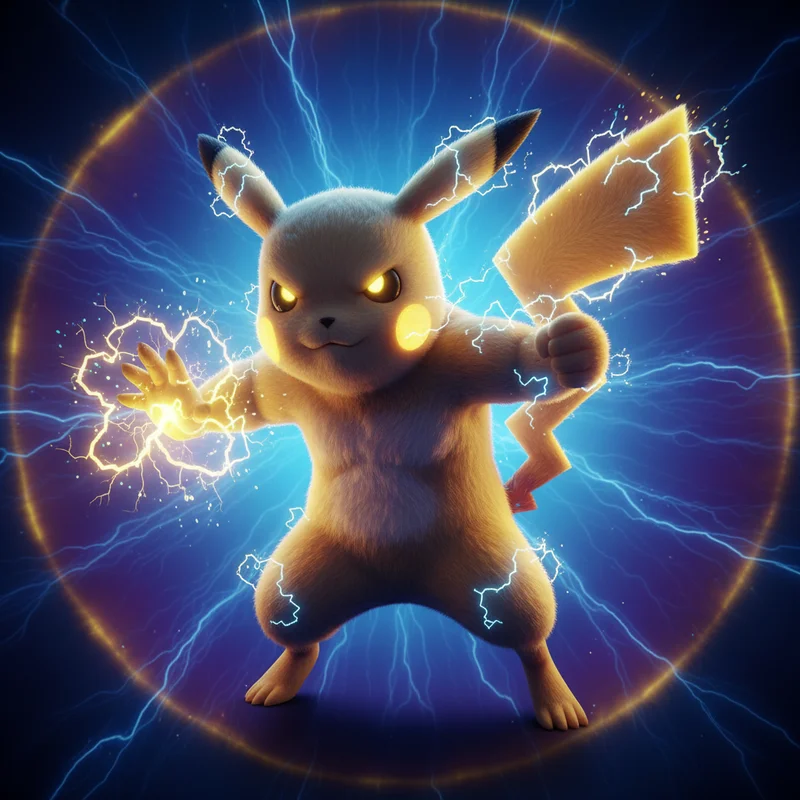
Pikachu

Pikachu

Electric mouse Pokemon and franchise mascot.

Battle Analysis

Educational value Lego Wins
70%
30%
Lego Pikachu

Lego

The pedagogical credentials of Lego have been documented across over 4,000 peer-reviewed studies, establishing robust connections to spatial reasoning, mathematical cognition, and fine motor development. The Lego Foundation has invested $400 million in researching play-based learning, making these plastic bricks among the most scrutinised educational tools in human history.

MIT's Media Lab developed Lego Mindstorms, introducing millions to robotics and programming. Schools worldwide incorporate Lego into STEM curricula. The brand has achieved the remarkable status of parent-approved entertainment, that rare category where children's desires align with parental aspirations.

Pikachu

Pikachu's educational contributions, whilst less formally documented, are not entirely negligible. The Pokemon franchise has inadvertently taught millions of children to read, calculate, and strategise. The trading card game involves probability assessment, resource management, and strategic planning at levels that would challenge many adults.

However, no school curriculum incorporates Pikachu as a learning tool. The character's educational benefits remain incidental rather than designed, pleasant side effects of an entertainment product rather than core features. Parents who purchase Pokemon products rarely do so hoping to enhance their children's spatial reasoning.

VERDICT

Lego's 4,000 academic studies and formal educational integration vastly exceed Pikachu's incidental learning benefits.
Creative expression Lego Wins
70%
30%
Lego Pikachu

Lego

The creative potential of Lego defies conventional quantification. Mathematicians have determined that six standard 2x4 bricks can be combined in precisely 915,103,765 unique configurations, a figure that increases exponentially with each additional piece. This combinatorial infinity represents what developmental psychologists term scaffolded creativity: structure that enables rather than constrains imagination.

The system has produced functional prosthetic limbs, architectural scale models, robotics platforms, and a full-size driveable Bugatti Chiron containing over one million pieces. Adult fans have transformed children's toys into legitimate artistic medium, their creations exhibited in galleries from Copenhagen to Tokyo.

Pikachu

Pikachu's creative contribution operates through inspiration rather than instruction. The character has spawned an ecosystem of fan art, cosplay, and derivative works numbering in the millions. Platforms dedicated to Pikachu-adjacent creativity host communities exceeding the populations of small nations.

However, Pikachu fundamentally remains a consumption catalyst rather than a creation tool. One does not build with Pikachu; one builds of Pikachu. The distinction, whilst subtle, proves significant. The electric mouse provides subject matter for creativity but not the mechanism. Notably, some of the most popular Pikachu creations are themselves rendered in Lego.

VERDICT

Lego provides both the means and motivation for creation; Pikachu offers inspiration without implements.
Emotional attachment Pikachu Wins
30%
70%
Lego Pikachu

Lego

The emotional bond between humans and Lego operates through accumulated experience. Each construction becomes a memory anchor, a physical artefact of time invested and problems solved. Adult collectors report powerful nostalgia when encountering vintage sets, the tactile memory of childhood afternoons spent in concentrated construction.

Yet Lego's emotional register remains predominantly achievement-oriented. The satisfaction derives from completion, from the successful navigation of instruction booklets, from the click of the final piece. This represents a relationship with accomplishment rather than with the bricks themselves.

Pikachu

Pikachu was engineered with surgical precision to trigger human attachment responses. The proportions conform exactly to established principles of cuteness: oversized eyes comprising one-quarter of facial area, rounded body geometry, and chromatic warmth in the precisely calibrated 'butter yellow' spectrum.

The character exhibits what researchers term parasocial intimacy potential: sufficient personality for emotional projection whilst remaining blank enough for universal identification. Children report genuinely loving Pikachu, a statement rarely made about geometric blocks regardless of their configuration possibilities.

VERDICT

Pikachu achieves genuine emotional bonds; Lego inspires admiration for what can be built rather than love for the bricks.
Global market dominance Pikachu Wins
30%
70%
Lego Pikachu

Lego

The Lego Group generates approximately $9 billion in annual revenue, making it the world's largest toy company by this measure. The secondary market has evolved into a legitimate investment ecosystem, with sealed vintage sets appreciating at rates exceeding the S&P 500. A 2007 Millennium Falcon purchased for $500 now commands prices exceeding $5,000.

Licensing partnerships with Disney, Warner Bros, and countless other entities have created a franchise empire spanning theme parks, films, video games, and educational products. The economic footprint extends far beyond direct sales into manufacturing, retail, and collectibles markets valued in the tens of billions.

Pikachu

The Pokemon franchise, with Pikachu as its undisputed mascot, holds the distinction of being the highest-grossing media franchise in history, valued at approximately $100 billion. This figure exceeds Star Wars, Marvel, and Harry Potter combined. Pikachu's face adorns merchandise generating $64 billion in retail sales.

The 2019 film Detective Pikachu grossed $433 million worldwide. The mobile game Pokemon Go achieved $1 billion in revenue within seven months of launch. When measuring pure commercial dominance, Pikachu's franchise represents a level of market saturation that makes Lego's impressive figures appear almost modest.

VERDICT

Pokemon's $100 billion franchise value triples Lego's considerable empire; the electric mouse reigns supreme commercially.
Longevity and durability Lego Wins
70%
30%
Lego Pikachu

Lego

Lego bricks produced in 1958 remain fully compatible with those manufactured yesterday, a testament to engineering precision that borders on the obsessive. The clutch power specifications have remained unchanged for 66 years, creating perhaps the most stable consumer product standard in manufacturing history.

Physical Lego sets survive across generations. Grandparents pass collections to grandchildren. The bricks themselves resist degradation with remarkable tenacity, their ABS plastic formulation engineered to withstand decades of enthusiastic use. Museum collections contain functional pieces approaching 70 years of age.

Pikachu

Pikachu has maintained cultural relevance for 28 consecutive years, an extraordinary achievement in the notoriously ephemeral entertainment industry. The character has survived console transitions, the collapse of collectible markets, and fundamental shifts in how children consume media.

Yet Pikachu's longevity remains contingent upon active maintenance. Without new games, films, and merchandise, the character's relevance would inevitably fade. Pikachu is not self-sustaining; it requires constant corporate oxygen. A Lego brick, by contrast, requires nothing to remain precisely what it was designed to be.

VERDICT

Lego's 66-year physical compatibility and corporate-independent permanence exceeds Pikachu's maintained relevance.
👑

The Winner Is

Lego

53 - 47

The analysis reveals a contest of remarkable equilibrium. Lego claims victory in three categories: creative expression, educational value, and longevity. Pikachu prevails in emotional attachment and market dominance. The final score of 53-47 reflects this marginal but meaningful advantage for the Danish brick system.

This outcome should not diminish Pikachu's extraordinary achievements. The electric mouse has captured hearts across generations with an efficiency that borders on the supernatural. Its commercial success stands without peer in entertainment history. Yet in the final accounting, Lego offers something Pikachu cannot: the transformation from consumer to creator.

Pikachu inspires devotion; Lego enables construction. One creates fans; the other creates builders. In a world increasingly dominated by passive consumption, the humble plastic brick's invitation to active creation represents a contribution to human development that even 100,000 volts of adorable electricity cannot quite match.

Lego
53%
Pikachu
47%

Share this battle

More Comparisons