
Topic Battle

Where Everything Fights Everything

Lego

Lego

Interlocking plastic bricks and barefoot landmines.

VS
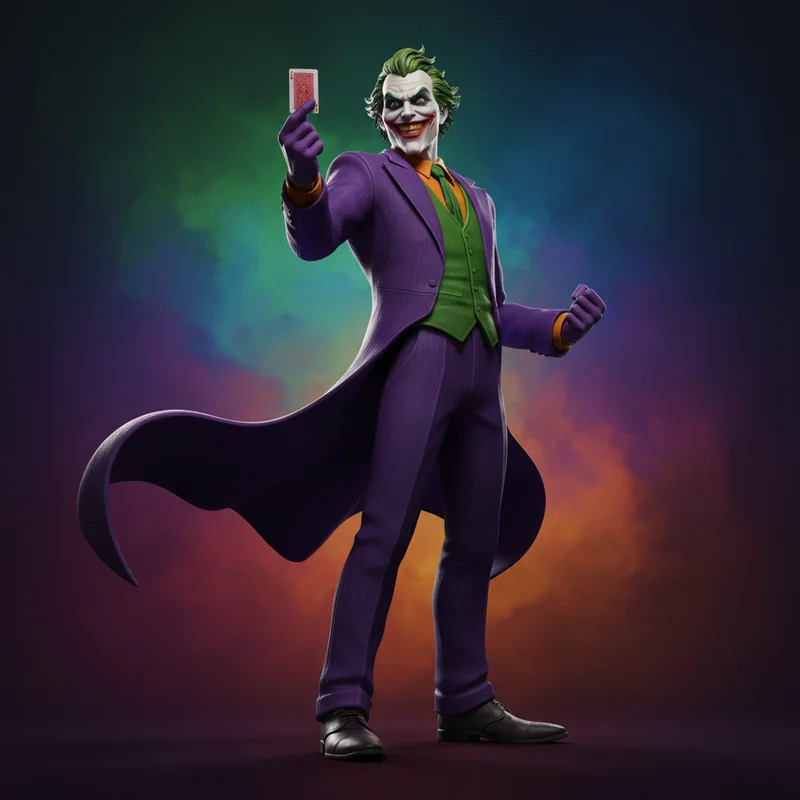
The Joker

The Joker

Chaos-loving clown prince of crime.

Battle Analysis

Global reach Lego Wins
70%
30%
Lego The Joker

Lego

Lego maintains physical retail presence in over 130 countries, with Legoland theme parks operating on four continents. The company's licensing agreements with Star Wars, Harry Potter, Marvel, and DC have created products that bridge virtually every major entertainment franchise. Annual revenue exceeds $8 billion, making Lego the world's largest toy company by revenue.

The educational division, Lego Education, operates programmes in schools across 85 countries, introducing millions of children annually to STEM concepts through brick-based learning. The brand recognition approaches universal status in developed nations.

The Joker

The Joker's global reach operates through media penetration rather than retail presence. The 2019 film Joker grossed over $1 billion worldwide, becoming the first R-rated film to achieve this milestone. The character appears in video games, animated series, and merchandise sold globally, though his presence requires no dedicated retail infrastructure.

His image has been appropriated by protest movements across the globe, from Hong Kong to Lebanon, demonstrating a symbolic resonance that transcends entertainment contexts. However, this reach remains primarily cultural rather than commercial, dependent upon the infrastructure of other media companies.

VERDICT

Lego's autonomous global infrastructure surpasses the Joker's dependent media distribution channels.
Accessibility Lego Wins
70%
30%
Lego The Joker

Lego

Lego's accessibility spans economic, physical, and cognitive dimensions. Entry-level sets retail for under ten pounds, whilst elaborate collector editions can exceed five hundred. This price range accommodates virtually every budget level. The bricks require no batteries, no screens, no network connections; they function identically in remote villages and metropolitan centres.

Age ranges extend from Duplo sets designed for eighteen-month-old children to complex Technic models intended for adults. The universal language of the brick transcends literacy requirements; one need not read to build. Physical accessibility has been enhanced through partnerships with organisations serving disabled communities.

The Joker

The Joker's accessibility is mediated entirely through secondary platforms. To encounter him requires access to cinemas, television broadcasts, comic book retailers, or streaming services. His most celebrated appearances carry age restrictions that exclude younger audiences. The psychological intensity of many Joker narratives renders them unsuitable for children, limiting his demographic reach.

The character's complexity also demands certain interpretive sophistication. His philosophy is not self-explanatory; appreciation requires engagement with questions of morality, society, and meaning that younger or less philosophically inclined audiences may find inaccessible.

VERDICT

Lego's universal accessibility across ages, incomes, and abilities far exceeds the Joker's mediated availability.
Cultural longevity Lego Wins
70%
30%
Lego The Joker

Lego

Lego's ninety-two years of continuous operation represents a remarkable feat of cultural endurance. The company survived near-bankruptcy in the early 2000s, adapted to digital competition through strategic licensing agreements, and emerged stronger than ever. The brick has achieved transgenerational transmission; grandparents who played with Lego in the 1960s now purchase sets for grandchildren who will, in turn, pass the same bricks to future generations.

The secondary market for vintage Lego sets has achieved the sophistication of fine art collecting, with rare pieces commanding prices that would startle the uninitiated. A sealed 1978 Lego Castle set recently sold for over $10,000 at auction, whilst certain minifigures fetch hundreds of pounds apiece.

The Joker

The Joker first appeared in Batman #1 in 1940, making him eighty-five years old as a cultural entity. Unlike Lego's consistent identity, the Joker has been continuously reinvented, from campy television villain to anarchist philosopher to origin-story protagonist. This very adaptability has ensured his survival; he is not one character but an archetype that each generation reshapes to reflect its particular anxieties.

Heath Ledger's portrayal earned a posthumous Academy Award; Joaquin Phoenix's interpretation won another. No fictional villain has achieved such critical recognition across multiple performances. The character has transcended his comic book origins to become a genuine cultural symbol of irreducible chaos.

VERDICT

Seven additional years of existence and consistent identity across generations give Lego the longevity advantage.
Philosophical depth The Joker Wins
30%
70%
Lego The Joker

Lego

Lego embodies the Enlightenment ideal of rational progress. Through systematic application of standardised components, complex structures emerge from simple elements. The instruction manual serves as sacred text, guiding the faithful builder through sequential steps toward predetermined glory. Yet the medium also permits free play, the rejection of instructions in favour of personal vision.

This duality reflects profound questions about human creativity: are we makers following cosmic blueprints, or artists imposing our own designs upon formless matter? Lego accommodates both philosophies within its modular embrace.

The Joker

The Joker represents existentialist philosophy rendered in greasepaint. His famous monologues articulate a coherent worldview: that meaning is human invention, morality is collective hallucination, and the most honest response to existence is laughter at its absurdity. He serves as fiction's most articulate nihilist, yet his very commitment to chaos suggests a perverse form of meaning-making.

Academic papers analysing the Joker's philosophy fill scholarly journals. His challenge to Batman represents the eternal debate between order and freedom, between systems that protect and systems that constrain. He asks questions that comfortable societies prefer to leave unasked.

VERDICT

The Joker's explicit philosophical provocations achieve depths that Lego's implicit worldview cannot match.
Transformative power The Joker Wins
30%
70%
Lego The Joker

Lego

Lego's transformative capacity operates through additive construction. From a formless pile of bricks emerges the Millennium Falcon, the Eiffel Tower, or entirely original creations limited only by the builder's imagination. This transformation is fundamentally positive: raw materials become meaningful structures, chaos becomes order, potential becomes actual.

The therapeutic applications of Lego have been extensively documented. Occupational therapists employ it for fine motor skill development; psychologists use it to help patients externalise internal states. The act of building provides measurable stress reduction and cognitive engagement benefits.

The Joker

The Joker's transformative power operates through revelation rather than construction. He does not build new orders; he exposes the fragility of existing ones. His transformation of Harvey Dent from Gotham's White Knight to Two-Face represents perhaps fiction's most devastating illustration of how quickly heroes can become villains when pushed beyond their limits.

His philosophy argues that civilisation itself is a shared delusion, one bad day away from collapse. This transformative vision operates psychologically rather than physically, changing not the world but our understanding of its stability. He transforms certainty into doubt, order into recognised chaos.

VERDICT

The Joker's psychological transformations prove more profound than Lego's physical constructions.
👑

The Winner Is

Lego

55 - 45

This analysis has revealed a confrontation between two fundamentally opposing forces in human culture. Lego represents the builder's impulse, the satisfaction of systematic creation, the joy of watching order emerge from chaos. The Joker represents the critic's insight, the recognition that all order is temporary, the uncomfortable truth that destruction requires no instruction manual.

By a margin of 55 to 45, Lego emerges victorious, its advantages in longevity, global reach, and universal accessibility outweighing the Joker's superior philosophical depth and transformative psychological power. Yet this victory should not be mistaken for philosophical triumph; the Joker would doubtless find the entire exercise of comparative ranking deliciously absurd, further proof that humans desperately seek order even where none exists.

The Danish brick system prevails through its sheer constructive ubiquity, its presence in homes across the globe, its capacity to engage every age and ability level. The Joker remains a potent cultural force, but one that operates within the entertainment sphere rather than the daily lived experience of billions.

Lego
55%
The Joker
45%

Share this battle

More Comparisons