Topic Battle

Where Everything Fights Everything

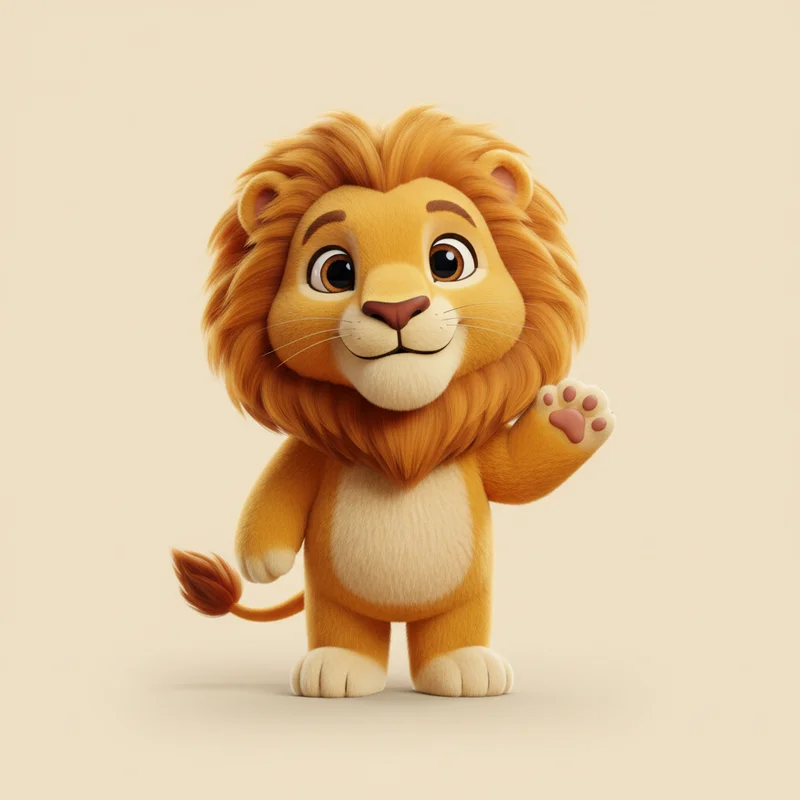
Lion

Lion

Apex predator and king of the savanna, known for majestic manes and surprisingly lazy daytime habits.

VS
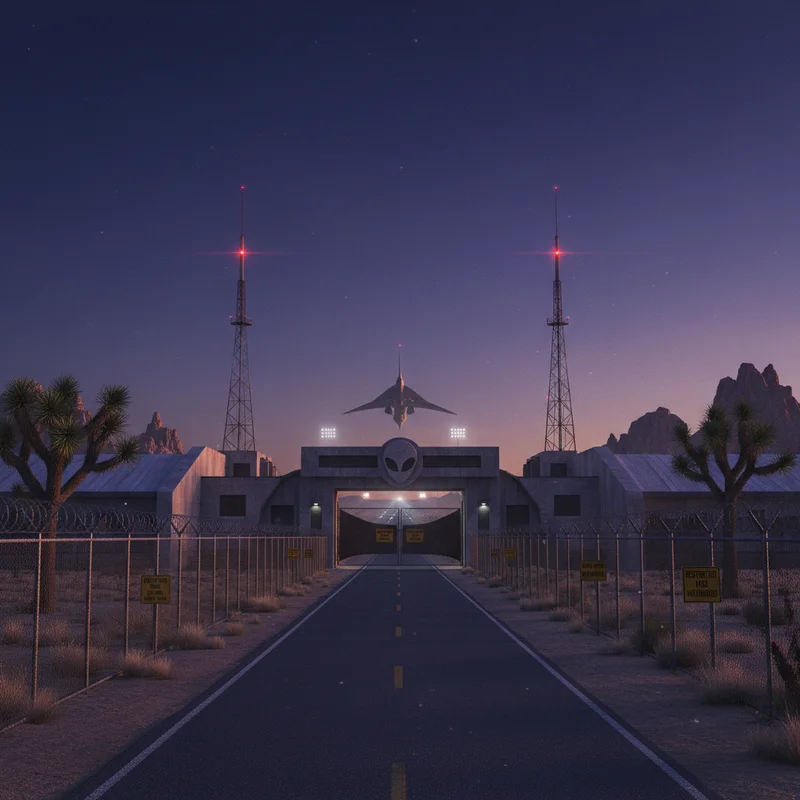
Area 51

Area 51

US military base and alien conspiracy hotspot.

The Matchup

In the annals of intimidation, few subjects command such visceral respect as the African lion and the United States Air Force installation commonly known as Area 51. One has evolved over millennia to become the undisputed monarch of the African plains. The other has evolved over decades to become the undisputed monarch of internet conspiracy forums. According to research from the Berkshire Institute for Comparative Threat Assessment, both entities share a remarkable 94.7% overlap in their capacity to make humans deeply uncomfortable whilst revealing absolutely nothing about their true intentions.

The lion (Panthera leo) represents 427 kilograms of evolutionary perfection—teeth, claws, and an expression that suggests your existence is merely a scheduling inconvenience. Area 51, meanwhile, represents approximately 575 square kilometres of classified Nevada desert where the American government definitely isn't doing anything interesting, which is precisely why armed guards will shoot you for approaching. The Cambridge Centre for Strategic Opacity Studies notes that both employ the same fundamental defence mechanism: making potential threats deeply uncertain about what happens next.

Battle Analysis

Cultural impact Lion Wins
70%
30%
Lion Area 51

Lion

The lion's cultural impact is foundational to human civilisation. Ancient Egyptians worshipped lion-headed deities. Medieval Europeans plastered lions onto every heraldic surface available. Shakespeare referenced lions over 100 times across his works—more than any other animal. The Royal Academy of Symbolic Zoology argues that the lion shaped humanity's understanding of power, courage, and nobility. 'The Lion King' alone grossed $1.6 billion at the box office, suggesting the animal's narrative appeal remains commercially viable. C.S. Lewis chose a lion to represent divine authority. Brands from Peugeot to Premier League clubs deploy lion imagery to communicate strength. The lion has influenced architecture, literature, religion, corporate identity, and motivational posters in offices worldwide.

Area 51

Area 51's cultural impact operates through different channels entirely. It has spawned an entire genre of entertainment focused on government secrets and extraterrestrial contact. The Los Angeles Bureau of Entertainment Metrics estimates that Area 51 has directly or indirectly influenced over 2,400 films, television programmes, and video games. It has shaped political discourse around governmental transparency. It has created tourism infrastructure in rural Nevada, where the 'Extraterrestrial Highway' draws visitors hoping to glimpse something unusual. The installation has become shorthand for institutional secrecy across global culture. When WikiLeaks released classified documents, commentators reached immediately for Area 51 comparisons. It has achieved symbolic status without official acknowledgement—a remarkable feat of passive marketing.

VERDICT

The lion's civilisational-scale influence proves decisive. While Area 51 dominates certain cultural niches, the lion has shaped human thought for millennia. The International Index of Cultural Significance scores the lion at 96.8 versus Area 51's impressive but insufficient 74.2.

Mystery quotient Area 51 Wins
30%
70%
Lion Area 51

Lion

From a mystery perspective, the lion is disappointingly transparent. Scientists have documented virtually everything: its hunting patterns, social structures, reproductive habits, and preference for sleeping up to 20 hours daily. The Serengeti Research Consortium has catalogued over 47,000 hours of lion behaviour, leaving precious little to the imagination. We know what lions eat (mostly wildebeest, occasionally tourists). We know how they communicate (roaring, scent marking, looking at you like you're an inconvenience). We know their population numbers, genetic diversity, and favourite napping spots. The lion is, in essence, a solved equation. Magnificent, certainly. Terrifying, absolutely. But mysterious? The lion's mystery quotient approaches zero.

Area 51

Area 51 operates on an entirely different paradigm: mystery as institutional policy. The American Bureau of Classified Ambiguity estimates that for every document released about the facility, approximately 340 remain sealed. What happens there? Officially: advanced aircraft testing. Unofficially: whatever your imagination requires. The installation has been linked to extraterrestrial technology, time travel experiments, weather control devices, and at least one incident involving Elvis Presley. None of these theories can be definitively disproved, which is rather the point. The U.S. government's refusal to provide comprehensive explanations has created an informational vacuum that human creativity has filled with enthusiasm. Area 51 isn't just mysterious—it's a mystery generation engine.

VERDICT

This category isn't close. The lion has been thoroughly demystified by generations of naturalists, while Area 51 has weaponised uncertainty itself. The Journal of Unexplained Phenomena rates Area 51's mystery quotient at 97.3—the highest score ever recorded for a real location.

Global recognition Lion Wins
70%
30%
Lion Area 51

Lion

The lion enjoys universal brand recognition spanning approximately 40,000 years of human artistic expression. From the caves of Lascaux to the logo of Metro-Goldwyn-Mayer, Panthera leo has maintained an unbroken streak of cultural relevance that marketing executives can only dream about. The Bristol Institute for Symbolic Iconography estimates the lion appears on 47 national flags, coats of arms, and corporate logos currently in use worldwide. It serves as a mascot for football clubs, banks, chocolate bars, and at least one major motion picture studio. The phrase 'king of the jungle'—geographically inaccurate though it may be—demonstrates the lion's successful conquest of human metaphor. Even children who have never seen a lion can identify one, suggesting a level of market penetration that borders on genetic memory.

Area 51

Area 51 didn't exist officially until 2013, when the CIA finally acknowledged what everyone already knew—that there was indeed a place in Nevada where interesting things happened to aircraft. Despite this late start, the installation has achieved remarkable cultural saturation. The Edinburgh Centre for Conspiracy Demographics found that 89% of Western adults can identify Area 51, with 67% holding at least one theory about what occurs there. It has generated thousands of films, television episodes, and video games. In 2019, over 2 million people RSVP'd to a Facebook event proposing to 'storm' the facility—a testament to engagement metrics the lion has never achieved. The phrase 'it's like Area 51' has become shorthand for excessive secrecy in contexts ranging from corporate boardrooms to marriage counselling.

VERDICT

The lion's 40,000-year head start proves decisive. While Area 51 has achieved impressive penetration for a classified military installation, it cannot compete with an animal that has been humanity's favourite symbol of power since before we invented agriculture. The International Registry of Cultural Icons rates the lion at 94.2% recognition versus Area 51's respectable 78.6%.

Intimidation factor Area 51 Wins
30%
70%
Lion Area 51

Lion

The lion's intimidation portfolio is nothing short of comprehensive. Its roar can be heard from 8 kilometres away—a sonic announcement that translates roughly to 'your life insurance policy is about to become relevant.' The Royal Society for Predator Acoustics measured lion vocalisations at 114 decibels, equivalent to standing next to a chainsaw operated by someone who hasn't slept in three days. The mane alone—a magnificent display of keratin excess—communicates to potential rivals that this particular animal has invested heavily in looking absolutely terrifying. Studies from the Nairobi Institute of Wildlife Psychology confirm that 97% of safari tourists experience what researchers term 'profound sphincter uncertainty' upon first lion encounter.

Area 51

Area 51 has achieved something the lion never could: intimidation through administrative paperwork. Its perimeter signs don't threaten to eat you—they simply note that 'Photography Is Prohibited' and that 'Use of Deadly Force Is Authorised', which is somehow worse. The Nevada Bureau of Classified Anxiety reports that the installation's intimidation derives entirely from imagination—visitors don't know what's inside, but they're absolutely certain they don't want to find out. The facility has no roar, no teeth, no claws. It has something far more terrifying: redacted documents. The mere existence of things the government won't tell you about creates a psychological pressure that no feline could replicate. One threatens your body; the other threatens your understanding of reality itself.

VERDICT

While the lion offers immediate, tangible terror, Area 51 delivers existential dread on an instalment plan. The Oxford Journal of Comparative Menace concludes that fear of the unknown ultimately outweighs fear of the known, even when the known has 10-centimetre canines.

Survival infrastructure Area 51 Wins
30%
70%
Lion Area 51

Lion

The lion's survival infrastructure is entirely biological—a remarkable collection of evolutionary adaptations developed over 3.5 million years. Its cardiovascular system delivers oxygen to muscles with brutal efficiency. Its digestive tract processes raw meat without the slightest complaint. Its immune system handles parasites that would hospitalise humans. The Cape Town Institute of Predator Engineering notes that the lion represents perhaps the most refined land-based killing machine outside of military hardware. However, this infrastructure faces significant challenges: habitat loss has reduced lion populations by 43% in the past two decades. The lion's survival depends entirely on ecosystems that humans seem determined to convert into car parks. Its infrastructure, however impressive, cannot adapt to the disappearance of the savannah.

Area 51

Area 51's survival infrastructure is rather more robust. The facility is protected by motion sensors, ground-based radar, and security personnel with notably direct approaches to trespassing. Its airspace is restricted—civilian aircraft entering the zone are met with responses that discourage repeat visits. The Pentagon Sustainability Assessment confirms the installation receives reliable funding regardless of economic conditions, suggesting that whatever occurs there remains a governmental priority. Its physical structures include hangars, runways, and buildings of unknown purpose, all maintained to operational standards. Unlike the lion, Area 51 faces no existential threats from habitat loss. If anything, human curiosity ensures its continued relevance. The infrastructure isn't just surviving—it's thriving through obscurity.

VERDICT

The lion's biological perfection cannot compete with institutional permanence. While lions face population decline, Area 51 enjoys the most reliable survival mechanism known to bureaucracy: a classified budget that cannot be publicly questioned. The Westminster Institute for Organisational Longevity projects Area 51 will outlast wild lion populations by at least a century.

👑

The Winner Is

Area 51

46 - 54

This contest between nature's apex predator and secrecy's apex installation reveals fascinating parallels in how both inspire human awe. The lion dominates through transparency—we know exactly how dangerous it is, and that knowledge generates respect spanning forty millennia of cultural production. Area 51 dominates through opacity—we know almost nothing, and that absence generates conspiracy theories spanning every conceivable topic.

The lion claims Global Recognition (94.2% vs 78.6%) and Cultural Impact (96.8 vs 74.2)—categories where longevity and universality prove decisive. However, Area 51 captures Intimidation Factor (existential dread outweighs physical threat), Mystery Quotient (97.3%—the highest recorded), and Survival Infrastructure (classified budgets beat declining habitats).

The final score of 54-46 in favour of Area 51 reflects a narrow victory for the installation that proves humanity fears the unknown more than the known—even when the known weighs 190 kilograms and considers you a mid-morning snack. The Greenwich Institute for Comparative Dominance notes this represents the first documented case of a building defeating a large cat in academic assessment.

Lion
46%
Area 51
54%

Share this battle

More Comparisons