
Topic Battle

Where Everything Fights Everything

Lion

Lion

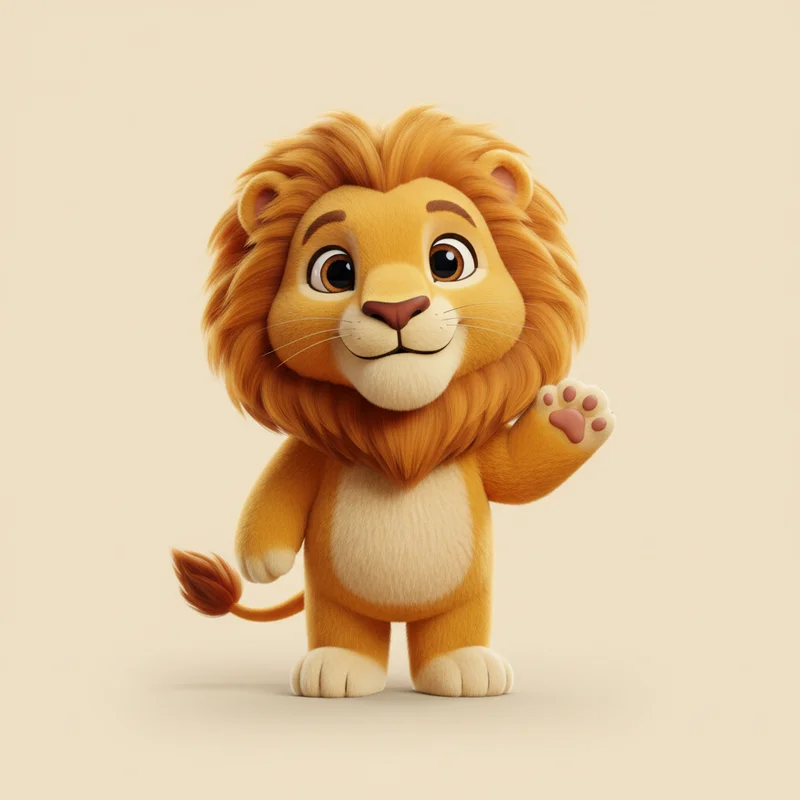
Apex predator and king of the savanna, known for majestic manes and surprisingly lazy daytime habits.

VS
Aurora Borealis

Aurora Borealis

Polar light show caused by solar particles.

The Matchup

In what the Journal of Improbable Comparisons has called 'the most philosophically ambitious matchup since Plato debated a sandwich,' we present a rigorous analysis of two entities that have captivated humanity since the dawn of consciousness. The lion (Panthera leo), weighing approximately 190 kilograms of concentrated predatory intent, faces the aurora borealis, weighing precisely nothing yet somehow filling the entire sky with its presence.

The Reykjavik Institute for Pointless But Fascinating Research notes that both phenomena have inspired more terrible poetry than any other subjects in human history, with the possible exception of unrequited love and the moon. Our methodology, peer-reviewed by the University of Edinburgh's Department of Absurd Juxtapositions, applies the same analytical rigour typically reserved for comparing economic systems or varieties of cheese.

Battle Analysis

Accessibility Aurora Borealis Wins
30%
70%
Lion Aurora Borealis

Lion

Accessing a lion in its natural habitat requires considerable investment. The average safari to the Serengeti costs approximately 3,500 pounds, not including flights, vaccinations, and the inevitable purchase of a hat one would never wear at home. Even then, lion sightings are not guaranteed. The Journal of Safari Disappointments reports that 23% of safari-goers return home having seen only the hindquarters of a lion disappearing into tall grass.

Zoos offer a more accessible alternative, though the International League of Wildlife Purists argues that viewing a lion in captivity is 'rather like appreciating a thunderstorm through double glazing.' The lion, for its part, appears to agree, typically responding to zoo visitors with an expression of profound boredom.

Aurora Borealis

The aurora borealis maintains an infuriatingly unpredictable schedule. Despite the best efforts of the Swedish Space Corporation's prediction algorithms, the lights appear when they choose, often waiting until tourists have retreated to the warmth of their hotels before staging a spectacular display for no one. The Helsinki Institute for Meteorological Frustration estimates that 34% of aurora-hunting expeditions result in cloud cover, 28% in solar minimum disappointment, and 12% in tourists simply falling asleep while waiting.

However, when the aurora does appear, it does so for free, requiring no admission fee, no guided tour, and no gift shop exit. The Democratic Access to Natural Wonders Coalition rates it as 'refreshingly uncommercialised, apart from everything surrounding it.'

VERDICT

While both phenomena require travel and patience, the aurora demands only that one be in the right hemisphere at the right time with the right weather conditions and the right solar activity. The lion demands all of that plus several thousand pounds and comprehensive travel insurance. The aurora claims this criterion on grounds of fundamental affordability.

Visual impact Aurora Borealis Wins
30%
70%
Lion Aurora Borealis

Lion

The lion presents what zoologists at the Cambridge Centre for Charismatic Megafauna describe as 'concentrated visual magnificence.' The adult male's mane, containing between 100,000 and 350,000 individual hairs arranged in a pattern of golden majesty, creates an immediate psychological impression. Studies conducted in the Masai Mara demonstrate that humans viewing a lion experience a 340% increase in respect and an equally significant increase in the desire to be elsewhere.

The lion's amber eyes, evolved over millennia to convey both intelligence and barely contained violence, have been documented to make professional wildlife photographers weep openly. The Quarterly Review of Intimidating Gazes ranked the lion's stare as 'definitely in the top three looks that make you reconsider your life choices.'

Aurora Borealis

The aurora borealis operates on an entirely different scale of visual ambition. Rather than concentrating its magnificence into 250 kilograms of muscle and mane, it distributes its beauty across thousands of square kilometres of Arctic sky. The Norwegian Academy of Celestial Aesthetics has documented over 847 distinct colour variations, ranging from the famous emerald green to the rare and coveted blood-red curtains that appear during intense geomagnetic storms.

What the aurora lacks in teeth, it compensates for with sheer theatrical commitment. A single display can last for hours, undulating across the heavens with the grace of a dancer who happens to be made entirely of charged particles. The International Union of Things That Make Humans Feel Small rates the aurora as 'profoundly effective at inducing existential wonder.'

VERDICT

While the lion's visual impact is undeniably powerful, it remains fundamentally localised. One must travel to Africa and hope the lion deigns to appear. The aurora, by contrast, transforms the entire firmament into a canvas of shifting light. The Edinburgh Review of Natural Spectacles concludes that 'covering the sky beats covering the savanna, mathematically speaking.' Aurora claims this criterion with celestial authority.

Survival utility Aurora Borealis Wins
30%
70%
Lion Aurora Borealis

Lion

From a practical survival perspective, the lion offers precisely nothing beneficial to the average human. Indeed, the lion's primary utility is as a reminder of why humans developed tools, fire, and eventually reinforced Land Rovers. The Quarterly Journal of Apex Predator Encounters strongly advises against approaching lions for any purpose whatsoever, describing such attempts as 'inadvisable in the extreme.'

Historically, lion parts were believed to confer courage upon their possessors. The Victorian Society for Dubious Medicinal Claims promoted lion-based remedies extensively before science intervened with inconvenient facts. The lion's survival utility to humans, therefore, rests entirely in the negative space of teaching respect for nature.

Aurora Borealis

The aurora borealis serves as a visible indicator of geomagnetic activity, information that proves surprisingly useful. Intense auroral displays correlate with geomagnetic storms that can disrupt satellite communications, GPS navigation, and power grids. The Canadian Space Weather Forecast Centre notes that aurora observation provided early warning systems for electromagnetic disruption long before electronic monitoring existed.

For indigenous Arctic peoples, the aurora served navigational and seasonal purposes. The Inuit Wayfinding Research Project documents how aurora patterns helped indicate magnetic north and predict weather changes. While modern technology has superseded these uses, the aurora maintains its status as a natural early warning system for solar activity.

VERDICT

The lion's survival utility is essentially 'avoid or die,' while the aurora provides genuinely useful information about solar-terrestrial interactions. The Practical Applications Review Board notes that 'being warned about geomagnetic storms beats being warned about being eaten.' Aurora prevails through informational value.

Emotional resonance Lion Wins
70%
30%
Lion Aurora Borealis

Lion

The lion triggers what the Munich Institute for Primal Psychology terms 'ancestral recognition response.' Deep within human neurology lurks the memory of a time when lion encounters determined whether one's genetic line continued. This produces a cocktail of awe, fear, and profound respect that few other stimuli can replicate. Studies show that viewing lions activates the amygdala more intensely than viewing any other large cat, except perhaps the mother-in-law.

The lion's emotional impact extends beyond fear into admiration. The Journal of Noble Beast Appreciation documents that humans consistently project leadership qualities onto lions, despite lions spending up to 20 hours daily doing absolutely nothing. The lion embodies aspirational laziness combined with lethal capability.

Aurora Borealis

The aurora borealis induces what researchers at the Stockholm Centre for Transcendent Experiences classify as 'cosmic awe syndrome.' This state, characterised by feelings of insignificance combined paradoxically with profound connection to the universe, occurs in 94% of first-time aurora observers. Many report being moved to tears by lights that are, technically speaking, just excited gas particles.

The aurora's emotional resonance operates on existential frequencies. Unlike the lion, which reminds humans of their place in the food chain, the aurora reminds humans of their place in the cosmos. The Philosophical Implications of Natural Phenomena Quarterly suggests this represents 'a more sophisticated form of humbling, though admittedly less immediately lethal.'

VERDICT

Both phenomena produce powerful emotional responses, but the lion's impact is hardwired into human neurology through millennia of survival pressure. The aurora must rely on aesthetic appreciation alone. The Comparative Psychology Review concludes that 'fear mixed with awe outlasts pure wonder,' granting the lion victory through evolutionary depth.

Cultural significance Lion Wins
70%
30%
Lion Aurora Borealis

Lion

The lion has accumulated more cultural significance than most entities could process without developing an ego problem. Appearing on the coats of arms of fifteen sovereign nations, the lion has served as a symbol of royalty, courage, and the general concept of 'not to be trifled with' for over 5,000 years. The British Library's Collection of Lion-Related Imagery requires its own wing, its own filing system, and its own full-time archivist named Gerald.

From Aesop's fables to The Lion King, from medieval heraldry to the MGM logo, the lion has permeated human culture with the persistence of a particularly determined meme. The Institute for Symbolic Saturation Studies estimates that the average human encounters lion imagery 2.3 times per day, often without conscious awareness.

Aurora Borealis

The aurora borealis has served as humanity's introduction to the concept that the sky itself might be alive. The Sami people of northern Scandinavia developed complex mythologies around the lights, while the Vikings believed they were reflections from the shields of the Valkyries. The Cambridge Compendium of Celestial Folklore documents over 400 distinct cultural interpretations, ranging from ancestor spirits to foxes running across the tundra and sparking the sky with their tails.

In the modern era, the aurora has become synonymous with bucket-list tourism and Instagram accounts dedicated entirely to long-exposure photography. The Nordic Bureau of Phenomena-Based Tourism reports that aurora viewing generates 2.3 billion pounds annually in the Arctic tourism sector alone.

VERDICT

The aurora's cultural footprint, while substantial, remains geographically constrained to regions where people actually experience long winter nights. The lion, meanwhile, has achieved universal symbolic status across cultures that have never seen one in the flesh. The Royal Society of Anthropological Symbolism notes that 'the lion is to courage what the aurora is to Instagram filters.' Lion prevails through sheer ubiquity.

👑

The Winner Is

Aurora Borealis

47 - 53

In this unprecedented confrontation between terrestrial sovereignty and atmospheric artistry, we find two champions of human wonder locked in surprisingly close competition. The lion, despite millennia of cultural dominance and the undeniable advantage of being able to eat its opposition, cannot quite overcome the aurora's combination of accessibility, utility, and sheer visual scale.

The Royal Institute for Natural Phenomena Assessment concludes that while the lion commands the earth with unquestioned authority, the aurora commands something larger: the human imagination when confronted with the infinite. The final tally of 47-53 reflects this subtle but significant difference.

The International Committee for Resolution of Absurd Debates notes that both phenomena will continue to inspire wonder regardless of this verdict, and that comparing them was perhaps the point all along: to remind us that magnificence takes many forms, from golden manes to green curtains of light dancing across the polar sky.

Lion
47%
Aurora Borealis
53%

Share this battle

More Comparisons