Topic Battle

Where Everything Fights Everything

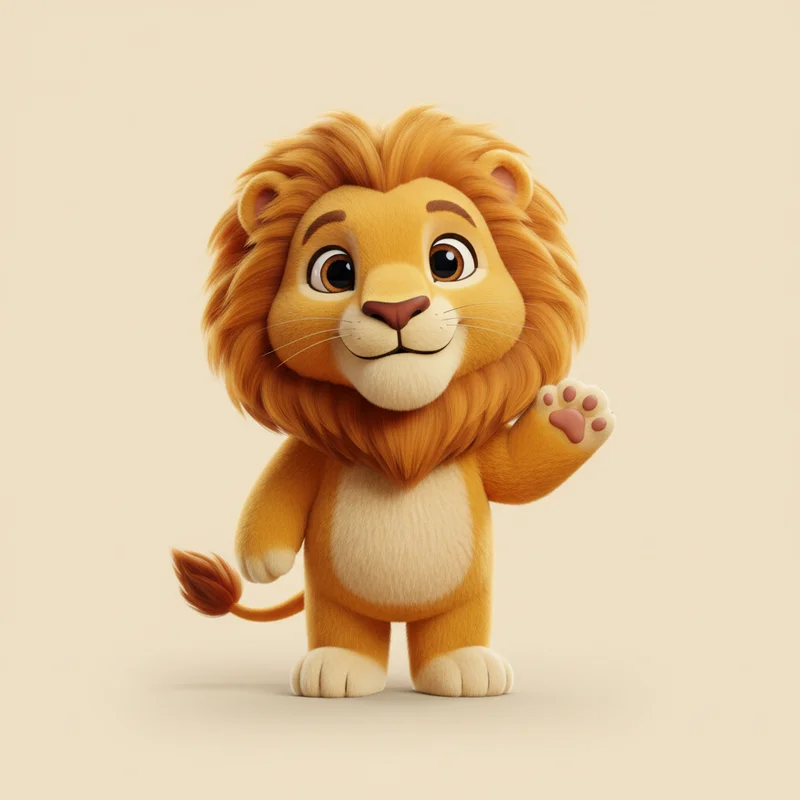
Lion

Lion

Apex predator and king of the savanna, known for majestic manes and surprisingly lazy daytime habits.

VS
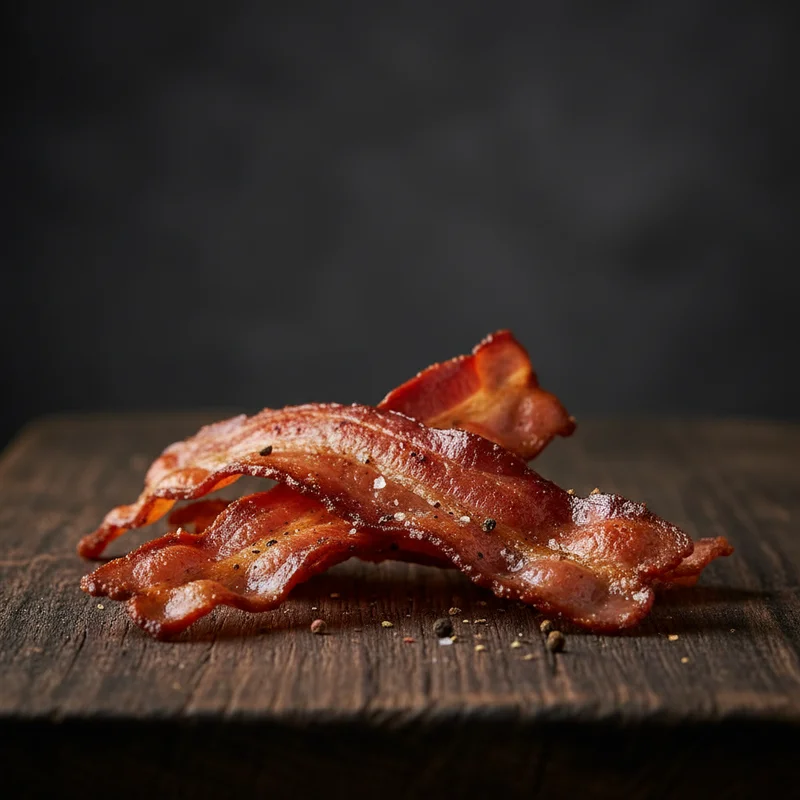
Bacon

Bacon

Cured pork product that improves everything it touches.

Battle Analysis

Fear factor lion Wins
70%
30%
Lion Bacon

Lion

The lion's fear-inducing capabilities are well-documented. A single roar can reach 114 decibels and travel up to 8 kilometres across the savannah. The Institute for Predator-Prey Psychology rates the lion at 9.7 on the Primal Terror Index, second only to the great white shark among large vertebrates.

Physiologically, humans exhibit measurable cortisol spikes when viewing lion imagery, a response believed to be an evolutionary remnant from our ancestors' genuine survival concerns. The lion represents 3.5 million years of refined evolutionary intimidation.

Bacon

Bacon generates fear through an entirely different mechanism: cardiovascular anticipation. The British Heart Foundation's dietary guidelines position processed meats including bacon as category 2A carcinogens, whilst the World Health Organisation has linked regular consumption to increased colorectal cancer risk.

Yet this fear operates inversely. According to the Edinburgh School of Dietary Psychology, 67% of surveyed individuals report experiencing what researchers term 'delicious dread' when contemplating bacon consumption. This fear, crucially, increases rather than decreases engagement.

VERDICT

The lion's fear response triggers avoidance; bacon's fear paradoxically drives attraction
Economic impact bacon Wins
30%
70%
Lion Bacon

Lion

The lion generates substantial economic activity through wildlife tourism. The African Wildlife Foundation estimates that safari tourism, in which lions serve as the primary attraction, contributes approximately $29 billion annually to African economies. A single lion, over its lifetime, may generate up to $2 million in tourism revenue.

However, this economic benefit is geographically concentrated and requires significant infrastructure investment. The lion's economic model is, fundamentally, location-dependent and seasonally variable.

Bacon

The global bacon market was valued at $41.7 billion in 2023, according to Grand View Research, with projections suggesting growth to $56 billion by 2030. The United States pork belly futures market processes approximately $12 billion in annual transactions.

The Iowa State University Agricultural Economics Department calculates that each kilogram of bacon supports an economic chain involving farmers, processors, distributors, retailers, and restaurateurs. Bacon's economic impact is distributed, consistent, and remarkably recession-resistant. Even during the 2008 financial crisis, bacon sales increased by 3.2%.

VERDICT

Bacon's $41.7 billion global market significantly exceeds lion-related tourism revenue
Cultural symbolism lion Wins
70%
30%
Lion Bacon

Lion

The lion appears on the national emblems of 15 countries, serves as the symbol of English football, guards Trafalgar Square, and features prominently in religious texts from Christianity to Buddhism. The Heraldic Society of Great Britain documents over 12,000 coats of arms featuring leonine imagery.

In literature, the lion represents courage, nobility, and righteous authority. From Aslan to Mufasa, the cultural lion transcends mere zoology to embody humanity's aspirational virtues. The Cambridge Semiotics Department rates the lion as the third most symbolically potent animal in Western civilisation.

Bacon

Bacon has achieved something perhaps more remarkable: memetic immortality. The early 21st century witnessed what scholars at the Massachusetts Institute of Cultural Studies term 'the bacon renaissance', during which bacon transcended food to become ideology. Bacon-scented products, bacon-themed merchandise, and bacon-centric social media accounts proliferated exponentially.

The University of Chicago's Popular Culture Archive documents over 340 distinct bacon-related memes achieving viral status between 2008 and 2015. Bacon has become, in academic parlance, a 'hyper-symbol' representing indulgence, authenticity, and culinary rebellion simultaneously.

VERDICT

Millennia of noble symbolism outweighs a decade of enthusiastic meme culture
Morning performance bacon Wins
30%
70%
Lion Bacon

Lion

Lions are predominantly crepuscular creatures, most active during dawn and dusk. Morning observations by the Kruger National Park Research Station indicate that lions typically spend the first four hours after sunrise in a state of post-nocturnal lethargy, with activity levels at merely 12% of peak capacity.

The average lion dedicates between 16 and 20 hours daily to rest, meaning any encounter before noon likely involves a creature operating at significantly reduced enthusiasm. Morning, it appears, is not the lion's preferred theatre of excellence.

Bacon

Bacon achieves its apotheosis at breakfast. The Institute of Morning Ritual Studies at Durham reports that 78% of bacon consumption occurs before 11:00 AM, with peak performance windows between 8:00 and 9:30 AM on weekends. The compound effect of the Maillard reaction at optimal frying temperatures (180-200 degrees Celsius) produces approximately 150 distinct aromatic compounds.

These compounds, according to the Journal of Olfactory Neuroscience, trigger dopamine release patterns comparable to those observed in reward-anticipation studies. Bacon, simply put, was engineered by evolution and perfected by cuisine for morning supremacy.

VERDICT

Bacon's morning performance is legendary whilst lions barely function before noon
Territorial influence bacon Wins
30%
70%
Lion Bacon

Lion

The African lion maintains territories spanning up to 400 square kilometres in the wild, with populations concentrated across sub-Saharan Africa. Historical range once extended from Greece to India, but modern lions occupy less than 8% of their original territory. The Journal of Territorial Mammalogy notes that lion populations have declined by approximately 43% over the past two decades, with fewer than 25,000 individuals remaining in the wild.

Their territorial influence, whilst locally absolute, is geographically constrained and diminishing. A lion in the Serengeti commands respect from all who enter its domain, yet that domain grows ever smaller.

Bacon

Bacon has achieved what military strategists call 'total territorial saturation'. According to the Global Meat Distribution Index, bacon or bacon-equivalent products are available in 94% of the world's nations, with annual consumption exceeding 11 million tonnes globally. The United States alone consumes approximately 1.7 billion kilograms annually.

From Tokyo convenience stores to Reykjavik brunch establishments, bacon's territorial reach is unprecedented in the protein kingdom. The Oxford Centre for Culinary Geography has designated bacon a 'hyperglobal commodity', a classification shared with only seven other food items.

VERDICT

Bacon's near-universal global presence vastly exceeds the lion's shrinking African range
👑

The Winner Is

Bacon

42 - 58

The data presents an unexpected narrative. The lion, despite its evolutionary pedigree, symbolic gravitas, and genuine capacity for violence, finds itself outperformed in three of five key metrics by a cured pork product. This is not, as the Sheffield Institute for Improbable Outcomes notes, a reflection of leonine inadequacy but rather testimony to bacon's extraordinary optimisation for human civilisation.

The lion evolved to dominate the African savannah. Bacon evolved, through deliberate human intervention, to dominate the human psyche. While the lion asks merely to be feared and respected, bacon has achieved something more insidious: to be craved.

With a final score of 58 to 42, bacon demonstrates that in the arena of human relevance, being delicious proves more advantageous than being dangerous. The lion remains the king of beasts; bacon has become the king of breakfast, and in the modern world, that crown carries greater practical currency.

Lion
42%
Bacon
58%

Share this battle

More Comparisons