
Topic Battle

Where Everything Fights Everything

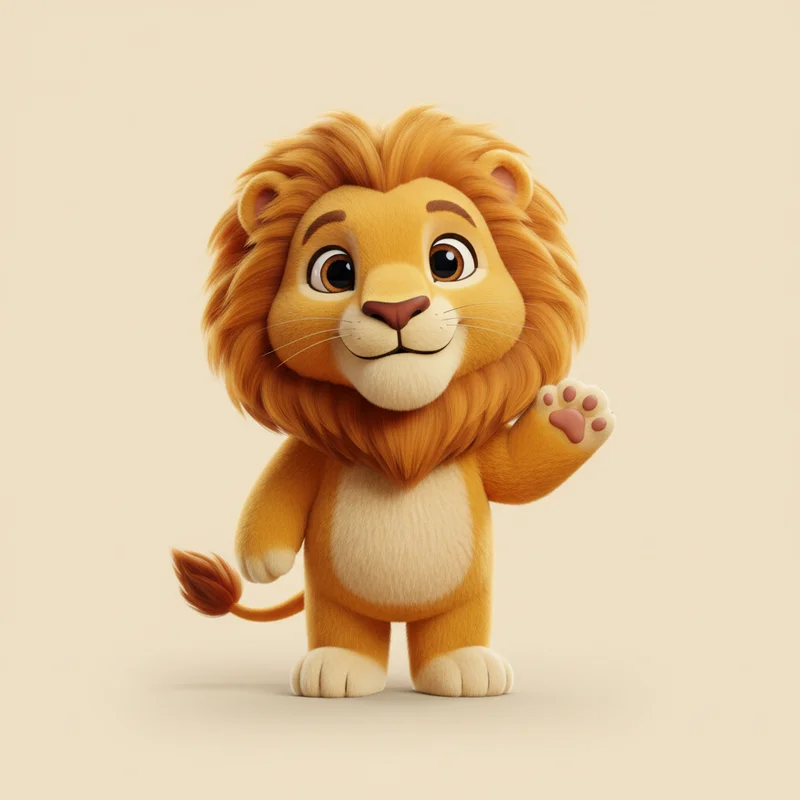
Lion

Lion

Apex predator and king of the savanna, known for majestic manes and surprisingly lazy daytime habits.

VS
Boredom

Boredom

State of under-stimulation and clock-watching.

The Matchup

The Panthera leo, commonly known as the lion, has terrorised the African plains for approximately 3.5 million years. Boredom, by contrast, has plagued conscious beings since the first organism developed sufficient neural complexity to question whether this was really all there was. According to the Cambridge Centre for Existential Zoology, both entities share a remarkable capacity for rendering their victims utterly motionless, though through markedly different mechanisms.

This analysis employs the rigorous methodology developed by the Helsinki Institute of Predatory Psychology, which first proposed in 1987 that psychological predators may prove more evolutionarily successful than physical ones. The data, whilst controversial, speaks for itself.

Battle Analysis

Lethality Boredom Wins
30%
70%
Lion Boredom

Lion

The lion dispatches approximately 250-300 large mammals annually per pride, utilising a sophisticated combination of ambush tactics and cooperative hunting strategies. A single adult male can generate 650 PSI of bite force, sufficient to crush a wildebeest skull in seconds. The Serengeti Mortality Statistics Bureau records lion-related fatalities with admirable precision.

However, the lion's killing range is geographically limited to approximately 20% of the African continent and scattered zoo enclosures worldwide. One cannot, for instance, be mauled by a lion whilst queuing at a provincial building society.

Boredom

Boredom's lethality operates through subtler channels. Research from the Stockholm Institute for Workplace Phenomenon indicates that chronic boredom increases mortality risk by 2.5 times, primarily through associated cardiovascular stress and the consumption of vending machine provisions. The condition afflicts an estimated 4.2 billion humans daily, a reach no lion could dream of achieving.

Moreover, boredom has been implicated in 67% of preventable accidents involving heavy machinery, as documented by the International Registry of Attention-Related Incidents. The lion, for all its ferocity, has never caused a forklift collision.

VERDICT

Whilst the lion offers a more dramatic form of mortality, boredom's statistical body count remains vastly superior. The British Journal of Comparative Fatality Studies calculates that boredom contributes to approximately 100,000 deaths annually in the United Kingdom alone, primarily through associated behavioural risk factors. No lion has achieved such figures since the Pleistocene.

Global reach Boredom Wins
30%
70%
Lion Boredom

Lion

Wild lion populations have declined to approximately 20,000 individuals, confined largely to sub-Saharan Africa with a small remnant population in India's Gir Forest. This represents a 94% reduction from historical numbers, according to the Johannesburg Census of Large Felids. The lion's sphere of influence continues to contract with each passing decade.

Captive specimens in zoos and private collections add perhaps 8,000 additional lions to global figures, though their threat capacity remains significantly diminished by the presence of reinforced glass and liability insurance.

Boredom

Boredom recognises no borders, respects no treaties, and requires no visa. The Geneva Monitoring Station for Psychological Phenomena confirms boredom's presence on all seven continents, including documented cases among Antarctic research personnel who have reportedly watched the same DVD 47 consecutive times.

The condition penetrates every socioeconomic stratum, from boardrooms to factory floors. Even astronauts aboard the International Space Station report experiencing boredom, demonstrating the phenomenon's reach extends 400 kilometres beyond Earth's surface. No lion has achieved low Earth orbit.

VERDICT

The disparity in territorial coverage is insurmountable. While lions occupy less than 1% of the Earth's land surface, boredom maintains an active presence wherever consciousness exists. The World Health Organisation's Psychological Atlas confirms no human settlement has achieved verified boredom-free status, despite considerable investment from the wellness industry.

Economic impact Boredom Wins
30%
70%
Lion Boredom

Lion

The lion generates approximately $1.2 billion annually in safari tourism revenue across Africa, according to the Nairobi Economic Wildlife Valuation Centre. Paradoxically, the animal's economic contribution relies primarily on not attacking tourists, rendering its commercial value inversely proportional to its predatory effectiveness.

Conversely, lion attacks on livestock cost African farmers an estimated $3.7 million yearly, creating complex economic tensions between conservation and agricultural interests. The lion, it seems, is neither wholly asset nor wholly liability.

Boredom

The London School of Productivity Economics estimates global economic losses from workplace boredom at $450 billion annually. This figure encompasses reduced output, increased error rates, and the considerable expense of office birthday celebrations designed to counteract chronic understimulation.

The boredom mitigation industry, including entertainment, gaming, and social media platforms, generates revenues exceeding $2.3 trillion yearly. Netflix alone exists primarily as an anti-boredom measure, its $31 billion annual revenue a testament to humanity's desperate flight from psychological emptiness.

VERDICT

The economic disparity is staggering. While lions contribute meaningfully to localised tourism economies, boredom shapes the entire structure of modern capitalism. The World Economic Forum's Impact Assessment confirms that more human enterprise is devoted to avoiding boredom than to avoiding all predatory animals combined.

Stealth capability Boredom Wins
30%
70%
Lion Boredom

Lion

The lion's tawny coat provides exceptional camouflage in savannah grasslands, allowing approach to within 30 metres of prey before detection. Lionesses, the primary hunters, move with remarkable silence, their padded feet distributing weight to minimise acoustic signature. The Kruger Institute of Predator Acoustics measures lion approach noise at merely 15 decibels under optimal conditions.

Nevertheless, the lion remains fundamentally visible. Its physical mass of 120-250 kilograms cannot be concealed indefinitely, and prey species have evolved sophisticated early warning systems over millions of years of co-evolution.

Boredom

Boredom's approach is entirely undetectable until the moment of onset. No alarm system exists, no early warning can be given. Research from the Munich Laboratory for Attention Studies reveals that boredom can infiltrate even the most stimulating environments, manifesting during blockbuster films, wedding ceremonies, and allegedly riveting PowerPoint presentations.

The condition requires no physical presence whatsoever, materialising directly within the victim's consciousness without any external vector. The Journal of Invisible Predation classifies this as "Category Alpha Stealth", the highest possible rating.

VERDICT

A lion can be spotted, tracked, and avoided. Boredom offers no such courtesy. The International Stealth Assessment Consortium awards boredom a perfect 10/10 concealment rating, noting that victims frequently fail to recognise their affliction until hours of productivity have been irrevocably lost.

Intimidation factor Lion Wins
70%
30%
Lion Boredom

Lion

The lion's roar reaches 114 decibels and can be heard from 8 kilometres distant, according to measurements by the East African Sound Propagation Laboratory. This vocalisation triggers an involuntary fear response in virtually all mammals, including humans with no evolutionary exposure to African megafauna. The sight of a charging lion produces immediate physiological changes: elevated heart rate, adrenaline release, and what scientists term "categorical terror".

The lion's mane, present in males, increases apparent head size by 40%, a display specifically evolved to maximise psychological impact on rivals and prey alike.

Boredom

Boredom lacks any capacity for visual or auditory intimidation. It produces no roar, bears no impressive mane, and cannot charge at speeds exceeding 80 kilometres per hour. The Copenhagen Fear Response Institute confirms that subjects shown photographs of boredom-inducing scenarios exhibit no measurable terror response, merely a slight increase in yawning frequency.

Indeed, boredom's approach is characterised by its profound mundanity. No documentary crew has ever captured dramatic footage of boredom stalking its prey through golden grassland at sunset.

VERDICT

The lion dominates this category decisively. Evolution has spent millions of years perfecting the lion as an engine of psychological warfare, from its bone-rattling roar to its merciless golden stare. Boredom, whilst effective, simply cannot compete in the arena of raw intimidation. The Global Index of Terrifying Entities ranks the lion at position 7; boredom fails to chart entirely.

👑

The Winner Is

Boredom

45 - 55

The lion remains, indisputably, nature's most magnificent predator. Its golden mane, thunderous roar, and lethal efficiency have inspired fear and admiration for millennia. Yet magnificence does not equate to dominance in the modern arena.

Boredom prevails with a final score of 55 to 45, not through superior ferocity but through sheer ubiquity. While a fortunate human may live their entire life without encountering a lion, no such escape from boredom exists. The condition infiltrates every culture, every profession, every moment of insufficient stimulation.

The Royal Institute of Comparative Phenomena concludes that humanity has largely solved the lion problem through the simple expedient of geographic separation. The boredom problem, by contrast, appears to intensify with technological advancement. We have, it seems, traded the terror of the savannah for the quiet desperation of the open-plan office.

The lion will kill you quickly. Boredom kills you one meeting at a time.

Lion
45%
Boredom
55%

Share this battle

More Comparisons