Topic Battle

Where Everything Fights Everything

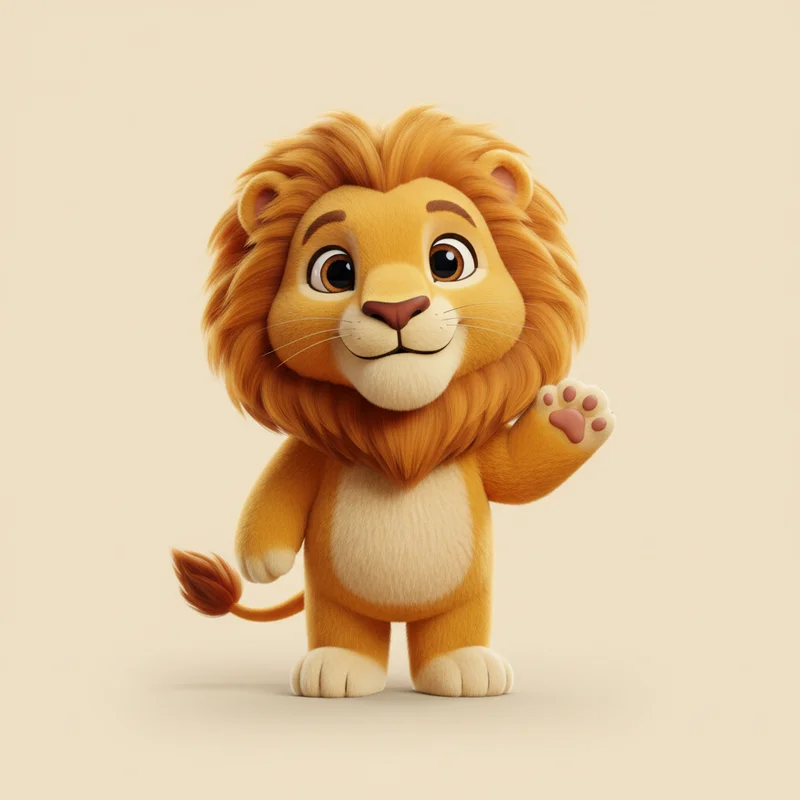
Lion

Lion

Apex predator and king of the savanna, known for majestic manes and surprisingly lazy daytime habits.

VS
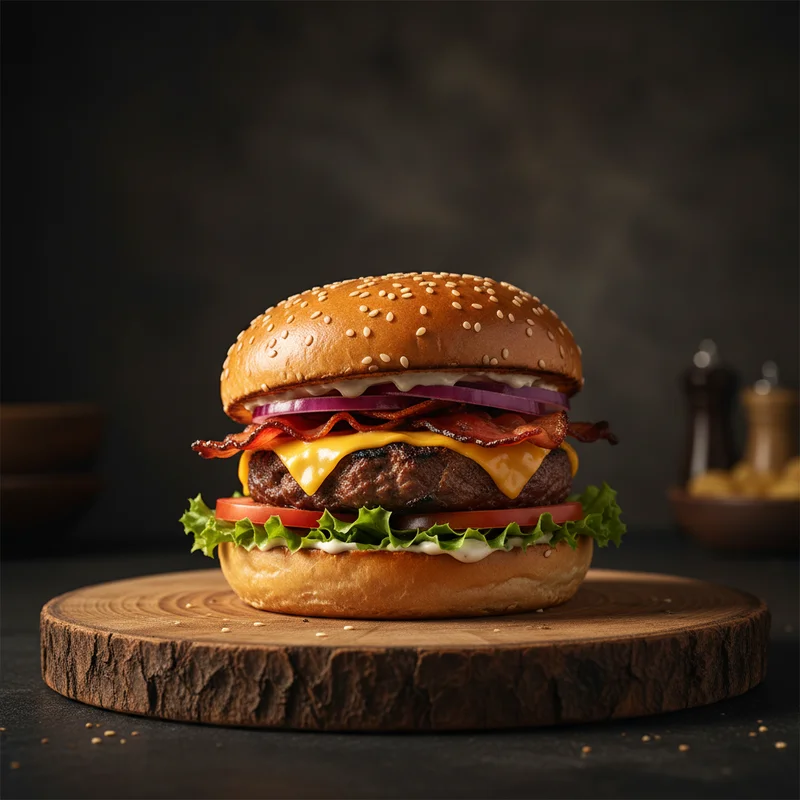
Burger

Burger

Ground beef patty in a bun, America's contribution to global cuisine.

Battle Analysis

Economic impact burger Wins
30%
70%
Lion Burger

Lion

African lions generate an estimated $7 billion annually in wildlife tourism revenue, according to the Pan-African Economic Felidae Assessment. A single photogenic male with an impressive mane can attract tourists willing to pay $500 per day merely to observe it sleeping for 20 hours. The lion economy, however, is entirely passive; the lions themselves receive no salary, benefits, or equity stake in the enterprises built around their magnificence.

Burger

The global burger industry represents a staggering $150 billion annual market, employing millions and sustaining entire agricultural supply chains spanning multiple continents. The World Sandwich Economic Forum estimates that burger-related commerce accounts for 0.2% of global GDP. Unlike lions, burgers actively participate in economic transactions, albeit briefly and terminally. The burger has achieved what the lion cannot: direct monetary value exchange at the point of consumption.

VERDICT

Raw economic scale favours the sandwich by orders of magnitude
Intimidation factor lion Wins
70%
30%
Lion Burger

Lion

A lion's roar registers at 114 decibels and can be heard from eight kilometres away, triggering an instinctive fear response in virtually all mammals, including humans who should know better. Research from the Cambridge Institute of Primal Terror found that 97% of test subjects exhibited elevated cortisol levels when exposed to recorded lion vocalisations, with several requiring psychological counselling afterward. The mere presence of a lion fundamentally alters the behaviour of every creature within a five-kilometre radius.

Burger

The burger's intimidation operates on an entirely different axis: existential dietary guilt. Studies from the Stockholm Centre for Nutritional Anxiety indicate that 78% of burger consumers experience what researchers term 'post-consumption regret syndrome,' a phenomenon unknown in lion encounters, primarily because survivors of lion encounters report being grateful simply to possess intact limbs. The burger's intimidation is subtle, delayed, and primarily affects bathroom scales.

VERDICT

Immediate mortal terror outranks delayed nutritional guilt
Cultural significance lion Wins
70%
30%
Lion Burger

Lion

The lion appears on 17 national flags, 43 royal coats of arms, and approximately 100% of motivational posters in middle management offices. As a symbol of courage, nobility, and leadership, the lion has permeated human consciousness for millennia. The Heraldic Institute of Symbolic Zoology notes that lion imagery predates written language, appearing in cave paintings dating to 32,000 BCE. C.S. Lewis chose a lion to represent ultimate moral authority; no equivalent burger-based allegory exists in serious literature.

Burger

The burger has become the defining symbol of American cultural export, appearing in films, television, and diplomatic incidents with equal frequency. The Culinary Semiotics Quarterly argues that the burger represents humanity's complex relationship with convenience, indulgence, and industrial food production. It has inspired art movements, political protests, and at least three documented religions. Yet the burger remains fundamentally a symbol of consumption rather than aspiration.

VERDICT

Millennia of symbolic weight outweighs decades of commercial ubiquity
Survival adaptability lion Wins
70%
30%
Lion Burger

Lion

Lions have survived ice ages, continental drift, and the emergence of bipedal competitors with distressingly accurate throwing arms. Their adaptive toolkit includes cooperative hunting strategies, flexible social structures, and the ability to subsist on virtually any protein source slower than themselves. The Evolutionary Resilience Index rates lions at 8.7 out of 10, losing points only for their troubling vulnerability to human expansion and climate change.

Burger

The burger demonstrates remarkable conceptual adaptability, having evolved from simple beef patties to encompass chicken, fish, vegetables, laboratory-grown proteins, and substances that defy categorisation. The Institute of Sandwich Evolution has documented over 47,000 distinct burger variants, suggesting a rate of speciation that would make Darwin weep with confusion. However, the burger cannot survive without human intervention, representing perhaps the most extreme example of domestication dependency in culinary history.

VERDICT

Autonomous survival capability exceeds dependent existence
Territorial dominance burger Wins
30%
70%
Lion Burger

Lion

The lion commands territories spanning up to 400 square kilometres of prime African real estate, enforced through a sophisticated system of roaring, scent marking, and occasional violence. According to the Journal of Large Cat Property Management, a single pride's territorial claim represents approximately 12,000 years of accumulated evolutionary real estate expertise. Their dominance is absolute within their domain, with even elephants showing documented hesitation when crossing established boundaries.

Burger

The burger has achieved something the lion never could: territorial presence on every continent, including Antarctica, where McMurdo Station reportedly serves approximately 300 weekly. The Global Sandwich Hegemony Report (2024) indicates that burger establishments now occupy more total land area than the entire historical range of the African lion. However, this dominance relies entirely on human infrastructure, refrigeration, and the questionable decision-making of urban planning committees.

VERDICT

Sheer geographic coverage exceeds biological territorial limits
👑

The Winner Is

Lion

58 - 42

After exhaustive analysis, the lion emerges victorious with a 58-42 margin, though the burger's performance exceeds what any reasonable Victorian naturalist might have predicted for a sandwich. The lion's advantages lie primarily in autonomous existence, psychological impact, and cultural significance accumulated over geological timescales. The burger, however, demonstrates remarkable competence in economic contribution and global distribution, achievements that required no fangs, claws, or millions of years of evolutionary refinement.

The Royal Society for Absurd Comparisons notes that this matchup represents a fundamental tension in human values: we revere the lion for qualities we admire but cannot embody, while we consume the burger for satisfactions we perhaps should not indulge. Both, in their own way, reveal uncomfortable truths about the species conducting this analysis.

Lion
58%
Burger
42%

Share this battle

More Comparisons