
Topic Battle

Where Everything Fights Everything

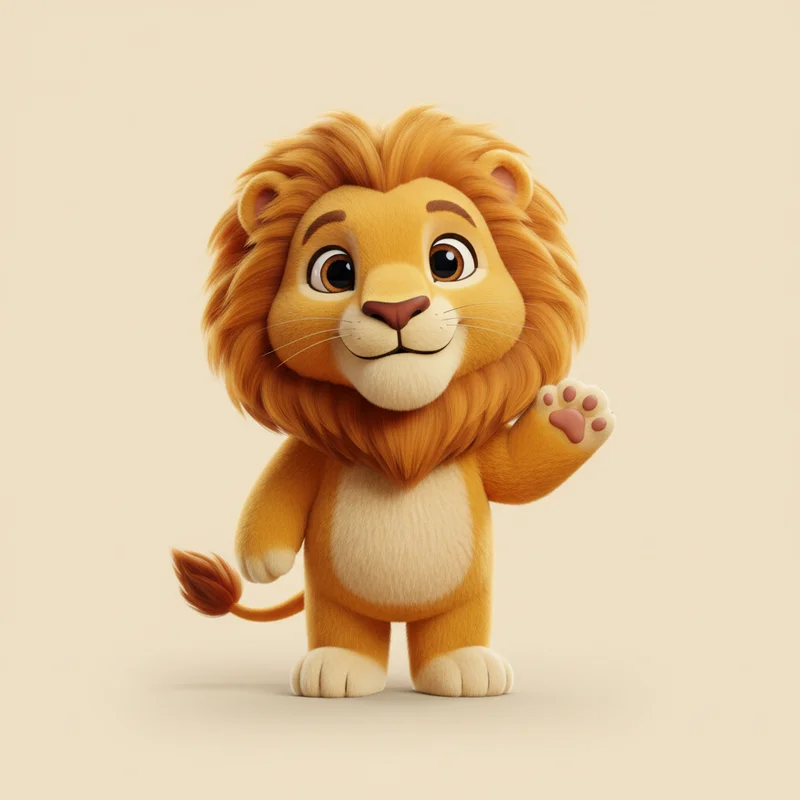
Lion

Lion

Apex predator and king of the savanna, known for majestic manes and surprisingly lazy daytime habits.

VS
Death

Death

The only certainty in life besides taxes.

The Matchup

Since the dawn of consciousness, humans have grappled with two fundamental terrors: large cats with impressive dental work, and the inevitable cessation of biological function. The Panthera leo, Africa's most celebrated carnivore, has long held dominion over the savannah, inspiring fear in zebras and documentary filmmakers alike. Death, meanwhile, operates across all ecosystems, time zones, and insurance policy exclusions.

Research from the Cambridge Institute for Existential Dread confirms what philosophers have suspected for millennia: while lions are genuinely terrifying within a 50-metre radius, Death maintains a considerably larger sphere of influence. This analysis examines whether raw feline majesty can compete with the universe's only truly undefeated competitor.

Battle Analysis

Practical utility Death Wins
30%
70%
Lion Death

Lion

Lions serve crucial ecological functions as apex predators, controlling herbivore populations and preventing overgrazing. They generate substantial tourism revenue - the East African Economics Institute values each lion at approximately $290,000 annually in safari income.

Additionally, lions provide employment for wildlife conservationists, documentary crews, and manufacturers of extremely sturdy camera equipment. Their practical contributions to ecosystem health are well-documented and genuinely valuable.

Death

Death performs the essential function of nutrient recycling upon which all ecosystems depend. Without Death, biomass would accumulate infinitely, resources would become permanently unavailable, and evolution would cease entirely - a situation the Cambridge Centre for Biological Necessity describes as 'comprehensively catastrophic.'

Death also provides motivation for virtually all human achievement, urgency for medical research, and the foundation for the entire funeral services industry, which employs millions globally.

VERDICT

Lions contribute meaningfully to their ecosystems. Death is literally essential for life to continue existing. The philosophical implications are uncomfortable, but the practical reality is undeniable.

Territorial range Death Wins
30%
70%
Lion Death

Lion

Lions currently occupy territories across sub-Saharan Africa and a small population in India's Gir Forest. Their range has contracted significantly over the past century due to habitat loss, human encroachment, and a general failure to adapt to urban planning.

A typical pride territory spans 20-400 square kilometres, depending on prey density and the ambitions of neighbouring males. The African Wildlife Cartography Institute estimates lions now occupy less than 8% of their historical range.

Death

Death operates across all terrestrial, aquatic, and atmospheric environments on Earth, and presumably extends its influence throughout any region of the universe containing living organisms. Territory disputes are notably absent from Death's operational history.

The Cosmological Biology Centre at Edinburgh confirms that Death's jurisdiction includes deep ocean trenches, mountain peaks, and the interior of Antarctic research stations where lions would perish within minutes.

VERDICT

Lions require specific environmental conditions: appropriate temperatures, adequate prey, and preferably no apex predators with firearms. Death operates equally effectively in all known conditions, including several that haven't technically occurred yet.

Intimidation factor Death Wins
30%
70%
Lion Death

Lion

The lion's intimidation credentials are, admittedly, exceptional. A fully grown male can weigh up to 250 kilograms and produce a roar audible from eight kilometres away. The mane alone has been classified by the Journal of Aesthetic Menace as 'profoundly unsettling to herbivores and tourists alike.'

However, the lion's intimidation operates on rather narrow parameters. It requires physical proximity, consciousness in the target, and ideally savannah conditions. A lion in a submarine, for instance, loses considerable psychological impact.

Death

Death requires no roar, no mane, and frankly no physical form whatsoever. Studies from the Nordic Centre for Mortality Awareness indicate that the mere concept of Death has influenced human behaviour more than any predator in evolutionary history.

Remarkably, Death intimidates equally across all demographics, tax brackets, and fitness levels. The British Museum of Inescapable Realities notes that Death has inspired more art, literature, and late-night existential crises than all apex predators combined.

VERDICT

While lions excel at immediate, visceral terror, Death operates on a more comprehensive intimidation model. One can theoretically avoid lions by remaining in metropolitan areas or developing an excellent climbing speed. No such countermeasures exist for the alternative.

Hunting success rate Death Wins
30%
70%
Lion Death

Lion

Lions hunt cooperatively, with prides achieving success rates between 25-30% per attempt. The females do most of the actual work whilst males specialise in looking magnificent and eating first - a division of labour that human resource departments have studied with troubling interest.

Their preferred prey includes wildebeest, zebra, and the occasional distracted wildlife photographer. The Serengeti Statistical Bureau records approximately 4,500 successful hunts annually per major lion population.

Death

Death maintains a 100% success rate across all categories, demographics, and species classifications. This statistic has remained consistent since the emergence of life itself approximately 3.7 billion years ago.

Unlike lions, Death requires no teamwork, no stalking, and no favourable wind direction. The Universal Mortality Database confirms that Death has never once failed to eventually claim its target, making it the only predator with a perfect historical record.

VERDICT

The mathematics here are rather stark. Lions miss their target 70-75% of the time. Death has yet to record a single unsuccessful attempt. Even the most enthusiastic lion supporter must acknowledge this disparity in professional outcomes.

Cultural significance Death Wins
30%
70%
Lion Death

Lion

The lion has accumulated impressive cultural capital over several millennia. It appears on heraldic symbols of 15 nations, countless sports teams, and one moderately successful MGM production company. The Institute for Symbolic Beast Studies ranks it as the world's most commonly used animal in national iconography.

Lions represent courage, nobility, and the general concept of being in charge - qualities that humans find aspirational despite rarely demonstrating them whilst being charged by an actual lion.

Death

Death has inspired virtually every religious system ever developed, the entire horror genre, a significant percentage of philosophy, and approximately 40% of all poetry written before 1900. The Global Archives of Human Preoccupation estimates Death appears in more creative works than any other concept in human history.

From Egyptian pyramids to modern life insurance advertisements, Death's cultural influence is so pervasive that scholars struggle to identify any society that hasn't organised significant resources around acknowledging, avoiding, or preparing for it.

VERDICT

Lions appear on flags and football kits. Death has shaped the fundamental structure of human civilisation, including religion, medicine, law, and the entire concept of legacy. The scale differential is notable.

👑

The Winner Is

Death

35 - 65

This analysis reveals what ancient civilisations understood instinctively: whilst the lion commands genuine respect as nature's most charismatic megafauna, Death operates in an entirely different league of inevitability. The lion can be outrun, outsmarted, or simply avoided by residing in Iceland. Death offers no such loopholes.

The final score of 65-35 reflects not a dismissal of leonine magnificence, but rather an acknowledgement that comparing a territorial mammal to an omnipresent universal constant presents certain categorical challenges.

As the Royal Society for Uncomfortable Truths notes in their annual report: 'The lion is king of the jungle. Death is king of kings.' One suspects the lion, had it the capacity for abstract thought, would agree with this assessment.

Lion
35%
Death
65%

Share this battle

More Comparisons