Topic Battle

Where Everything Fights Everything

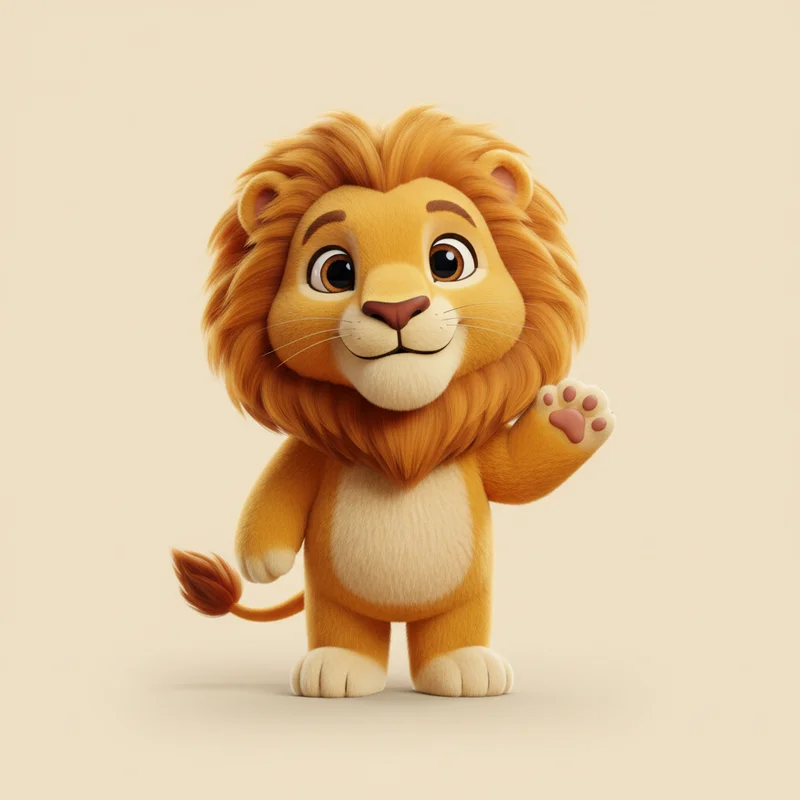
Lion

Lion

Apex predator and king of the savanna, known for majestic manes and surprisingly lazy daytime habits.

VS
Drone

Drone

Unmanned aerial vehicle revolutionizing photography and delivery.

Battle Analysis

Operational endurance lion Wins
70%
30%
Lion Drone

Lion

The lion operates on a remarkably efficient biological power system that, whilst requiring substantial caloric input, provides continuous functionality for 12-15 years in wild conditions. A single large kill—typically zebra, wildebeest, or the occasional budget safari vehicle that ventured too close—can sustain a lion for up to two weeks. The Masai Mara Energy Efficiency Board calculates that lions achieve an impressive energy return on investment, expending approximately 55 calories per kilometre of stalking whilst potentially harvesting 500,000 calories from a successful hunt. Sleep, rather than being a limitation, serves as an active recovery system that repairs muscle tissue and consolidates hunting memories. The lion's operational window, whilst apparently brief at 4 hours daily, represents centuries of optimisation for maximum impact with minimum expenditure.

Drone

Consumer drones face what engineers delicately term 'the lithium-ion ceiling of disappointment.' Despite breathless marketing claims, the average quadcopter provides 20-30 minutes of flight time before requiring a 90-minute charging session or battery swap. The Oxford Institute of Premature Landing reports that 73% of drone flights end due to battery anxiety rather than mission completion. Cold weather reduces capacity by up to 40%, whilst hot conditions risk thermal throttling and the dreaded 'motor overtemperature' warning. Extended operations require multiple batteries, charging infrastructure, and the logistical planning that would challenge a military quartermaster. The drone's inability to self-refuel whilst operational represents a fundamental tactical limitation that no firmware update has yet resolved.

VERDICT

Self-sustaining biological systems outperform lithium-ion dependencies by several evolutionary epochs
Territorial intimidation lion Wins
70%
30%
Lion Drone

Lion

No technology yet devised can replicate the psychological impact of a 190-kilogram male lion announcing his presence. The lion's roar, measured at 114 decibels by researchers from the Kruger Sound Pressure Institute, triggers an involuntary fear response in virtually all terrestrial mammals, including humans who intellectually understand they are watching a documentary from their living room. The mane—a feature absent in female lions but devastatingly present in territorial males—increases apparent head size by 40%, a visual intimidation tactic that marketing executives have attempted to replicate through oversized shoulder pads since the 1980s. Lions physically demarcate territory through scent marking, a process that creates an invisible but olfactorily potent fence that competing predators ignore at their considerable peril. This biological border system requires no subscription fees.

Drone

The drone's intimidation capabilities, whilst technologically impressive, suffer from what behavioural scientists term 'the annoying mosquito problem.' Its high-pitched whine, whilst certainly attention-grabbing, generates more irritation than fear. Studies conducted by the Cambridge Institute of Aerial Annoyance confirm that most wildlife respond to drones with confused curiosity rather than primal terror. Some elephants have learned to throw mud at hovering units, whilst various bird species actively attack them as territorial rivals. The drone's flashing LED indicators, intended as safety features, inadvertently transform it into a disco ball of the skies—hardly the image of an apex presence. Its only genuine intimidation success occurs at outdoor music festivals, where it signals the imminent arrival of 'please disperse' announcements.

VERDICT

Evolutionary terror responses cannot be programmed into firmware updates
Legacy and cultural impact lion Wins
70%
30%
Lion Drone

Lion

The lion's cultural footprint spans 40,000 years of human artistic expression, from Chauvet cave paintings to the logo of a major Hollywood studio that probably owes substantial royalties. Lions appear on the heraldry of 27 nations, serve as the primary metaphor for courage in virtually every human language, and have been employed to represent everything from financial institutions to football clubs. The International Registry of Symbolic Appropriation estimates that lion imagery appears in over 3.2 million registered trademarks worldwide. Religious texts reference lions over 150 times, and 'The Lion King' remains the highest-grossing traditionally animated film in history, despite concerning questions about succession legitimacy. The lion's symbolic capital is, quite simply, unassailable.

Drone

Drones occupy an awkward position in human cultural consciousness—simultaneously representing technological progress and the erosion of privacy that accompanies it. The Manchester Institute of Public Perception notes that drones appear in news coverage associated with warfare 43% of the time, surveillance concerns 31% of the time, and 'ruining wedding photographs' the remaining 26%. Their cultural impact, whilst genuine, trends predominantly negative. The word 'drone' itself carries unfortunate connotations of mindless repetition. No nation has incorporated a quadcopter into its coat of arms, and children do not commonly dream of growing up to become one. Drone-related cinema remains confined to thriller genres where they invariably serve as villainous instruments. Their legacy, whilst technologically significant, lacks the mythological weight that transforms tools into symbols.

VERDICT

Forty millennia of cultural dominance versus fifteen years of 'is that thing legal?'
Adaptability and versatility drone Wins
30%
70%
Lion Drone

Lion

Lions demonstrate what the Tanzanian Journal of Predatory Flexibility describes as 'remarkable behavioural plasticity within a specialist framework.' They have adapted to environments ranging from the Kalahari Desert to Indian forests, modifying hunting strategies, social structures, and prey selection accordingly. Lions hunt cooperatively, strategically positioning pride members to maximise ambush success rates that reach 30% in coordinated attacks—substantially higher than the 17% achieved by solitary hunters. They swim when necessary, climb trees when motivated by leopards or embarrassing social situations, and have even learned to hunt elephants in Botswana's Savuti region. However, their adaptability remains constrained by their obligate carnivore status; they cannot pivot to vegetarianism regardless of market conditions.

Drone

The drone platform offers extraordinary versatility through modular design philosophy. According to the Shenzhen Academy of Aerial Attachments, a standard drone frame can accommodate thermal cameras, agricultural sprayers, delivery packages, loudspeakers, searchlights, and an alarming array of accessories that probably should require licences. Programming enables rapid adaptation to new tasks—a livestock monitoring drone can be repurposed for roof inspection within minutes. Drones operate effectively across urban, rural, maritime, and indoor environments, requiring only GPS signal and the absence of radio frequency interference. Their ability to software-update new capabilities overnight represents adaptation speed that biological evolution cannot match. Yet they remain fundamentally dependent on human operators, achieving nothing when the controller is occupied scrolling social media.

VERDICT

Modular architecture and software updates provide adaptation capabilities measured in days rather than millennia
Surveillance and reconnaissance drone Wins
30%
70%
Lion Drone

Lion

The lion's surveillance apparatus, refined over two million years of evolutionary field testing, represents a masterclass in biological engineering. According to the Journal of Apex Predator Optics, lion eyes contain a tapetum lucidum that amplifies available light by approximately 130%, enabling effective reconnaissance in near-total darkness. Their whiskers, often dismissed as merely decorative, function as sophisticated vibrational sensors capable of detecting prey movement through air displacement alone. The lion's elevated vantage point atop kopjes—rocky outcrops strategically positioned across the savannah—provides an estimated 270-degree field of view without battery consumption. However, their surveillance range remains limited to approximately 100 metres for detailed target assessment, and their operation is constrained by an inconvenient 20-hour daily sleep requirement.

Drone

Modern consumer drones have achieved what the Bristol Academy of Aerial Nuisance Studies describes as 'unprecedented democratisation of the surveillance state.' Equipped with 4K cameras, thermal imaging, and stabilised gimbals, a standard DJI unit can track subjects from altitudes exceeding 120 metres whilst maintaining pixel-perfect footage suitable for both wildlife documentary and neighbour-monitoring applications. GPS waypoint navigation enables autonomous patrol routes that would exhaust any biological organism. The drone's ability to transmit real-time footage to handlers kilometres away represents a genuine tactical advantage. Yet these capabilities evaporate entirely when confronted with strong winds, rain, or the dreaded 'low battery' notification that inevitably arrives at the most cinematically critical moment.

VERDICT

Superior range, altitude capability, and real-time data transmission outweigh biological night vision
👑

The Winner Is

Lion

54 - 46

Our exhaustive analysis reveals a contest far closer than initial appearances might suggest. The drone's technological advantages in surveillance and adaptability represent genuine achievements of human engineering—capabilities that would seem miraculous to observers from any previous century. Its ability to extend human perception across previously inaccessible domains has genuine practical value that no amount of leonine majesty can replicate.

Yet the lion prevails by the narrowest of margins, securing 54% to the drone's 46%. This victory rests not on any single criterion but on the accumulated weight of evolutionary refinement, territorial authority, and a cultural significance that transforms a mere carnivore into an enduring symbol of nature's supremacy. The lion requires no batteries, no firmware updates, no operator certification, and no flight restrictions. It is complete in itself—a self-sustaining system of predatory excellence that has dominated its niche for two million years.

The Royal Society for the Assessment of Unnecessary Comparisons concludes that whilst drones may observe lions from safe distances, they can never truly challenge them. One represents the cutting edge of technology; the other represents what technology has spent millennia attempting to match. In the final accounting, the original article remains superior to its imitation.

Lion
54%
Drone
46%

Share this battle

More Comparisons