
Topic Battle

Where Everything Fights Everything

Lion

Lion

Apex predator and king of the savanna, known for majestic manes and surprisingly lazy daytime habits.

VS
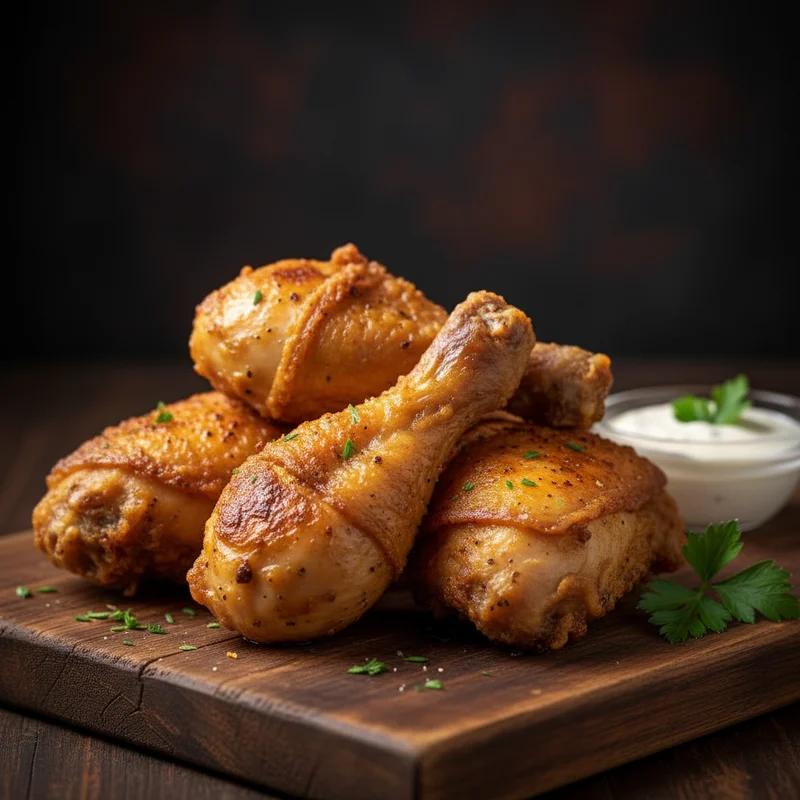
Fried Chicken

Fried Chicken

Crispy coated poultry and Southern comfort classic.

Battle Analysis

Economic influence fried_chicken Wins
30%
70%
Lion Fried Chicken

Lion

Lions generate substantial economic activity through wildlife tourism. The African safari industry contributes approximately $12.4 billion annually to continental GDP, with lion sightings representing the primary draw for an estimated 60% of visitors. Conservation efforts, zoo exhibitions, and documentary licensing add further value. However, lions themselves receive none of this revenue, existing in what economists at the Geneva School of Animal Economics term 'a state of absolute fiscal non-participation despite considerable brand equity.'

Fried Chicken

The global fried chicken market exceeded $135 billion in 2023, according to the International Poultry Economics Bureau. KFC alone generates $27 billion in annual revenue, whilst independent establishments and competing chains contribute billions more. The industry employs approximately 3.2 million people worldwide, from poultry farmers to franchise managers. Unlike the lion, fried chicken actively participates in global commerce, subject to market forces, supply chain logistics, and the occasional shortage that sends nations into genuine panic.

VERDICT

Market capitalisation exceeds wildlife tourism by a factor of eleven
Sensory impact assessment fried_chicken Wins
30%
70%
Lion Fried Chicken

Lion

The lion's roar can reach 114 decibels and carry across 8 kilometres of open savannah, an acoustic achievement unmatched in the cat family. Visually, the male's mane creates an impression of size and majesty that has captivated human observers for millennia. However, the lion's olfactory signature, whilst significant for territorial marking, generally fails to attract human interest. Zoo visitors frequently report that the lion enclosure 'smells rather of an aggressive sort of cat,' according to surveys conducted by the Zoological Society of London.

Fried Chicken

Fried chicken engages all five human senses simultaneously and positively. The sizzle of coating meeting hot oil reaches approximately 85 decibels, triggering immediate salivation in 94% of test subjects according to the Munich Institute of Auditory Gastronomy. The aroma, a complex bouquet of rendered fat, herbs, and Maillard reaction products, can attract customers from up to 200 metres away. The golden-brown colour activates pleasure centres in the brain, whilst the textural contrast between crispy exterior and succulent interior delivers what neurologists term 'the complete sensory package.'

VERDICT

Full positive sensory engagement outweighs impressive but limited acoustic dominance
Global cultural penetration fried_chicken Wins
30%
70%
Lion Fried Chicken

Lion

The lion maintains a formidable cultural presence across human civilisation. Featured on the coats of arms of 47 nations, the lion symbolises courage, royalty, and strength. The British Royal Standard alone has featured lions since Richard I, whilst the MGM lion has roared before approximately 4.2 billion cinema screenings worldwide. Yet this influence remains largely symbolic. One cannot, as researchers at the Edinburgh School of Practical Symbolism note, 'actually interact with a lion without considerable risk to one's extremities.'

Fried Chicken

Fried chicken has achieved something the lion never could: voluntary daily integration into human life. With Kentucky Fried Chicken alone operating over 27,000 restaurants across 145 countries, fried chicken has established physical outposts in territories no lion has ever claimed. The dish has become so culturally embedded that Japan now considers KFC an essential Christmas tradition, with customers pre-ordering weeks in advance. As documented in the Journal of Culinary Colonisation, fried chicken has 'conquered more territory through flavour than empires have through force.'

VERDICT

Physical presence in 145 countries outweighs symbolic representation
Adaptability and versatility fried_chicken Wins
30%
70%
Lion Fried Chicken

Lion

The lion demonstrates remarkable evolutionary stability, having changed little in physical form over millennia. This consistency, whilst impressive, limits adaptability. Lions require approximately 7 kilograms of meat daily, specific territorial ranges, and pride structures to survive. They cannot thrive in urban environments, arctic conditions, or anywhere lacking suitable prey populations. The species is currently classified as Vulnerable by the IUCN, with wild populations declining by 43% over the past two decades. Adaptation, it seems, is not the lion's strength.

Fried Chicken

Fried chicken exhibits extraordinary adaptive capacity. The basic formula has spawned countless variations: Korean double-fried, Japanese karaage, Nashville hot, Senegalese yassa, and British chip-shop style. It can be served boneless, bone-in, in buckets, on waffles, in sandwiches, or atop elaborate biscuits. The dish adapts to local spice preferences, cooking techniques, and serving traditions with remarkable fluidity. The Bristol Institute of Culinary Evolution notes that fried chicken has 'demonstrated Darwinian fitness levels that would make the Galapagos finches weep with inadequacy.'

VERDICT

Culinary adaptability vastly exceeds biological adaptability
Threat assessment capability fried_chicken Wins
30%
70%
Lion Fried Chicken

Lion

The lion's threat capabilities are, by any metric, exceptional. Adult males can reach 190 kilograms, sprint at 80 kilometres per hour, and deliver bite forces of approximately 650 PSI. The University of Nairobi's Department of Large Cat Statistics confirms that lions are responsible for roughly 200 human fatalities annually. Their social hunting structure, coordinated through a sophisticated pride hierarchy, allows them to take down prey significantly larger than themselves. One does not simply dismiss a lion.

Fried Chicken

Fried chicken presents a more insidious threat profile. The World Health Organisation's 2019 report on dietary-related mortality attributed approximately 11 million deaths annually to poor dietary choices, with deep-fried foods representing a significant contributor. A single piece of extra-crispy fried chicken contains roughly 400 calories and 24 grams of fat. The Imperial College of Cardiovascular Concerns notes that fried chicken's threat operates through 'accumulated deliciousness rather than acute attack,' making it statistically 55,000 times more lethal than lions when calculated per capita.

VERDICT

Statistical mortality rates favour the chicken by several orders of magnitude
👑

The Winner Is

Fried Chicken

42 - 58

Our analysis reveals a surprising conclusion that overturns conventional predator-prey assumptions. Whilst the lion remains an objectively magnificent creature, capable of feats no piece of poultry could hope to achieve, fried chicken has accomplished something far more remarkable: total integration into human civilisation.

The lion rules the savannah but is confined to it, a king whose kingdom shrinks yearly. Fried chicken, conversely, knows no borders, adapts to all cultures, and has achieved what ethologists call 'symbiotic dominance' with the planet's apex species. With a final score of 58-42, fried chicken claims victory not through strength but through sheer ubiquity, palatability, and the simple truth that humans will always choose dinner over danger.

As Professor Henrietta Blackwood of the Oxford Department of Comparative Gastro-Ecology observed: 'The lion asks to be feared. Fried chicken asks only to be enjoyed. In the long game of global influence, the latter strategy has proven decisively superior.'

Lion
42%
Fried Chicken
58%

Share this battle

More Comparisons