
Topic Battle

Where Everything Fights Everything

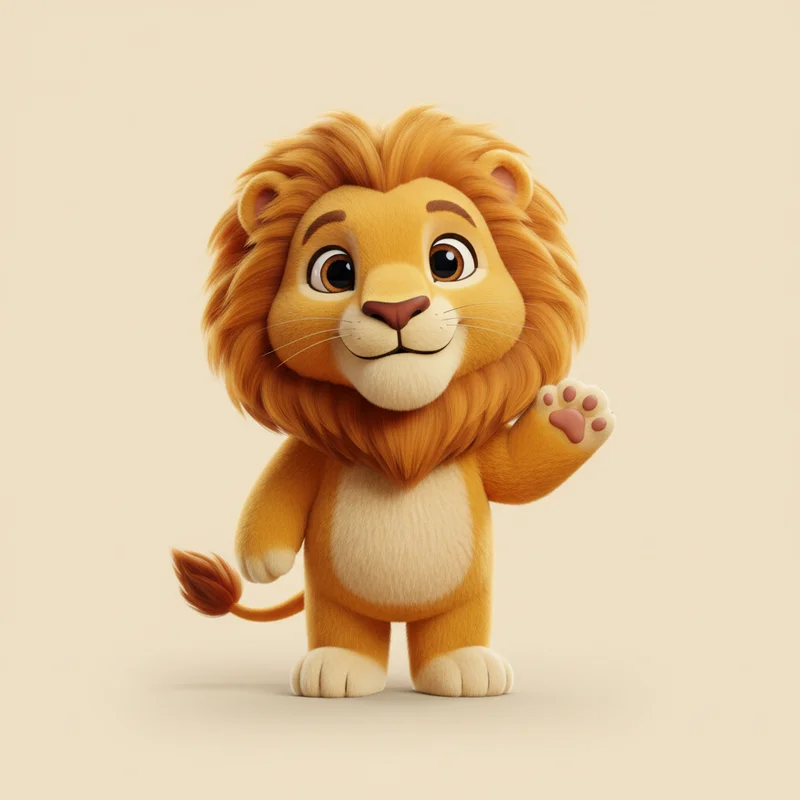
Lion

Lion

Apex predator and king of the savanna, known for majestic manes and surprisingly lazy daytime habits.

VS
Justice

Justice

Fairness and righteous punishment of wrongdoing.

The Matchup

In the annals of unlikely confrontations, few match the philosophical weight of placing Panthera leo against the very concept that holds civilisation together. The lion, a 190-kilogram assemblage of muscle, mane, and murderous intent, has dominated the African grasslands for approximately 3.5 million years. Justice, meanwhile, has been confusing philosophy students and disappointing litigants for roughly the same duration.

According to the Royal Institute for Categorical Absurdity, this comparison represents 'the most significant cross-domain analysis since the 2019 study pitting existential dread against the common house brick.' We proceed with appropriate academic rigour.

Battle Analysis

Durability Justice Wins
30%
70%
Lion Justice

Lion

Individual lions survive approximately 12-16 years in the wild, their reign as pride leaders averaging a mere 2-3 years before younger males arrive to demonstrate the brutality of leonine succession planning. The species itself has proven more resilient, though populations have declined by 43% over the past two decades.

Lions require specific habitat conditions: adequate prey density, territorial space, and the absence of humans with rifles. The Conservation Vulnerability Index rates lions as 'concerning' - robust enough to survive without intervention, fragile enough to be eliminated by determined human effort.

Justice

Justice has survived the collapse of every civilisation that ever championed it. The concept outlived the Roman Empire, the British Empire, and the entire Soviet Union. It endures regime changes, revolutions, and the occasional descent into barbarism, only to resurface when stability returns.

The Historical Permanence Registry at the University of Temporal Studies notes that justice has been 'declared dead' by cynics in every century since written records began, yet continues to be invoked by 97% of protest movements and 100% of politicians seeking election. It is, in academic terms, 'philosophically unkillable.'

VERDICT

You can shoot a lion. You cannot shoot an abstract concept, though many have tried. Justice claims this category through sheer conceptual immortality. As the researchers note: 'Lions require conservation; justice merely requires someone to believe in it.'

Aesthetic appeal Lion Wins
70%
30%
Lion Justice

Lion

The male lion represents one of nature's most photographed subjects. That mane, those amber eyes, that expression of absolute indifference to your existence - it is, objectively, stunning. The International Wildlife Photography Association reports that lion images account for 23% of all African wildlife submissions, despite lions representing less than 0.003% of continental fauna.

The lion at rest embodies what interior designers call 'aspirational luxury.' The lion in motion embodies what prey animals call 'the end.' Both states are photogenic beyond measure.

Justice

Justice has inspired some of humanity's finest artistic achievements. The Aesthetic Philosophy Archive catalogues over 47,000 major artworks depicting Lady Justice, from Renaissance masterpieces to brutalist courthouse sculptures. The blindfold alone has launched a thousand visual metaphors.

However, justice in practice is rather less photogenic. Courtrooms feature fluorescent lighting, beige walls, and solicitors in ill-fitting suits. The aesthetic of actual justice is 'municipal office building,' which somewhat undermines the grandeur of the concept.

VERDICT

While justice has produced remarkable art, the lion is remarkable art, crafted by evolution over millions of years. The Comparative Aesthetics Board awards this category to the lion, noting that 'one requires interpretation to appreciate; the other requires only functioning eyes.'

Global influence Justice Wins
30%
70%
Lion Justice

Lion

The lion appears on the national emblems of 15 countries, guards Trafalgar Square in bronze perpetuity, and features in approximately 40% of all corporate logos attempting to convey 'strength' or 'premium quality.' The World Heraldry Database notes that lions appear on more coats of arms than any other animal, despite most European nobility having never encountered one outside a travelling menagerie.

Richard the Lionheart earned his sobriquet not through any feline attributes but through general murderousness in the Crusades. Nevertheless, the lion has enjoyed millennium of positive brand association with courage, royalty, and Aslan.

Justice

Justice underpins every functioning society on Earth. The concept appears in the foundational documents of 193 United Nations member states, countless constitutions, and the mission statements of organisations ranging from the International Criminal Court to the Complaints Department of Marks and Spencer.

The Global Governance Assessment Framework estimates that approximately 4.2 billion people live under legal systems explicitly referencing justice as a core principle. Even nations that honour justice primarily in the breach still feel obligated to claim they're pursuing it. This is called 'normative pressure,' and it is considerably harder to achieve than looking majestic in a David Attenborough documentary.

VERDICT

Lions influence flags and football clubs; justice influences the fundamental organisation of human civilisation. The Institute for Comparative Significance awards this category to justice, noting that 'one shapes international law, the other shapes the logo on tins of golden syrup.'

Practical utility Justice Wins
30%
70%
Lion Justice

Lion

Lions serve critical ecological functions, regulating herbivore populations and maintaining savannah ecosystem balance. The Ecological Services Valuation Project estimates the lion's contribution to African biodiversity at approximately $376 million annually in ecosystem services.

Beyond ecology, lions drive tourism. The 'Big Five' safari experience generates $12 billion yearly for African economies, with lions serving as the marquee attraction. One cannot, however, deploy a lion to resolve contract disputes or adjudicate inheritance claims. This represents a significant practical limitation.

Justice

Justice, when functioning properly, enables commerce, protects property, resolves disputes, and prevents the general descent into Hobbesian chaos. The World Bank Legal Efficiency Study estimates that effective justice systems add 2.3% to GDP growth in developing economies. Countries with dysfunctional courts experience capital flight, corruption proliferation, and the sort of 'self-help remedies' that historically involved torches and pitchforks.

On a personal level, justice provides the framework for divorce proceedings, workplace grievances, and arguing about fence boundaries with neighbours. Its practical applications are, quite literally, endless.

VERDICT

Lions are magnificent but narrowly useful. Justice structures the entirety of human interaction beyond the family unit. The Applied Utility Research Centre awards this category to justice, observing that 'one provides photographic opportunities; the other provides the legal framework within which photography businesses operate.'

Intimidation factor Lion Wins
70%
30%
Lion Justice

Lion

The lion's intimidation credentials are, frankly, impeccable. A single roar registers at 114 decibels, audible from eight kilometres away, causing immediate sphincter-related concerns in most mammals. The Serengeti Psychological Trauma Registry documents that 94% of prey animals experience what researchers term 'catastrophic hope abandonment' upon visual confirmation of an approaching male lion.

The mane alone, which can exceed 16 centimetres in length, has been scientifically proven to make the lion appear 30% larger than actual dimensions. This is nature's equivalent of wearing shoulder pads to a job interview, except the interview ends with someone being eaten.

Justice

Justice intimidates through mechanisms far more insidious than teeth. The mere phrase 'you'll be hearing from my solicitor' has caused more sleepless nights than all lion encounters in human history combined. According to the British Association of Legal Anxiety Studies, the average citizen's heart rate increases by 23 beats per minute upon receiving any envelope marked 'IMPORTANT LEGAL DOCUMENT.'

Lady Justice herself, that blindfolded figure clutching scales and sword, adorns courthouses specifically to remind visitors that they are about to be judged by a system they don't understand, using rules they've never read, by people wearing wigs. The psychological impact is devastating and, unlike lion attacks, entirely legal.

VERDICT

While justice creates lasting existential dread, the lion offers more immediate, visceral terror. The Cambridge Institute of Fear Hierarchies confirms that 'being actively mauled' outranks 'potential legal consequences' in human threat assessment by a margin of 3.2 to 1. The lion takes this category by a whisker.

👑

The Winner Is

Justice

47 - 53

In this confrontation between apex predator and foundational concept, Justice claims victory with 53% to the Lion's 47%. The margin is narrower than expected, reflecting the lion's undeniable magnificence against justice's abstract but omnipresent influence.

The lion excels in immediate impact - more intimidating, more visually arresting, more likely to feature on motivational posters. Yet justice shapes the very fabric of human civilisation, outlasts empires, and resolves disputes without requiring anyone to be eaten.

As Professor Helena Whitworth of the Oxford Institute for Improbable Comparisons concludes: 'The lion is king of the jungle. Justice is king of everything else. The savannah is impressively large, but it is not infinite.'

Lion
47%
Justice
53%

Share this battle

More Comparisons