Where Everything Fights Everything

Lion vs King Kong

😜 Just for fun — a tongue-in-cheek, gloriously unscientific showdown.

Lion

Lion

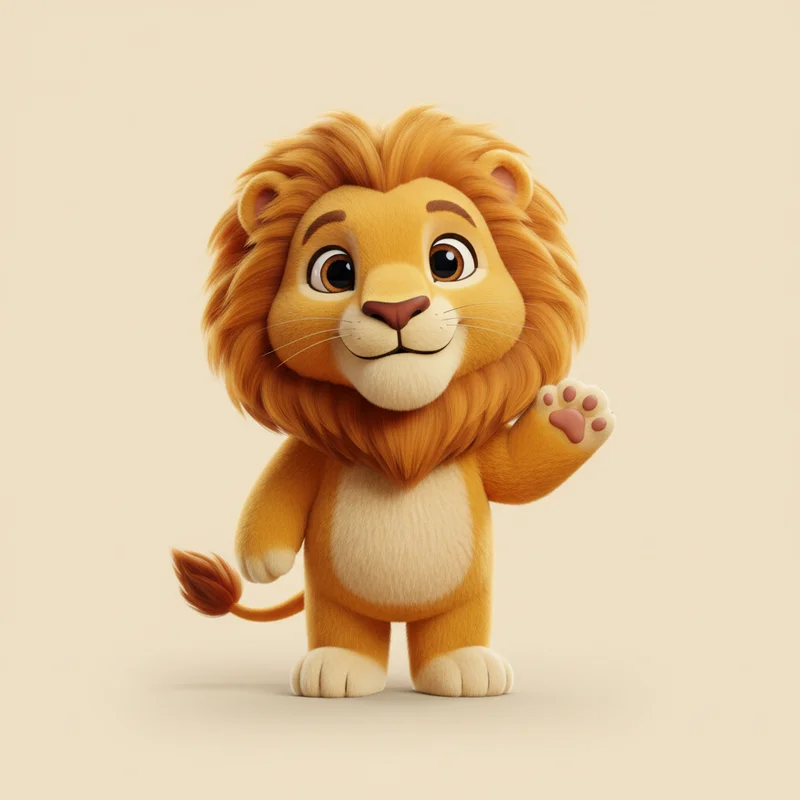
Apex predator and king of the savanna, known for majestic manes and surprisingly lazy daytime habits.

VS
King Kong

King Kong

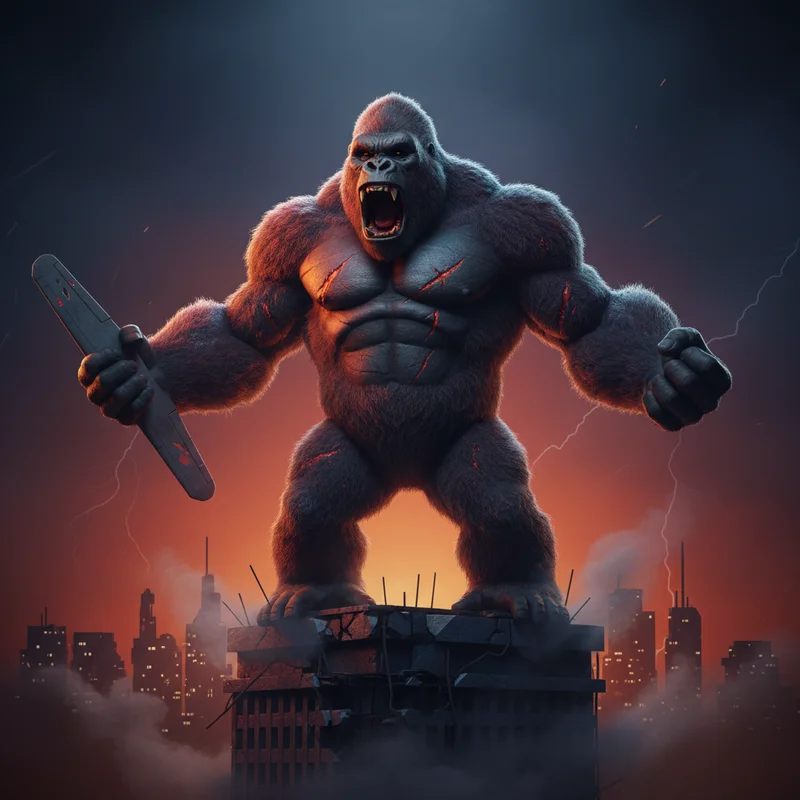
Giant ape with a thing for tall buildings.

Battle Analysis

Accessibility Lion Wins
🏆 Lion takes this round

Lion

Lions remain observable through multiple legitimate channels. Safari tourism generates billions annually, allowing direct encounters with wild prides across multiple African nations. Zoos worldwide maintain captive populations, though ethical considerations increasingly complicate such arrangements. Documentary footage provides intimate access to lion behaviour; streaming services offer hundreds of hours of leonine content. One might reasonably encounter a lion, at safe distance, within a matter of weeks through organised travel.

The lion is rare but not inaccessible, endangered but not imaginary.

King Kong

King Kong's accessibility suffers from a fundamental limitation: he does not exist. No safari can locate him, no zoo houses him, no conservation programme tracks his movements. Those wishing to experience Kong must content themselves with cinematic representations, theme park attractions featuring mechanical simulations, or the peculiar exercise of travelling to New York to stare upward at the Empire State Building whilst imagining. Universal Studios offers a Kong encounter, though participants generally recognise the distinction between attraction and reality.

Kong remains perpetually present in culture yet permanently absent in person.

VERDICT

Lions exist within reachable reality whilst Kong remains confined to screens and imagination. The lion triumphs through the considerable advantage of actually existing.

Physical dominance King Kong Wins
🏆 King Kong takes this round

Lion

The lion's physical specifications read like an advertisement for evolutionary engineering. Adult males weigh between 150-190 kilograms, capable of explosive sprints reaching 80 kilometres per hour over short distances. Their bite force of approximately 650 PSI can crush bone with casual efficiency. The mane, that magnificent crown of fur, serves both as protection during combat and as a visual declaration of genetic superiority. Lions have been recorded killing prey up to six times their own body weight, a hunting efficiency that has remained essentially unchanged for 800,000 years.

Yet even the most impressive lion remains, fundamentally, lion-sized. This presents certain limitations when confronting adversaries who measure themselves in storeys rather than metres.

King Kong

King Kong's physical statistics exist beyond biological possibility, which is rather the point. Standing at approximately 30 metres tall in modern interpretations, Kong possesses strength proportional to his impossible dimensions. He has been observed wrestling dinosaurs to submission, scaling the Empire State Building whilst swatting biplanes, and absorbing military ordnance with the inconvenience of mosquito bites. His grip strength alone would register on seismographic equipment.

The square-cube law suggests Kong's biology should collapse under its own weight. Kong has apparently not been informed of this mathematical inconvenience and continues functioning regardless.

VERDICT

Whilst the lion represents the pinnacle of natural predator evolution, King Kong exists beyond such constraints entirely. Kong claims this criterion through sheer dimensional impossibility.

Survival prospects King Kong Wins
🏆 King Kong takes this round

Lion

The lion's survival situation presents sobering statistics. Approximately 20,000 lions remain in the wild, a decline of 43% over two decades. Habitat loss, human conflict, and trophy hunting have reduced the species to fragments of its former range. Conservation efforts continue, but the lion faces genuine existential pressure. Climate change threatens prey populations; expanding human settlements encroach upon traditional territories. The king of beasts finds his kingdom shrinking with each passing year.

Lions, despite their magnificence, remain bound by ecological realities that care nothing for royal titles.

King Kong

King Kong's survival prospects operate entirely differently. As a fictional entity, Kong cannot be rendered extinct through conventional means. Each new adaptation resurrects him with contemporary special effects and modern sensibilities. He has survived the transition from stop-motion to CGI, from black-and-white to IMAX, from 1933 to the MonsterVerse. Studios have demonstrated willingness to invest hundreds of millions in Kong's continued existence. Box office returns ensure his immortality more reliably than any conservation programme.

Kong's population remains stable at exactly one, a number that has proven sufficient since 1933.

VERDICT

Lions face genuine extinction pressure whilst Kong benefits from the perpetual resurrection machine of Hollywood economics. Kong secures this criterion through fictional immortality.

Cultural significance King Kong Wins
🏆 King Kong takes this round

Lion

The lion's cultural penetration extends across virtually every civilisation that has encountered it. Lions appear on the coats of arms of 15 sovereign nations, guard the British Parliament in bronze form, and have symbolised courage, royalty, and divine authority since ancient Mesopotamia. The lion of Judah, the Nemean lion, Aslan, and countless other leonine figures populate human mythology. Sports teams, corporations, and political movements have adopted lion imagery with such frequency that the symbol has achieved near-universal recognition.

The lion's roar alone has become auditory shorthand for power itself, opening MGM films since 1916.

King Kong

King Kong has achieved something the lion cannot: singular iconic status. The image of an enormous ape atop the Empire State Building has transcended its 1933 origins to become universal visual vocabulary. Kong represents humanity's complex relationship with nature, the tragedy of the misunderstood other, and the uncomfortable question of who the real monster might be. Academic papers, philosophical treatises, and cultural criticism have dissected Kong's meaning for nine decades. Unlike the lion's distributed symbolism, Kong concentrates mythological significance into a single, unmistakable figure.

One need not explain who King Kong is; the name carries its own weight.

VERDICT

Whilst lions saturate human symbolism through breadth, King Kong achieves cultural impact through concentrated iconic power. Kong claims victory through mythological singularity.

Territorial authority Lion Wins
🏆 Lion takes this round

Lion

Lions command territories spanning up to 260 square kilometres of prime African real estate, an area they patrol, mark, and defend with lethal efficiency. A pride's territory represents generations of genetic investment, boundaries maintained through roaring contests that can be heard eight kilometres away and, when necessary, violent confrontation that leaves no ambiguity about ownership. The lion's territorial authority is recognised by virtually every species within its domain; zebras, wildebeest, and buffalo alter their behaviour based solely on proximity to lion prides.

This is genuine, operational kingship that functions 365 days per year across measurable geography.

King Kong

King Kong's territorial claims present fascinating jurisdictional complexity. Skull Island, his nominal domain, exists in varying locations depending on which adaptation one consults, occasionally disappearing entirely or being destroyed by geological activity. When Kong ventures beyond his island, his territorial authority manifests primarily through property destruction and the temporary evacuation of whatever urban centre has attracted his attention. New York City has never formally recognised Kong's sovereignty, despite multiple visits.

Kong's territory might best be described as wherever he happens to be standing, a mobile kingdom of approximately one gorilla's footprint.

VERDICT

The lion maintains consistent, recognised authority over vast territories through established biological systems. Kong's domain remains geographically inconsistent and largely fictional. The lion prevails through territorial legitimacy.

👑

The Winner Is

King Kong

Takes 3 of 5 rounds

This investigation concludes with King Kong claiming victory at 58-42, a result that speaks to the peculiar power of mythology over biology. Kong's triumph rests upon his impossible physical specifications, his concentrated cultural significance, and the ironic advantage of fictional immortality that shields him from the conservation crises afflicting his real-world counterpart.

The lion, despite securing victories in territorial authority and accessibility, ultimately confronts a fundamental limitation: reality itself. Lions must contend with habitat loss, declining prey populations, and the encroaching footprint of human civilisation. Kong faces no such challenges; his habitat is human imagination, his prey is audience attention, and his population regenerates with each new film production.

Yet there is something melancholic in this verdict. The lion represents four million years of evolutionary refinement, a genuine achievement of natural selection that deserves preservation. Kong represents our ability to imagine beings more magnificent than reality permits, which says something profound about human consciousness but contributes nothing to biodiversity.

Share this battle

More Comparisons