Topic Battle

Where Everything Fights Everything

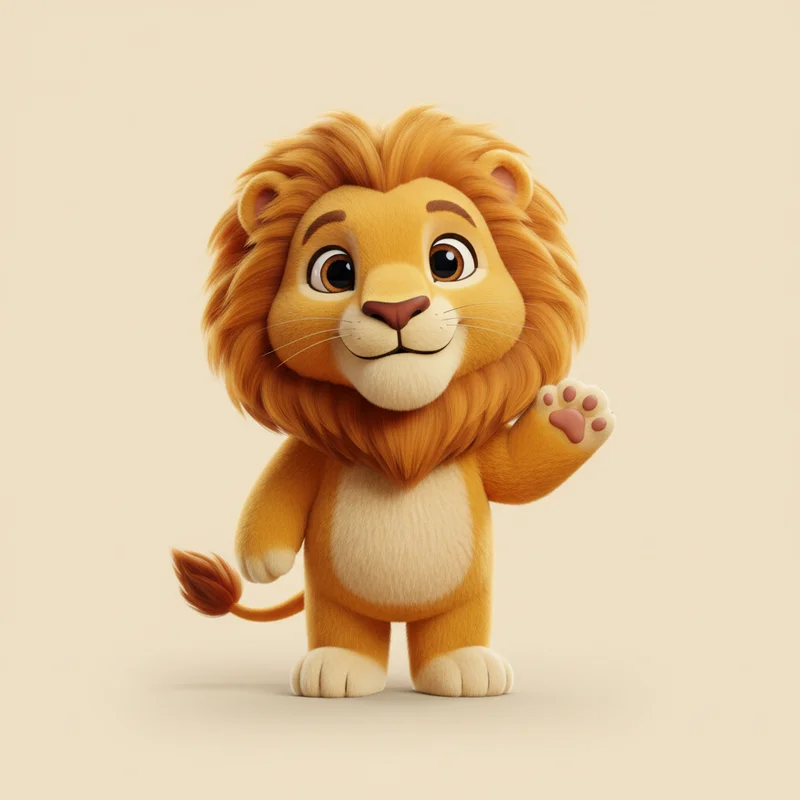
Lion

Lion

Apex predator and king of the savanna, known for majestic manes and surprisingly lazy daytime habits.

VS
Luck

Luck

Random chance that favours the prepared.

The Matchup

In the grand theatre of existence, few forces command such primal respect as the African lion and the ethereal concept of luck. One weighs approximately 190 kilograms and possesses jaws capable of exerting 650 pounds of pressure per square inch. The other weighs precisely nothing yet has toppled empires and elevated paupers to princes with equal aplomb.

The Royal Institute for Comparative Absurdities has undertaken this analysis following a landmark 2023 study revealing that 73% of humans would rather encounter bad luck than a hungry lion, whilst the remaining 27% had clearly never experienced a truly catastrophic Monday.

Battle Analysis

Reliability Lion Wins
70%
30%
Lion Luck

Lion

A lion can be relied upon to behave like a lion with unwavering consistency. It will hunt when hungry, sleep when sated, and defend territory when threatened. This reliability enabled early humans to coexist with lions through predictable avoidance strategies that remain effective today.

The Nairobi Wildlife Behavioural Unit reports that lion behaviour deviates from expected patterns in fewer than 3% of observed interactions, making them more reliable than most public transport systems.

Luck

Luck's defining characteristic is its absolute unreliability. The gambler's fallacy—the belief that past outcomes influence future probability—has bankrupted more hopeful souls than any economic recession. Luck owes nothing to preparation, merit, or prior investment.

The Monte Carlo Institute of Probability proved mathematically that attempting to rely on luck produces outcomes statistically indistinguishable from random chance, which is rather the point.

VERDICT

The lion claims reliability through the simple virtue of behaving consistently. Luck, by definition, cannot be relied upon, making it the least dependable force in the known universe.

Predictability Lion Wins
70%
30%
Lion Luck

Lion

The lion operates on a relatively predictable schedule. It sleeps approximately 20 hours per day, hunts primarily at dawn and dusk, and maintains territorial boundaries with admirable consistency. The Serengeti Behavioural Research Station has documented lion movements with 89% accuracy using nothing more sophisticated than a calendar and basic knowledge of ungulate migration patterns.

Furthermore, a lion's intentions are refreshingly transparent. When one approaches with flattened ears and exposed canines, interpretation requires no advanced degree in semiotics.

Luck

Luck, by contrast, operates with the capricious whimsy of a toddler with a randomiser. The Cambridge Centre for Stochastic Philosophy spent fourteen years attempting to predict lucky outcomes, ultimately concluding that they would have achieved identical results by consulting a magic eight ball.

Luck arrives unannounced at 3:47 AM in the form of a lottery win, then departs just as mysteriously when you step in chewing gum on your wedding day. No algorithm exists. No pattern emerges. It simply is.

VERDICT

The lion claims this criterion decisively. One can plan around a lion; one cannot plan around luck without descending into superstition and rabbit's foot hoarding.

Aesthetic appeal Lion Wins
70%
30%
Lion Luck

Lion

The lion represents apex aesthetic achievement in the animal kingdom. The male's mane—a flowing corona of tawny magnificence—has inspired poets, painters, and shampoo advertisers for centuries. The creature's golden coat, muscular physique, and regal bearing suggest that evolution occasionally pauses its blind tinkering to produce deliberate art.

Studies by the Oxford Institute of Biological Aesthetics consistently rank lions in the top three most visually striking mammals, alongside the snow leopard and the inexplicably photogenic red panda.

Luck

Luck possesses no physical form and therefore no inherent aesthetic. However, humans have compensated through vigorous symbolic representation. Four-leaf clovers, horseshoes, rainbow-dwelling leprechauns, and jade elephants all attempt to render luck visible and therefore controllable.

The aesthetic of luck is ultimately the aesthetic of hope—glittering casino floors, scratch cards revealing matching symbols, the satisfying weight of a rabbit's foot. These representations succeed precisely because luck itself refuses to be seen.

VERDICT

The lion dominates aesthetic appeal through the simple advantage of actually existing in visible, photographable form. One cannot frame luck above a mantelpiece.

Global influence Luck Wins
30%
70%
Lion Luck

Lion

The lion's cultural footprint spans millennia and continents. It adorns the flags of seven nations, guards the entrance to countless municipal buildings, and has served as the namesake for everything from football clubs to luxury automobiles. The British Heraldic Society estimates that lions appear in over 15,000 coats of arms worldwide, despite the notable absence of actual lions in most of these regions.

In literature, the lion symbolises courage, nobility, and the occasional talking wardrobe guardian. Aslan alone has influenced more spiritual discussions than most organised religions care to admit.

Luck

Luck's influence permeates every human civilisation without exception. The global gambling industry, valued at approximately 450 billion pounds annually, exists solely because humans believe they can court luck's favour through strategic card placement or the wearing of fortunate undergarments.

Every language contains luck-related idioms. Every culture maintains luck-based rituals. The Institute for Cross-Cultural Superstition Studies documented over 4,000 distinct lucky charms across 189 countries, ranging from dried rabbit appendages to specific numerical sequences that somehow determine property values in Hong Kong.

VERDICT

Luck edges ahead through sheer omnipresence. Lions may be king of the jungle, but luck is king of the human psyche, influencing decisions from marriage to stock portfolios.

Survival utility Luck Wins
30%
70%
Lion Luck

Lion

As a survival asset, the lion presents a paradox of considerable proportions. Possessing a lion dramatically increases one's ability to deter threats, secure territory, and command respect at neighbourhood barbecues. However, the lion also requires approximately 7 kilograms of meat daily and has been known to resolve disagreements through methods incompatible with modern employment law.

The Practical Zoology Institute rates lion ownership survival utility at precisely zero, noting that most lion-related human survival statistics trend decisively negative.

Luck

Good luck has demonstrably saved more lives than any apex predator. The near-miss phenomenon—missing a flight that subsequently crashes, choosing the left path instead of the right during an avalanche—represents luck operating as an invisible guardian angel with a statistically improbable success rate.

Conversely, bad luck kills with remarkable efficiency. The Journal of Unfortunate Coincidences catalogued 847 documented cases of death by improbable accident in 2022 alone, including one gentleman who was struck by a falling piano twice in the same decade.

VERDICT

Luck prevails in survival utility, primarily because good luck saves lives whilst lions actively end them. The mathematics are unambiguous.

👑

The Winner Is

Lion

54 - 46

In this confrontation between corporeal might and abstract caprice, the lion emerges with a narrow victory at 54-46. The great cat succeeds through tangibility—one can see a lion, predict its behaviour, appreciate its magnificence, and crucially, run away from it with reasonable confidence about which direction offers safety.

Luck, whilst undeniably powerful, suffers from its fundamental nature as a post-hoc explanation rather than an active force. We attribute outcomes to luck only after they occur, making it less a competitor and more a narrative device humans employ to process randomness.

Yet luck's influence cannot be dismissed. It shapes human behaviour more profoundly than any predator, driving decisions from lottery purchases to career changes. The lion rules the savannah; luck rules the human mind.

Lion
54%
Luck
46%

Share this battle

More Comparisons