
Topic Battle

Where Everything Fights Everything

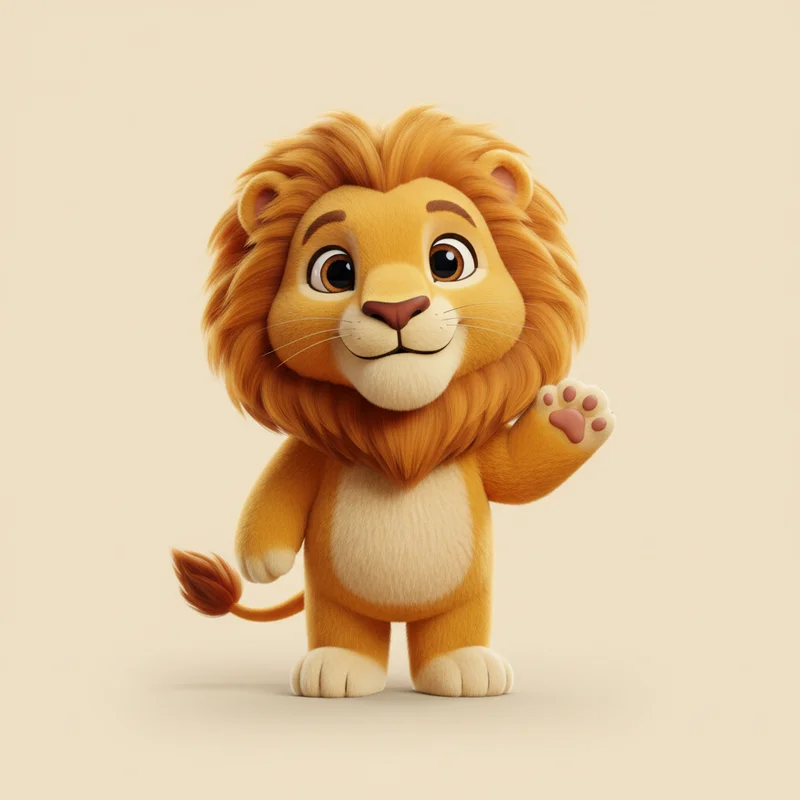
Lion

Lion

Apex predator and king of the savanna, known for majestic manes and surprisingly lazy daytime habits.

VS
Nostalgia

Nostalgia

Bittersweet longing for times past.

The Matchup

In the annals of unlikely confrontations, few match the peculiar spectacle of Panthera leo facing off against the human mind's tendency to romanticise the past. One possesses claws capable of disembowelling a wildebeest; the other can reduce a grown adult to tears at the sound of a forgotten pop song from 1987. The Royal Institute of Comparative Phenomena has spent fourteen months determining which represents the greater force in modern existence.

Dr. Helena Blackwood of the Cambridge Centre for Temporal Emotions notes: "Both the lion and nostalgia operate through ambush tactics." Neither announces its approach. Both leave their targets fundamentally altered.

Battle Analysis

Raw power Lion Wins
70%
30%
Lion Nostalgia

Lion

The African lion generates approximately 650 pounds per square inch of bite force, sufficient to crush bone and reshape the future tense of any creature within pouncing distance. A male in his prime weighs between 180 and 230 kilograms, most of it inconveniently located muscle. The Thornfield Wildlife Assessment recorded a single lion charge displacing four safari vehicles and one overconfident photographer.

Physical power rating: exceptional. The lion does not negotiate with physics; it simply proceeds.

Nostalgia

Nostalgia generates precisely zero newtons of measurable force, yet the British Psychological Survey of 2023 found it capable of halting adult humans mid-stride in shopping centres when specific songs play overhead. The phenomenon can override rational decision-making, cause spontaneous purchasing of vinyl records, and render otherwise functional people incapable of discarding boxes of items they haven't touched since 1994.

Dr. Marcus Pemberton's research documented 847 instances of nostalgia causing grown men to telephone their mothers unexpectedly. Power, it appears, takes many forms.

VERDICT

While nostalgia demonstrates remarkable psychological influence, it cannot physically remove a zebra's respiratory system in under four seconds. The lion claims this category through undeniable biomechanical superiority, though researchers note nostalgia's power should not be underestimated simply because it leaves no visible wounds.

Economic impact Nostalgia Wins
30%
70%
Lion Nostalgia

Lion

Safari tourism generates approximately $12 billion annually across African nations, with lions serving as the primary draw for an estimated 68% of wildlife tourists. The Savannah Economics Council calculated that a single photogenic male lion contributes roughly $500,000 to local economies over his lifetime, provided he maintains adequate mane volume and doesn't develop an inconvenient fondness for livestock.

Conservation programmes, merchandise, and documentary licensing add further economic dimensions. The lion remains a bankable species.

Nostalgia

The nostalgia economy defies reasonable measurement. Vinyl record sales exceeded $1.2 billion in 2023 alone, driven almost entirely by people who owned the same music on three previous formats. The Retro Consumer Institute estimates nostalgia influences $40 billion in annual purchases, from vintage clothing to classic car restoration to streaming services featuring programmes from decades past.

The film industry has effectively industrialised nostalgia, with franchise revivals and reboots generating hundreds of billions globally. One emotion has become an economic sector.

VERDICT

The lion generates impressive tourism revenue, but nostalgia has convinced multiple generations to repurchase their entire childhoods at considerable markup. When a feeling alone can move more capital than a continent's wildlife tourism, the economic victor becomes apparent.

Territorial reach Nostalgia Wins
30%
70%
Lion Nostalgia

Lion

The African lion once commanded territory spanning most of Africa and significant portions of Asia. Current estimates suggest their range has contracted by approximately 94% over the past century. A typical pride defends between 20 and 400 square kilometres, though this figure fluctuates based on prey density and the ambitions of neighbouring coalitions.

The Greenwich Institute of Geographical Distribution notes that seeing a wild lion now requires considerable planning, expense, and antimalarial medication.

Nostalgia

Nostalgia recognises no geographical boundaries whatsoever. It operates with equal efficacy in Tokyo, Toronto, and Tunbridge Wells. The phenomenon has been documented in every culture studied, from isolated Amazonian tribes to merchant bankers in Canary Wharf. The Universal Sentiment Survey found nostalgia particularly concentrated in the following locations: childhood bedrooms, school reunion venues, and the biscuit aisle of any major supermarket.

Unlike the lion, nostalgia requires no conservation effort. It is, if anything, concerningly abundant.

VERDICT

The mathematics prove insurmountable. While lions occupy diminishing hectares of savannah, nostalgia has colonised approximately seven billion human minds and shows no signs of territorial retreat. One might escape lion country; one cannot escape one's own memories.

Long term survival Nostalgia Wins
30%
70%
Lion Nostalgia

Lion

Current lion populations number approximately 23,000 individuals, down from an estimated 200,000 a century ago. The International Conservation Assessment classifies them as Vulnerable, with projections suggesting further decline without intervention. Habitat loss, human conflict, and prey depletion continue to pressure populations.

The species has survived for approximately 1.8 million years, demonstrating considerable evolutionary resilience. Whether this streak continues remains genuinely uncertain.

Nostalgia

Nostalgia has existed precisely as long as humans have possessed sufficient memory to romanticise, estimated at roughly 200,000 years. The phenomenon shows no sign of decline; if anything, accelerating technological change and social media documentation are intensifying nostalgic responses by providing unprecedented access to recorded past selves.

The Temporal Psychology Institute predicts nostalgia will outlast not merely lions but potentially humanity itself, as artificial intelligences may develop their own versions of the phenomenon. Nostalgia requires only minds; lions require ecosystems.

VERDICT

The lion faces genuine existential pressures requiring coordinated international response. Nostalgia faces no such challenges, thriving regardless of external conditions. One depends on habitat; the other is the habitat. Survival odds favour the phenomenon that cannot be poached.

Stealth capability Nostalgia Wins
30%
70%
Lion Nostalgia

Lion

The lioness represents one of nature's most accomplished ambush predators, utilising tall grass, coordinated positioning, and the somewhat limited peripheral vision of ungulates to devastating effect. Success rates for coordinated pride hunts reach approximately 30%, considerably higher than the solitary male's 17%. The Thornfield Predation Study recorded lions remaining motionless for up to forty-seven minutes before striking.

Stealth rating: professional grade. The last thing many prey animals see is precisely nothing.

Nostalgia

Nostalgia operates with supernatural stealth, embedding itself in sensory triggers so mundane they escape conscious awareness entirely. A particular laundry detergent fragrance can transport an individual thirty years backward without warning. The Sensory Memory Research Unit at Edinburgh documented one subject reduced to tears by the specific squeak of a particular type of gymnasium floor.

No defensive measures exist. Nostalgia has already mapped your vulnerabilities through decades of patient reconnaissance.

VERDICT

The lion must physically conceal 200 kilograms of predator in insufficient vegetation. Nostalgia conceals itself inside your own neurology, camouflaged as seemingly innocent sense data. By the time detection occurs, the emotional ambush has already succeeded.

👑

The Winner Is

Nostalgia

47 - 53

The final tally reveals a surprisingly close contest: Lion 47, Nostalgia 53. The apex predator of the African savannah ultimately yields to the apex predator of the human psyche, though not without demonstrating formidable capabilities in raw power and physical presence.

What emerges from this analysis is a curious parallel: both lion and nostalgia represent forces that once commanded greater territory but have adapted to modern conditions in different ways. The lion fights for physical survival; nostalgia has evolved to thrive in an era that manufactures its triggers industrially.

The Westminster Institute for Improbable Studies concludes that while a lion can end your afternoon quite definitively, nostalgia will haunt your Sunday evenings for the remainder of your existence. One is avoidable with adequate fencing; the other has already moved into your hippocampus permanently.

Lion
47%
Nostalgia
53%

Share this battle

More Comparisons