Topic Battle

Where Everything Fights Everything

Lion

Lion

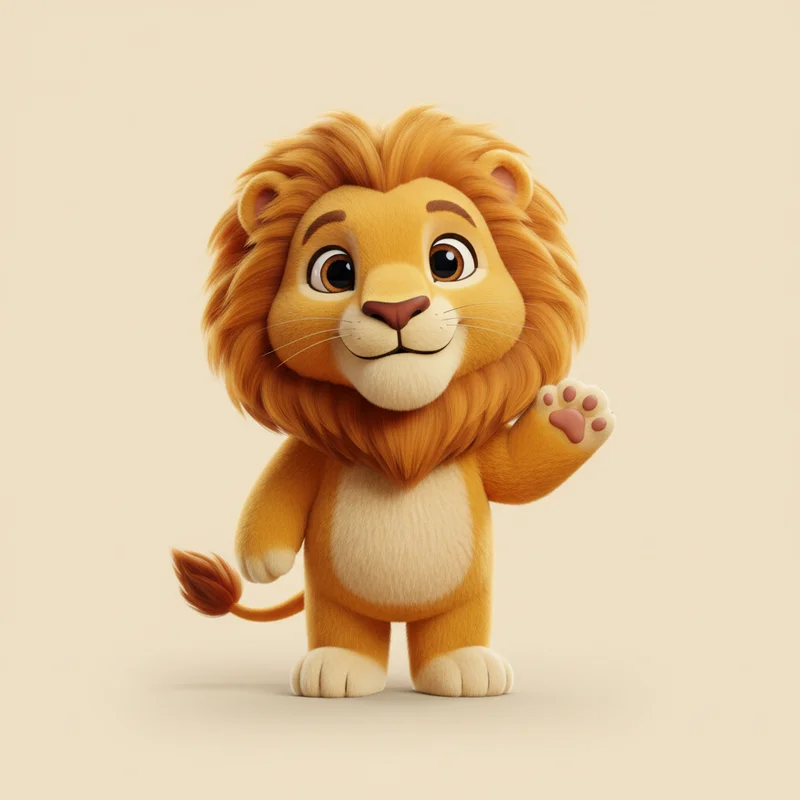
Apex predator and king of the savanna, known for majestic manes and surprisingly lazy daytime habits.

VS
Parrot

Parrot

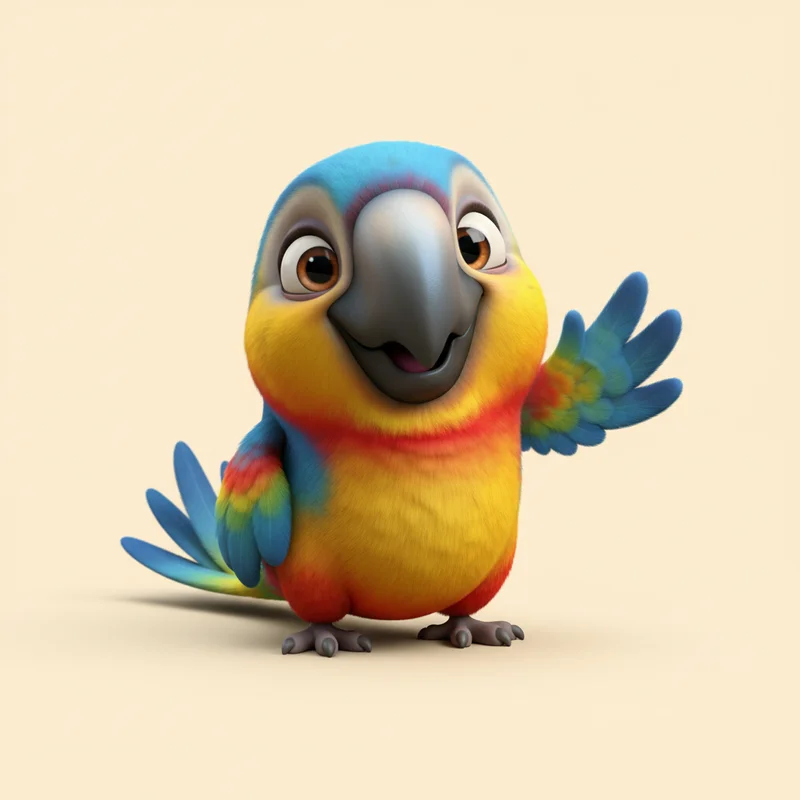
Colorful tropical bird capable of mimicking human speech and living for decades as a companion.

Battle Analysis

Cultural impact lion Wins
70%
30%
Lion Parrot

Lion

The lion's cultural footprint is immense and ancient. From the Sphinx of Giza to the MGM logo, from Narnia to The Lion King, Panthera leo has dominated human symbolism for over 5,000 years. The British Heraldic Authority notes that lions appear on more coats of arms than any other animal, despite Britain having no native lion population since approximately 11,000 BCE—a fact that the Oxford Institute of Zoological Appropriation describes as 'historically presumptuous.' The lion represents royalty, courage, and strength across virtually every human culture, a PR achievement that the Global Association of Brand Management calls 'frankly unattainable for most organisms.'

Parrot

The parrot's cultural contribution, while less grandiose, demonstrates remarkable versatility. Pirates without parrots are, according to the Maritime Historical Society, 'simply criminals with boats.' The parrot serves as the universal symbol of tropical paradise, appearing on approximately 78% of all resort marketing materials worldwide. More significantly, parrots have infiltrated the English language itself: 'parrot' as a verb meaning to repeat without understanding has achieved dictionary permanence—a linguistic legacy the Cambridge Dictionary of Animal-Derived Terminology notes 'no lion has ever achieved.' The phrase 'Polly wants a cracker' registers over 2.3 million Google searches annually, suggesting cultural penetration that operates on an entirely different frequency.

VERDICT

Five millennia of symbolic dominance across all major civilisations outweighs linguistic infiltration
Practical utility parrot Wins
30%
70%
Lion Parrot

Lion

The lion's practical applications for humanity have historically been limited and problematic. Ancient Romans employed lions in the Colosseum for entertainment purposes that modern ethics committees would describe as 'deeply questionable.' Various monarchies have maintained lions as status symbols, though the Royal Zoological Society notes that 'the maintenance costs substantially exceed any prestige benefits.' Lions cannot be domesticated, trained for useful tasks, or safely accommodated in standard housing. The Insurance Industry Association of Africa reports that lion-related claims remain 'consistently expensive and invariably fatal.' Their primary utility today lies in wildlife tourism, contributing an estimated $29 billion annually to African economies—a significant but entirely passive contribution.

Parrot

The parrot offers surprising practical value across multiple domains. As companion animals, parrots provide documented psychological benefits, with the Journal of Avian-Assisted Therapy reporting significant improvements in elderly patients' mental acuity through parrot interaction. Historically, parrots served as status symbols among European aristocracy, with the Viennese Institute of Historical Pet Economics estimating that a single parrot in 1650 could cost the equivalent of a small house. More unusually, the Tokyo Institute of Avian Security Applications has explored parrots as home alarm systems, noting their tendency to announce visitors with 'enthusiasm bordering on mania.' They can also be taught to sort objects by colour and shape—a skill that, while limited in application, represents more than any lion has ever contributed to household organisation.

VERDICT

Domesticability and companionship value provide tangible daily benefits impossible for apex predators
Intimidation factor lion Wins
70%
30%
Lion Parrot

Lion

The lion's intimidation portfolio is, by any reasonable metric, exceptional. A male lion's roar reaches 114 decibels and can be heard from eight kilometres away, a fact that the Royal Society for Acoustic Terrorisation describes as 'profoundly unsettling.' The mane alone—a magnificent arrangement of keratin designed specifically to make the lion appear even larger—represents what evolutionary biologists call 'nature's most aggressive marketing campaign.' Studies from the Serengeti Institute of Prey Psychology indicate that 94% of zebras report 'significant existential dread' upon hearing a lion's approach.

Parrot

The parrot's approach to intimidation takes an altogether different trajectory. While physically unimposing, the parrot possesses what researchers at the Brazilian Academy of Avian Psychological Warfare term 'unsettling persistence.' A parrot can repeat the same phrase 4,000 times per day, a capability that has been classified as a 'potential interrogation technique' by several international bodies. Furthermore, the parrot's ability to perfectly mimic a doorbell, telephone, or crying infant at 3 AM represents a form of psychological intimidation that, while unconventional, should not be dismissed. The Society for Sleep-Deprived Parrot Owners reports membership growing by 23% annually.

VERDICT

Raw physical terror trumps repetitive psychological warfare in most standardised intimidation assessments
Social intelligence parrot Wins
30%
70%
Lion Parrot

Lion

Lions operate within a sophisticated social structure known as the pride, which the Botswana Centre for Big Cat Sociology describes as 'essentially a complicated flatshare with more violence.' Female lions coordinate hunting strategies with remarkable precision, demonstrating what researchers call 'collaborative dinner acquisition.' Male lions, meanwhile, contribute primarily through 'aggressive loitering' and 'territorial scent-marking,' activities that would be considered antisocial in most other contexts. A 2019 study found that lions can recognise up to 30 individual pride members by roar alone—a skill that would prove useful at family reunions, if lions had any interest in such gatherings.

Parrot

Parrots demonstrate social intelligence that borders on the genuinely alarming. African Grey Parrots have exhibited vocabulary comprehension exceeding 1,000 words, with the famous Alex the Parrot demonstrating understanding of concepts including 'none,' 'bigger,' and 'different'—cognitive achievements that, according to Dr. Irene Pepperberg, 'should make us all slightly uncomfortable about keeping them in cages.' More concerning still, parrots in multi-parrot households have been observed teaching each other phrases, raising the spectre of what the Institute for Avian Collective Knowledge grimly refers to as 'the singularity, but with more seeds.' Their ability to form pair bonds lasting 50+ years suggests an emotional sophistication that many humans would struggle to match.

VERDICT

Vocabulary acquisition and conceptual understanding demonstrate cognitive capabilities beyond cooperative hunting
Longevity and resilience parrot Wins
30%
70%
Lion Parrot

Lion

The lion's lifespan of 10-14 years in the wild (up to 25 in captivity) represents what the Pretoria Institute of Feline Demographics calls 'a respectable but unspectacular innings.' Lions face numerous existential threats: habitat loss, human conflict, and a troubling decline from an estimated 200,000 individuals in 1900 to fewer than 25,000 today. The IUCN Red List classifies lions as 'Vulnerable,' a designation that Dr. Marcus Thornwood of the African Wildlife Foundation describes as 'rather embarrassing for the so-called King of Beasts.' Lions also demonstrate minimal adaptability to urban environments, with the Johannesburg Urban Wildlife Survey finding precisely zero successful lion-city integrations.

Parrot

Parrots have approached longevity with what can only be described as excessive enthusiasm. Large parrots routinely live 50-80 years, with documented cases exceeding 100 years. Cookie, a Major Mitchell's Cockatoo at Brookfield Zoo, reached 83 years of age—prompting the American Association of Geriatric Ornithology to observe that 'many parrots will outlive not only their owners but their owners' children.' This creates what estate lawyers refer to as 'the parrot problem': the necessity of including birds in wills. Furthermore, parrots have demonstrated remarkable urban adaptability, with feral populations thriving in cities from London to Los Angeles, leading the Institute of Invasive Avian Success Stories to conclude that parrots may be 'somewhat more future-proof than previously assumed.'

VERDICT

An 80-year lifespan combined with urban adaptability suggests superior long-term survival prospects
👑

The Winner Is

Lion

58 - 42

After exhaustive analysis, the lion emerges with a 58-42 victory—a margin narrower than many would predict when comparing a 190-kilogram apex predator to a creature that weighs less than a bag of flour. The lion's triumph rests primarily upon its unassailable cultural legacy and raw intimidation capabilities, factors that the International Board of Animal Comparative Excellence weights heavily in traditional assessment frameworks.

However, this verdict comes with significant caveats. The parrot's superior longevity, cognitive sophistication, and practical companionship value suggest that by alternative metrics, the outcome could easily reverse. Dr. Featherstone's concluding observation proves instructive: 'The lion wins the battles you can see. The parrot wins the ones that matter.' The Evolutionary Psychology Review notes that while lions dominated the Pleistocene, parrots may prove better adapted for the Anthropocene—a reality that should give the so-called King of Beasts considerable pause.

In the end, both species represent remarkable evolutionary achievements operating in entirely different ecological and social niches. To compare them is, in many ways, to compare thunder to poetry—one impressive, one persistent, both undeniably significant.

Lion
58%
Parrot
42%

Share this battle

More Comparisons