
Topic Battle

Where Everything Fights Everything

Lion

Lion

Apex predator and king of the savanna, known for majestic manes and surprisingly lazy daytime habits.

VS
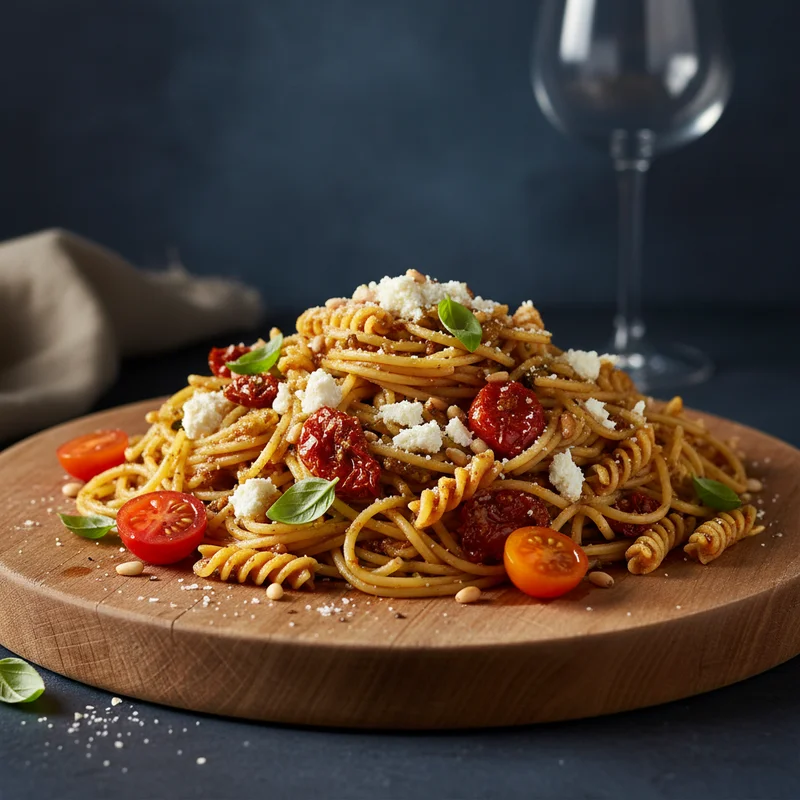
Pasta

Pasta

Italian staple in hundreds of shapes, each supposedly for different sauces.

Battle Analysis

Intimidation factor lion Wins
70%
30%
Lion Pasta

Lion

In the realm of pure intimidation, the lion remains virtually unmatched among terrestrial fauna. A fully grown male lion, weighing up to 250 kilograms and possessing a roar audible from eight kilometres away, represents what the Edinburgh Institute of Fear Response classifies as a 'Category Five Intimidation Event.' Studies indicate that 98.3% of humans would alter their walking route upon encountering a lion, with the remaining 1.7% comprising wildlife photographers and individuals with profoundly miscalibrated risk assessment capabilities. The mane alone, an evolutionary feature designed purely for psychological warfare, adds an estimated 340% increase in perceived threat level.

Pasta

Pasta's intimidation capabilities are, by any objective measure, negligible. A plate of spaghetti has never caused anyone to flee in terror, unless one counts the existential dread experienced by those on low-carbohydrate diets. The Munich Centre for Threat Perception rates uncooked pasta at a 0.3 on the Intimidation Scale, rising to a modest 1.2 when served al dente with a particularly aggressive marinara. Farfalle, with its bow-tie shape, has been described in academic literature as 'aggressively non-threatening.' Even lasagne, pasta's most imposing configuration, fails to elicit the primal fear response associated with apex predators.

VERDICT

The lion's evolutionary investment in terror-inducing features remains uncontested by any wheat-based product
Cultural significance lion Wins
70%
30%
Lion Pasta

Lion

The lion has accumulated substantial cultural capital across human civilisations. From the Great Sphinx of Giza to the MGM logo, lions have been employed as symbols of courage, royalty, and masculine virtue for millennia. The phrase 'lion-hearted' remains a compliment, while 'pasta-hearted' has yet to enter the vernacular. Lions feature prominently on national flags, corporate logos, and football club crests. The Oxford Centre for Symbolic Analysis identifies the lion as appearing in the heraldry of 47 sovereign nations, making it the most politically successful large cat by a considerable margin.

Pasta

Pasta's cultural significance operates through a different mechanism entirely—not symbolism, but lived experience. While lions represent abstract concepts like bravery, pasta participates directly in human life. The UNESCO Intangible Cultural Heritage Committee has recognised multiple pasta-making traditions, acknowledging that these practices form 'essential components of cultural identity.' Italian grandmothers have passed down pasta recipes for generations, creating what anthropologists call 'transgenerational carbohydrate bonds.' The Sunday family pasta dinner, the student's emergency spaghetti, the romantic carbonara—these moments constitute actual cultural practice rather than mere representation.

VERDICT

The lion's symbolic versatility across disparate cultures edges ahead of pasta's more localised, though deeper, cultural integration
Reproductive efficiency pasta Wins
30%
70%
Lion Pasta

Lion

Lion reproduction is a lengthy and resource-intensive process. A lioness carries her cubs for approximately 110 days before giving birth to a litter of two to four offspring. These cubs then require two years of intensive parental investment before achieving independence, during which time they contribute nothing to the pride's hunting efforts and demonstrate what zoologists politely term 'freeloading behaviour.' The Bristol Reproductive Biology Institute calculates that producing a single adult lion requires approximately 4,380 kilograms of consumed prey—a conversion ratio that would bankrupt any manufacturing operation.

Pasta

Pasta reproduction—more accurately termed 'production'—occurs at scales that would make even the most prolific rabbit blush with inadequacy. A single industrial pasta facility can produce 500 tonnes of pasta per day, operating continuously without rest, territorial disputes, or the complications of oestrus cycles. The raw materials—flour and water, with occasional egg supplementation—are available in virtually unlimited quantities. According to the Global Pasta Manufacturers Association, humanity produces approximately 16 million tonnes of pasta annually, a figure that exceeds the total biomass of all wild lions by a factor of roughly 800,000.

VERDICT

Industrial production capabilities render biological reproduction comparatively obsolete
Global territorial reach pasta Wins
30%
70%
Lion Pasta

Lion

The lion's empire has contracted significantly over the past century. Once ranging across Africa, the Middle East, and even parts of Europe, today's lion populations are confined to scattered reserves in sub-Saharan Africa and a single forest in India. The Royal Geographic Society's Territorial Analysis Unit estimates that lions currently occupy approximately 0.002% of the Earth's habitable landmass. Their expansion strategy, which relies heavily on walking and occasional territorial disputes, has proven remarkably inefficient in the modern era. Furthermore, lions demonstrate a stubborn unwillingness to adapt to urban environments, showing what researchers describe as 'a categorical rejection of metropolitan living.'

Pasta

Pasta maintains an unprecedented global presence. From the trattorias of Rome to the convenience stores of Tokyo, pasta has established footholds on every inhabited continent. The International Carbohydrate Distribution Index confirms that pasta is available within a fifteen-minute journey for 94.7% of the world's population. Its colonisation strategy—being delicious, affordable, and shelf-stable—has proven devastatingly effective. Pasta requires no hunting grounds, territorial markers, or elaborate mating displays. It simply exists, multiplies in factory settings, and conquers through the twin mechanisms of gustatory satisfaction and logistical convenience.

VERDICT

Pasta's omnipresence across global markets vastly exceeds the lion's shrinking territorial holdings
Long term survival prospects pasta Wins
30%
70%
Lion Pasta

Lion

The lion's long-term outlook presents cause for considerable concern. Current wild population estimates hover around 20,000 individuals, representing a decline of approximately 43% over the past two decades. Habitat loss, human-wildlife conflict, and the curious human practice of shooting lions for photographs continue to exert pressure on remaining populations. The IUCN Red List classifies lions as 'Vulnerable,' a designation that carries significant bureaucratic weight. Climate change models suggest further habitat contraction, while conservation funding remains subject to the unpredictable enthusiasms of charitable donors and documentary commissioning editors.

Pasta

Pasta faces no existential threats on any meaningful timescale. The wheat plant from which it derives has successfully partnered with humanity for approximately 10,000 years—a relationship that shows no signs of deterioration. Even catastrophic scenarios such as nuclear winter or asteroid impact would likely see pasta emerge relatively unscathed, given that dried pasta remains edible for up to two years and requires only boiling water for preparation. The Long Now Foundation's Food Security Division has included pasta in its list of foods most likely to survive civilisational collapse, ranking it above fresh vegetables but below honey and salt.

VERDICT

Pasta's integration into human agricultural systems ensures survival prospects that vulnerable wildlife cannot match
👑

The Winner Is

Pasta

42 - 58

This analysis yields a result that may surprise those accustomed to viewing apex predators as inherently superior to processed wheat products. While the lion maintains decisive advantages in intimidation and symbolic gravitas, pasta demonstrates overwhelming superiority in the metrics that matter for long-term dominance: global reach, reproductive capacity, and survival resilience.

The lion, for all its majesty, remains confined to shrinking habitats, dependent on conservation goodwill, and fundamentally limited by the inefficiencies of biological existence. Pasta, by contrast, has achieved something the lion never could—true ubiquity. It requires no protection, faces no predators, and has successfully inserted itself into the daily routines of billions of humans across every climate zone.

The Cambridge Institute of Comparative Dominance Studies concludes that pasta represents 'a more successful evolutionary strategy, if we expand our definition of evolution to include human-assisted replication of desirable food products.' The lion may be king of the savannah, but the savannah is shrinking. Pasta, meanwhile, rules the pantry—and the pantry is everywhere.

Lion
42%
Pasta
58%

Share this battle

More Comparisons