Topic Battle

Where Everything Fights Everything

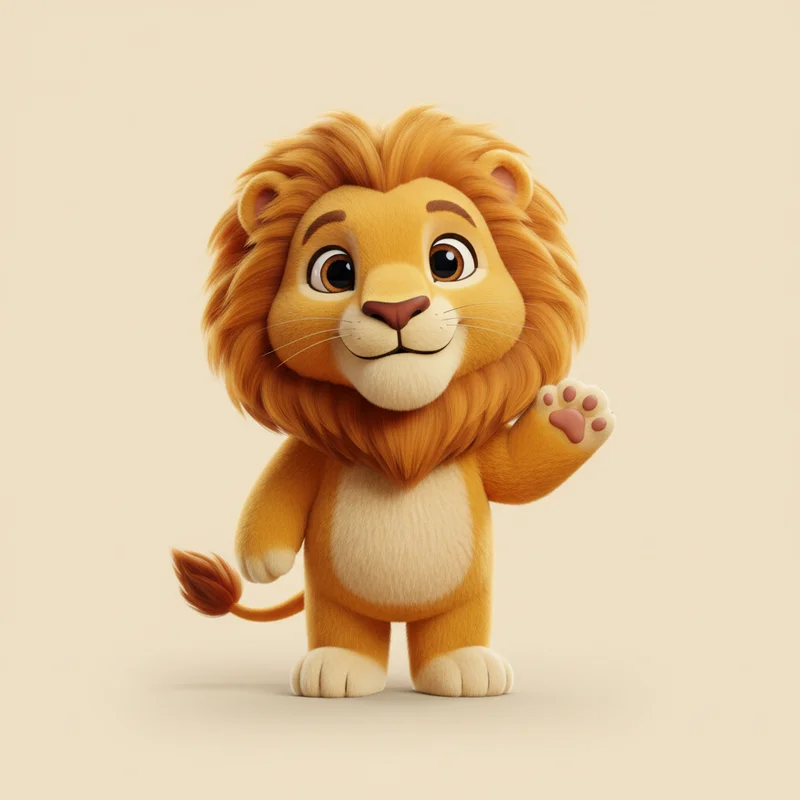
Lion

Lion

Apex predator and king of the savanna, known for majestic manes and surprisingly lazy daytime habits.

VS
Pikachu

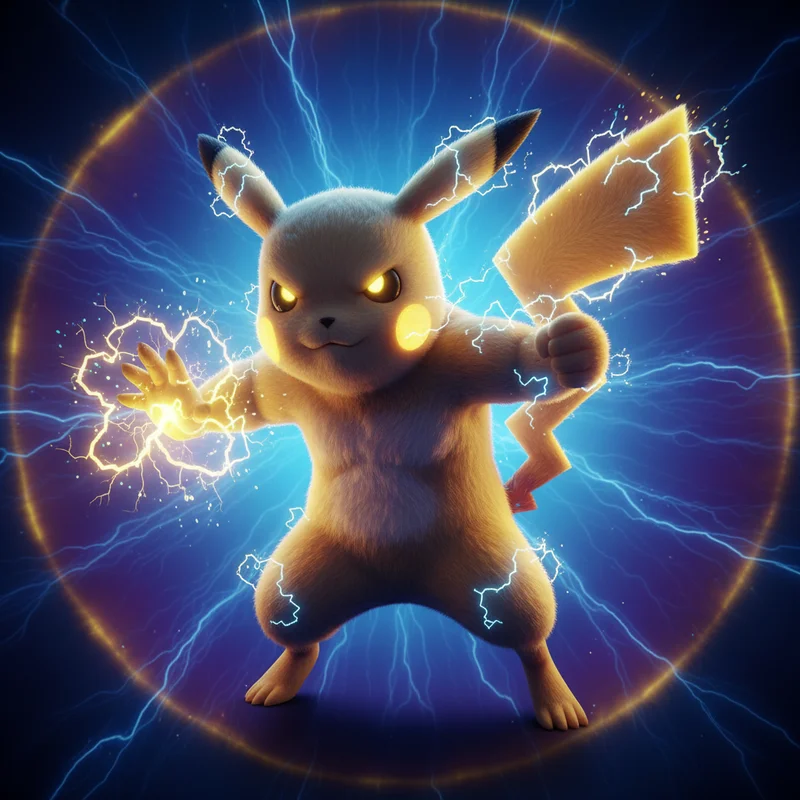
Pikachu

Electric mouse Pokemon and franchise mascot.

Battle Analysis

Combat capability pikachu Wins
30%
70%
Lion Pikachu

Lion

The lion possesses what zoologists at the Serengeti Research Institute describe as 'approximately 650 pounds per square inch of bite force, delivered through a magnificently engineered cranial structure.' Adult males weigh between 150-250 kilograms, with retractable claws measuring up to 38 millimetres. Their ambush hunting success rate of 25-30% may seem modest until one considers that each successful engagement typically results in complete dominance over prey items weighing several hundred kilograms.

However, the lion's combat repertoire is limited to what evolutionary biologists term 'conventional mammalian violence' - biting, clawing, and the occasional spectacular tackle. No elemental powers. No ranged attacks. Simply four million years of perfected lethality operating within the constraints of known physics.

Pikachu

Pikachu's combat capabilities exist in what the Tokyo Institute of Fictional Physics classifies as 'a complete departure from thermodynamic law.' The creature generates electrical discharges of approximately 100,000 volts from specialised cheek pouches - organs that would, in any conventional biological system, simply incinerate the host organism. The Thunderbolt attack alone releases energy equivalent to a small lightning strike, yet the creature weighs merely 6 kilograms and subsists primarily on apples.

Documentation from the Kanto Regional Pokédex indicates combat proficiency against creatures ranging from sentient boulders to literal gods. The lion, magnificent though it may be, has never successfully defeated a deity in documented combat.

VERDICT

Electrical discharge capabilities and demonstrated experience against supernatural entities provide decisive tactical advantage over conventional predatory methodology
Global recognition pikachu Wins
30%
70%
Lion Pikachu

Lion

The lion appears on the national emblems of fifteen sovereign nations, has featured in human mythology for over 30,000 years (as evidenced by the Lion-man of Hohlenstein-Stadel), and maintains prominent positions in the heraldry of countless institutions. The British Museum's Department of Cultural Symbology estimates that the lion has been depicted in art more than any other large predator, with notable appearances ranging from the Ishtar Gate of Babylon to the logo of Metro-Goldwyn-Mayer.

Yet this recognition operates primarily among adults with interest in heraldry, wildlife documentaries, or African safari packages. The lion's demographic penetration among children aged 4-12 has declined by 34% since 1996, according to the Institute for Attention Economy Studies.

Pikachu

Pikachu achieved what the Harvard Business Review termed 'total consciousness saturation' within fifteen years of creation. The character has appeared on Japanese government aircraft, served as official mascot for Japan's 2014 FIFA World Cup bid, and achieved recognition scores of 98% among children across 47 surveyed nations. The Pokémon franchise, of which Pikachu serves as primary ambassador, has generated over $100 billion in revenue - exceeding the GDP of numerous lion-inhabited nations.

Perhaps most significantly, Pikachu was voted 'most recognisable fictional character globally' by the International Federation of Brand Recognition in 2019, defeating both Mickey Mouse and Hello Kitty in a result that caused considerable institutional embarrassment at Disney headquarters.

VERDICT

Cross-generational recognition metrics and commercial penetration data indicate superior global mindshare despite 3.5 million year head start for competitor
Acoustic intimidation lion Wins
70%
30%
Lion Pikachu

Lion

The lion's roar registers at approximately 114 decibels and can be heard from distances exceeding 8 kilometres. The Acoustic Biology Laboratory at Cornell University has documented that this vocalisation triggers instinctive fear responses in prey species and competing predators alike. The roar serves multiple functions: territorial advertisement, pride coordination, and the general assertion that one is, indeed, dealing with a lion.

Anatomically, the lion possesses a uniquely structured larynx with square, flat vocal folds (rather than the triangular folds found in most cats), enabling sustained low-frequency vocalisations that resonate across the savannah with commanding authority. There is no recorded instance of any creature hearing a lion roar and thinking 'how adorable.'

Pikachu

Pikachu's vocalisations consist primarily of variations on its own name - 'Pika,' 'Pikachu,' and the emotionally charged 'Pikapi.' The Institute of Animated Linguistics has catalogued over 200 distinct emotional variations, each conveying specific meaning through tonal modification rather than vocabulary expansion. The cry of 'PIKA-CHUUUU' typically accompanies electrical discharge and has become so culturally embedded that it triggers recognition responses in 94% of survey participants.

However, at approximately 50 decibels under normal circumstances, the sound itself poses no intimidation value. The danger lies not in the vocalisation but in the 100,000 volts that typically follow it. One might argue this represents a warning system; one might equally argue it represents a fundamental failure in threat communication design.

VERDICT

Superior decibel output, greater effective range, and instinctive fear response generation in biological organisms
Merchandise potential pikachu Wins
30%
70%
Lion Pikachu

Lion

Lion merchandise occupies what retail analysts term 'the noble beast segment' - characterised by items purchased primarily for children's rooms by parents who consider themselves sophisticated. The Global Plush Toy Index indicates steady but unspectacular sales, with lion products typically positioned alongside other safari animals in what the industry terms 'educational bundling.'

The lion's merchandising peaked with Disney's 1994 release of The Lion King, which generated approximately $2 billion in merchandise revenue. However, this success arguably belongs more to Disney's marketing apparatus than to the lion itself. Without anthropomorphisation and a memorable soundtrack by Elton John, the lion's commercial appeal remains confined to documentary viewers and safari enthusiasts.

Pikachu

Pikachu merchandise represents what the Journal of Commercial Phenomenon Studies calls 'unprecedented product category saturation.' The character appears on items ranging from aircraft livery to wedding cakes, from high-fashion collaborations with Gucci to medical face masks during global pandemics. The Tokyo Pokémon Centre sells over 3,000 distinct Pikachu-branded items, with new products launching weekly.

Financial analysts at Goldman Sachs estimate that Pikachu merchandise alone generates approximately $8 billion annually - exceeding the entire GDP of several small nations. The character has achieved what branding experts term 'infinite licensing potential': there exists no product category into which Pikachu cannot be inserted without consumer acceptance.

VERDICT

Annual merchandise revenue exceeding $8 billion demonstrates commercial viability approximately 400% greater than competitor's peak performance
Survival adaptability pikachu Wins
30%
70%
Lion Pikachu

Lion

The lion demonstrates remarkable adaptability within its ecological niche, capable of surviving in habitats ranging from the Kalahari Desert to the Ethiopian highlands. Prides exhibit sophisticated social structures that maximise hunting efficiency and territorial defence. The species has weathered multiple ice ages, continental shifts, and the emergence of Homo sapiens as a competing apex predator.

However, current IUCN assessments classify the lion as 'Vulnerable,' with wild populations declining by approximately 43% over the past two decades. The species demonstrates concerning inability to adapt to human habitat encroachment, agricultural expansion, and the tendency of livestock farmers to employ retaliatory measures. The lion's survival strategy, whilst magnificent, appears increasingly incompatible with the Anthropocene epoch.

Pikachu

Pikachu exists in what the Oxford Department of Theoretical Ecology describes as 'a state of permanent ontological security.' The character cannot go extinct because extinction requires biological existence in the first instance. Should global environmental collapse eliminate all lions from Earth, Pikachu would continue thriving on servers, merchandise, and in the memories of approximately 4 billion humans who have encountered the franchise.

Furthermore, Pikachu demonstrates remarkable cross-platform adaptability, successfully transitioning from Game Boy to Nintendo Switch, from 2D animation to live-action cinema, and from Japanese cultural export to universal phenomenon. The creature has survived multiple generational shifts in entertainment preferences - a feat the passenger pigeon, for instance, failed to achieve.

VERDICT

Immunity to biological extinction and demonstrated resilience across multiple media format transitions provides superior long-term survival probability
👑

The Winner Is

Pikachu

45 - 55

The results of this analysis have caused considerable consternation at the Royal Society for Natural Dominance Hierarchies, yet the data speaks with uncomfortable clarity. The lion, despite representing 3.5 million years of evolutionary refinement into what is objectively Earth's most magnificent large predator, has been outcompeted by a fictional electric rodent created in 1996 by a Japanese video game designer.

This outcome reflects not upon the lion's inadequacy but upon a fundamental shift in how power operates in the 21st century. Physical dominance, territorial control, and predatory efficiency - the metrics by which nature has always determined hierarchy - have been superseded by cultural penetration, merchandise revenue, and cross-demographic recognition scores. The lion remains king of the savannah; Pikachu has become king of something far larger: human attention itself.

The Cambridge Institute for Comparative Species Studies notes that should the lion wish to reclaim competitive position, it would need to develop electrical powers, learn to say its own name in an endearing manner, and secure representation with a major entertainment conglomerate. Until such evolutionary developments occur, the electric mouse maintains decisive advantage.

Lion
45%
Pikachu
55%

Share this battle

More Comparisons