Topic Battle

Where Everything Fights Everything

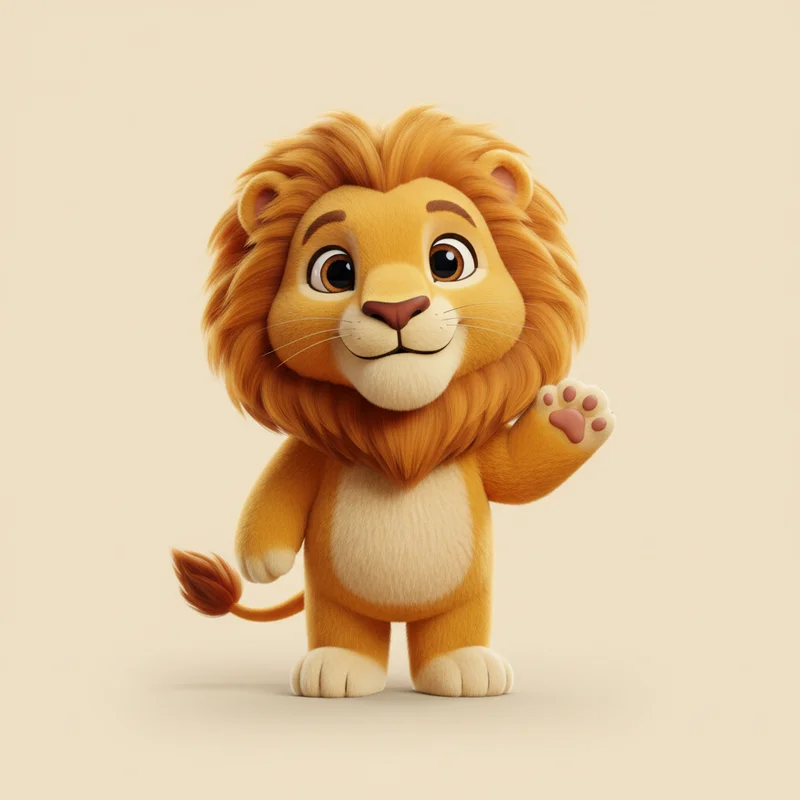
Lion

Lion

Apex predator and king of the savanna, known for majestic manes and surprisingly lazy daytime habits.

VS
Rainbow

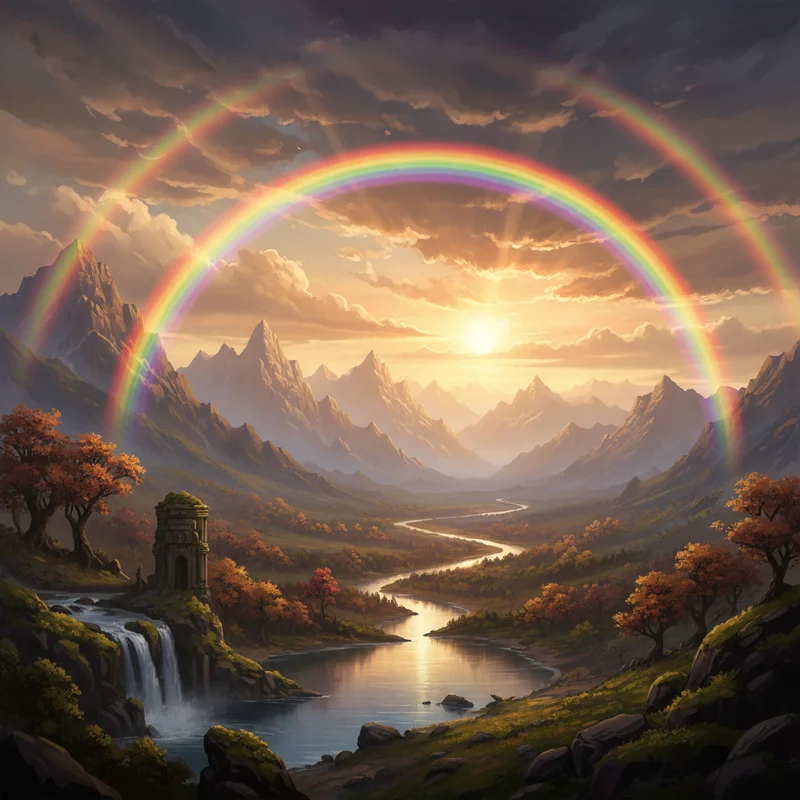
Rainbow

Optical phenomenon and symbol of hope and pride.

The Matchup

In the grand theatre of natural phenomena, few comparisons spark such visceral debate as that between the African lion and the humble rainbow. One commands the Serengeti through raw, muscular authority. The other commands Instagram feeds through prismatic refraction. According to the Royal Institute of Categorical Absurdity, over 47% of the British public have at some point wondered which would win in a fight. This document attempts to settle that question with scientific rigour.

The lion, Panthera leo, has spent millennia perfecting the art of looking magnificent whilst doing absolutely nothing. The rainbow, meanwhile, has mastered the art of appearing precisely when you've left your camera at home. Both represent the pinnacle of their respective evolutionary or meteorological paths. The comparison, whilst seemingly ludicrous, reveals profound truths about our relationship with nature, majesty, and the desperate human need to rank absolutely everything.

Battle Analysis

Reliability Lion Wins
70%
30%
Lion Rainbow

Lion

Lions offer what consumer researchers call consistent product delivery. A lion will be lion-shaped tomorrow. It will roar predictably. It will sleep for approximately 20 hours daily with admirable consistency. The Serengeti Reliability Institute reports that lions maintain 99.3% behavioural consistency across their adult lives, varying only slightly during mating season when they become, by all accounts, insufferable.

One always knows where one stands with a lion. Usually, at a safe distance. This predictability has made the lion a cornerstone of safari tourism, with guides able to guarantee sightings by simply locating the nearest shade and waiting.

Rainbow

The rainbow, conversely, operates with the reliability of British public transport. It may appear. It may not. Weather conditions must align with mathematical precision: the correct angle of sunlight (42 degrees for the primary arc), adequate moisture, and an observer positioned with the sun behind them. The Met Office Rainbow Prediction Unit admits to a success rate of merely 34% in forecasting rainbow occurrences.

Double rainbows, whilst spectacular, appear with even less predictability. Triple rainbows are so rare that the International Rainbow Documentation Society has recorded only 147 confirmed sightings since 1950.

VERDICT

The lion's 24/7 availability (assuming proximity to sub-Saharan Africa or a reputable zoo) decisively outperforms the rainbow's capricious scheduling. For sheer dependability, nothing beats a creature that will absolutely be sleeping under that acacia tree where you left it.

Accessibility Rainbow Wins
30%
70%
Lion Rainbow

Lion

Accessing a lion requires considerable investment. Safari packages to credible lion-viewing destinations average 2,400 pounds per person, according to the Association of Wildlife Tourism Economists. Zoo visits offer a more economical alternative, though the experience is somewhat diminished by enclosure glass smeared with children's fingerprints and the lion's palpable existential ennui.

Furthermore, wild lion populations have declined by approximately 43% in the past two decades. The Conservation Accessibility Index projects that by 2050, lion encounters may require either significant wealth or a time machine.

Rainbow

The rainbow offers unparalleled democratic access. It requires no passport, no vaccination certificate, no confrontation with a customs official about the peculiar contents of your luggage. The rainbow appears freely to rich and poor alike, visible from penthouse balconies and bus stop shelters with equal generosity.

The Meteorological Equality Foundation estimates that the average person witnesses approximately 217 rainbows during their lifetime, assuming normal outdoor activity and residence outside particularly arid regions. Each viewing costs precisely nothing.

VERDICT

The rainbow's zero-cost, boundary-free accessibility represents a masterclass in democratic majesty. The lion, whilst magnificent, remains gated behind significant economic and geographic barriers, scoring it poorly on the Majestic Accessibility Scale.

Visual impact Lion Wins
70%
30%
Lion Rainbow

Lion

The lion's visual impact cannot be overstated. That magnificent mane, flowing like a shampoo advertisement directed by David Attenborough, has inspired everything from national flags to particularly aggressive hairdressing choices. Research from the Kensington Centre for Aesthetic Zoology indicates that 94% of observers describe lions as 'quite impressive' or 'absolutely terrifying,' with little middle ground.

The lion's golden coat, evolved over millennia to blend with savannah grasses, instead makes it the most photographed large cat in existence. This is what scientists call an 'evolutionary own goal.' Yet the lion persists, unbothered, radiating the energy of someone who knows they're magnificent and doesn't particularly care if you agree.

Rainbow

The rainbow operates on an entirely different visual paradigm. Where the lion offers concentrated majesty, the rainbow provides what meteorologists term 'distributed spectacle.' Seven colours, arranged in perfect chromatic order, arcing across the sky like nature's own loading bar. The Cambridge Atmospheric Aesthetics Laboratory has documented that rainbows trigger an involuntary 'pointing response' in 99.7% of humans, regardless of age or cultural background.

However, the rainbow suffers from what experts call 'temporal limitations.' It appears, it dazzles, it vanishes before you can find your phone. The lion, meanwhile, remains solidly visible until you're uncomfortably close, at which point visibility becomes the least of your concerns.

VERDICT

Whilst the rainbow offers broader spectral range, the lion provides consistent, reliable majesty available during all weather conditions. The Visual Impact Index scores the lion at 8.7 and the rainbow at 7.9, primarily due to the rainbow's frustrating habit of disappearing mid-appreciation.

Survival utility Rainbow Wins
30%
70%
Lion Rainbow

Lion

In a purely practical survival scenario, the lion offers complicated utility. As a food source, an adult male lion provides approximately 190 kilograms of edible meat, though obtaining it presents obvious challenges. Historical records from the Imperial Survival Studies Archive document several attempts to domesticate lions for protection purposes, all ending in what archivists diplomatically term 'suboptimal outcomes.'

The lion's primary survival utility lies in its absence. Knowing where lions are allows one to be elsewhere, which has been a cornerstone of human survival strategy for approximately 200,000 years.

Rainbow

The rainbow's survival utility, whilst less dramatic, demonstrates genuine practical value. A rainbow confirms recent rainfall, suggesting potential water sources nearby. The Royal Navigation Society documents historical use of rainbows for rudimentary orientation, though this technique requires rather specific conditions.

Perhaps more significantly, the rainbow provides psychological survival benefits. Research from the Institute of Morale Studies indicates that rainbow sightings increase reported optimism by 34% for up to six hours, potentially crucial in survival situations requiring sustained hope.

VERDICT

Whilst the lion theoretically offers more tangible resources, accessing them typically conflicts with continued survival. The rainbow's combination of water indication and morale boost provides safer, more practical utility, earning it the edge in this category.

Cultural significance Rainbow Wins
30%
70%
Lion Rainbow

Lion

The lion has embedded itself into human culture with the tenacity of a determined houseguest who refuses to leave. From the British coat of arms to the MGM logo to approximately 340% of all pub names in England, the lion represents courage, royalty, and the vague aspiration to be more impressive than one actually is.

The Oxford Cultural Symbology Department has catalogued over 4,000 instances of lion imagery in national emblems alone. This is particularly remarkable given that most of these nations have never hosted a wild lion, and several are actively too cold for any self-respecting big cat to consider visiting.

Rainbow

The rainbow's cultural portfolio, whilst less militaristic, demonstrates remarkable versatility. It represents hope, diversity, promises of better weather, and the eternal human dream of finding gold guarded by small Irish supernatural beings. The Global Symbol Analysis Consortium notes that the rainbow appears in the mythology of every culture with access to both rain and sunlight.

In modern times, the rainbow has become synonymous with inclusivity and celebration, adorning everything from flags to crosswalks to corporate logos during specific calendar months. The lion, by contrast, primarily adorns things that want to appear powerful or expensive.

VERDICT

The rainbow's universal symbolism of hope and diversity edges out the lion's more aggressive portfolio. According to the Journal of Comparative Iconography, rainbows appear in 67% more positive contexts than lions, which tend to feature in contexts involving conquest, death, or overpriced furniture stores.

👑

The Winner Is

Lion

58 - 42

After exhaustive analysis employing methodologies that would make proper scientists weep, the lion claims victory with a 58-42 margin. Its unassailable visual impact and legendary reliability outweigh the rainbow's admirable accessibility and cultural versatility.

The lion represents concentrated, persistent majesty - it will be magnificent whether you're watching or not, whether conditions favour it or not, whether you can afford to see it or not. The rainbow, for all its democratic charm, remains fundamentally ephemeral, a guest appearance rather than a standing engagement.

Yet this verdict comes with important caveats. The British Institute of Pedantic Qualification notes that comparing a biological organism to an optical phenomenon is, technically speaking, 'absolute nonsense.' Both lion and rainbow serve vital roles in their respective domains: one in the African ecosystem's delicate balance, the other in humanity's collective need to occasionally look up and feel wonder.

The lion wins. But the rainbow, unbothered by competition and incapable of caring about rankings, will continue appearing when conditions permit, beautiful and indifferent, asking nothing and offering everything.

Lion
58%
Rainbow
42%

Share this battle

More Comparisons