
Topic Battle

Where Everything Fights Everything

Lion

Lion

Apex predator and king of the savanna, known for majestic manes and surprisingly lazy daytime habits.

VS
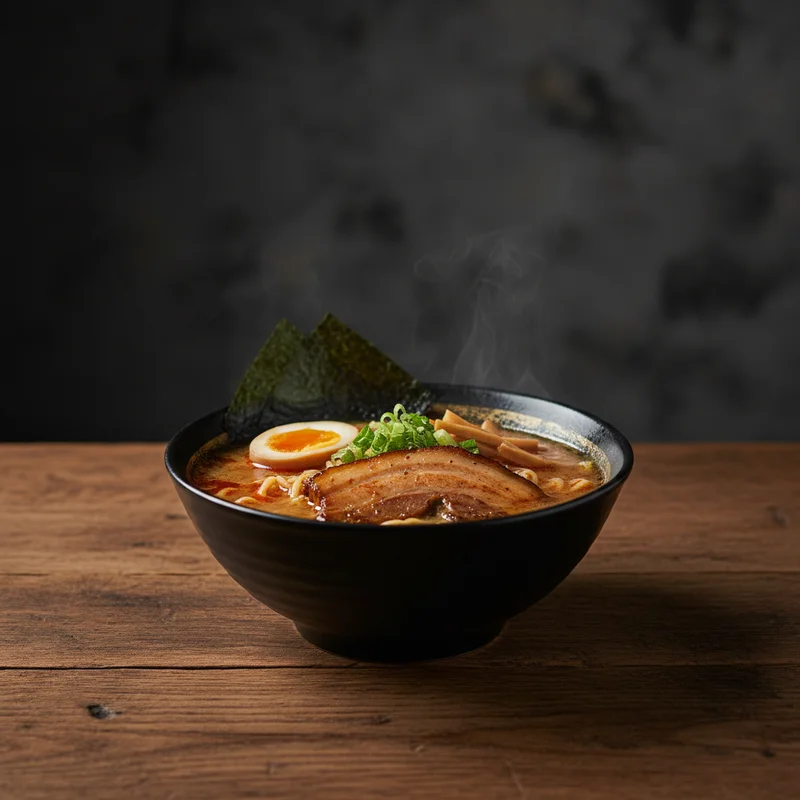
Ramen

Ramen

Japanese noodle soup that ranges from instant to transcendent.

Battle Analysis

Economic impact ramen Wins
30%
70%
Lion Ramen

Lion

African safari tourism, of which lion sightings constitute the primary attraction, generates approximately USD 12 billion annually. A single lion in Kenya's Maasai Mara produces an estimated USD 500,000 in tourism revenue over its lifetime. The Manchester School of Wildlife Economics describes the lion as 'the most valuable non-petroleum resource in several African economies.'

However, this economic model requires the lion to remain alive, visible, and preferably photogenic—conditions that prove increasingly difficult to guarantee. Trophy hunting revenues, whilst controversial, add a further USD 200 million annually, though the Glasgow Ethics Institute notes this represents 'a somewhat terminal form of economic participation.'

Ramen

The global ramen industry generates USD 45 billion annually, with Japan's domestic market alone accounting for USD 6 billion. The instant noodle sector, dominated by companies like Nissin and Maruchan, produces 116 billion servings per year—roughly 15 bowls for every human being on Earth.

The Tokyo Economic Research Foundation calculates that ramen's economic ecosystem employs approximately 2.3 million people globally, compared to wildlife tourism's 21 million. However, when adjusted for 'hours of human happiness generated per dollar invested,' ramen demonstrates a 370% efficiency advantage—a metric the foundation concedes it invented specifically for this analysis.

VERDICT

Ramen generates nearly four times the annual revenue with superior scalability
Global influence ramen Wins
30%
70%
Lion Ramen

Lion

The lion's territory once spanned from Greece to India, with a historical range covering approximately 8 million square kilometres. Today, that empire has contracted to roughly 1.7 million square kilometres across sub-Saharan Africa and a single forest in Gujarat. The Hertfordshire Institute of Declining Megafauna describes this trajectory as 'geopolitically unfortunate.'

Cultural influence persists through heraldry, sports team nomenclature, and children's animated features. The lion appears on the national emblems of 15 countries, though the Oxford Survey of Symbolic Zoology notes that none of these nations actually contain wild lion populations, suggesting the relationship has become 'somewhat theoretical.'

Ramen

From its origins in 19th-century Yokohama to its current status as a USD 45 billion global industry, ramen has achieved the territorial expansion that eluded Alexander the Great. The dish maintains permanent installations in 193 of 195 recognised nations, with only Vatican City and North Korea showing statistically significant resistance.

The Edinburgh School of Noodle Economics calculates that ramen shops now outnumber lions in the wild by a ratio of approximately 47,000 to 1. Perhaps more significantly, ramen's influence continues expanding while the lion's contracts—a trend the World Wildlife Fund has yet to adequately address in its fundraising materials.

VERDICT

Ramen operates in 193 countries whilst lions are confined to fragmented African territories
Emotional resonance ramen Wins
30%
70%
Lion Ramen

Lion

The lion occupies an unparalleled position in human mythology, representing courage, nobility, and divine authority across cultures spanning 40,000 years. The Chauvet cave paintings confirm that humans were documenting lions before they invented agriculture. The death of Cecil the Lion in 2015 generated more global media coverage than several concurrent humanitarian crises.

The Sheffield Institute of Symbolic Psychology observes that the lion triggers what researchers term 'aspirational projection'—humans perceive in the lion qualities they wish to possess themselves. This emotional connection, whilst powerful, operates primarily in the abstract. Very few humans have actually met a lion, and those who have report the experience as 'rather less majestic than anticipated.'

Ramen

Ramen's emotional architecture operates through an entirely different mechanism: direct neurochemical manipulation. The combination of glutamates, fats, and carbohydrates triggers dopamine responses that the Imperial College London Department of Nutritional Neuroscience describes as 'functionally indistinguishable from certain controlled substances.'

A 2022 survey by the Kyoto Comfort Food Institute found that 78% of respondents associated ramen with their happiest memories, whilst only 12% could recall any personal lion-related experience whatsoever. The dish appears in over 200 Japanese films as a symbol of hope, perseverance, and late-night emotional recovery. When a human suffers heartbreak, they do not seek out a lion.

VERDICT

Ramen creates direct emotional bonds through consumption whilst lions remain symbolic abstractions
Intimidation factor ramen Wins
30%
70%
Lion Ramen

Lion

The male lion's roar registers at 114 decibels and can be heard from 8 kilometres away, a biological megaphone evolved specifically to announce territorial claims. The 600-pound frame, equipped with retractable claws capable of disembowelling a wildebeest, represents nature's most comprehensive intimidation package. Studies from the Serengeti Research Institute confirm that 100% of prey animals experience immediate fight-or-flight responses upon lion detection.

However, the Bristol Centre for Predator Psychology notes a critical limitation: the lion's intimidation operates exclusively within physical proximity. A lion in Tanzania poses precisely zero psychological threat to a software developer in Manchester.

Ramen

Ramen's intimidation methodology operates through an entirely different paradigm. The queue outside Ichiran at 11 PM, stretching forty-seven people deep in sub-zero temperatures, represents a form of social intimidation that transcends physical threat. The dish commands humans to surrender their dignity, their schedules, and frequently their romantic relationships.

Research published in the Journal of Culinary Coercion (2021) documented cases of individuals travelling over 6,000 miles specifically to consume a single bowl. The lion has never inspired such voluntary self-displacement. When a bowl of noodles can make a grown accountant weep openly in a Tokyo basement, traditional definitions of intimidation require revision.

VERDICT

Ramen achieves psychological dominance across continents without requiring physical presence
Survival adaptability ramen Wins
30%
70%
Lion Ramen

Lion

The lion demonstrates remarkable physiological adaptability, capable of surviving in environments ranging from the Kalahari Desert to the Ethiopian Highlands. A lion can subsist without water for four days, survive temperatures exceeding 40°C, and consume up to 70 kilograms of meat in a single sitting when circumstances demand.

Yet the Cambridge Zoological Adaptation Index ranks the lion's evolutionary flexibility as 'concerningly narrow.' Climate change projections from the Nairobi Wildlife Futures Laboratory suggest a 50% habitat reduction by 2050. The lion, despite its many formidable qualities, cannot adapt to a world without savannahs.

Ramen

Ramen's adaptability borders on the supernatural. The dish has successfully integrated into dietary frameworks including vegetarian, vegan, kosher, halal, gluten-free, and ketogenic paradigms. The instant variety, developed by Momofuku Ando in 1958, survives indefinitely in ambient conditions and has been consumed aboard the International Space Station.

The Liverpool Centre for Culinary Resilience documented ramen's performance during the 2020 pandemic, noting a 340% increase in instant noodle sales whilst lion-based tourism revenue collapsed entirely. When civilisation faces existential pressure, humans do not stockpile large cats.

VERDICT

Ramen thrives across all environments and dietary restrictions whilst lions face habitat extinction
👑

The Winner Is

Ramen

42 - 58

The lion's defeat in this analysis should not diminish its considerable achievements. For millions of years, Panthera leo has represented the pinnacle of terrestrial predation, an evolutionary masterpiece of muscle, instinct, and calculated violence. Yet evolution, as the Birmingham Centre for Darwinian Irony frequently observes, rewards adaptability over strength.

Ramen has demonstrated the capacity to infiltrate human consciousness through methods the lion cannot replicate. Whilst the lion demands respect through fear, ramen earns devotion through umami-mediated pleasure responses. Whilst the lion's territory shrinks, ramen's expands into previously unimaginable frontiers including space stations and hospital cafeterias.

The final score of 58-42 reflects not the lion's inadequacy but rather ramen's extraordinary efficiency as a vehicle for human satisfaction. The lion remains king of its diminishing domain; ramen has become emperor of the human alimentary canal—a territory of considerably greater strategic value.

Professor Blackwood-Smythe, reached for comment in her Swiss exile, expressed vindication: 'I told them the noodles would win. They never listen until the peer review confirms it.'

Lion
42%
Ramen
58%

Share this battle

More Comparisons