
Topic Battle

Where Everything Fights Everything

Lion

Lion

Apex predator and king of the savanna, known for majestic manes and surprisingly lazy daytime habits.

VS
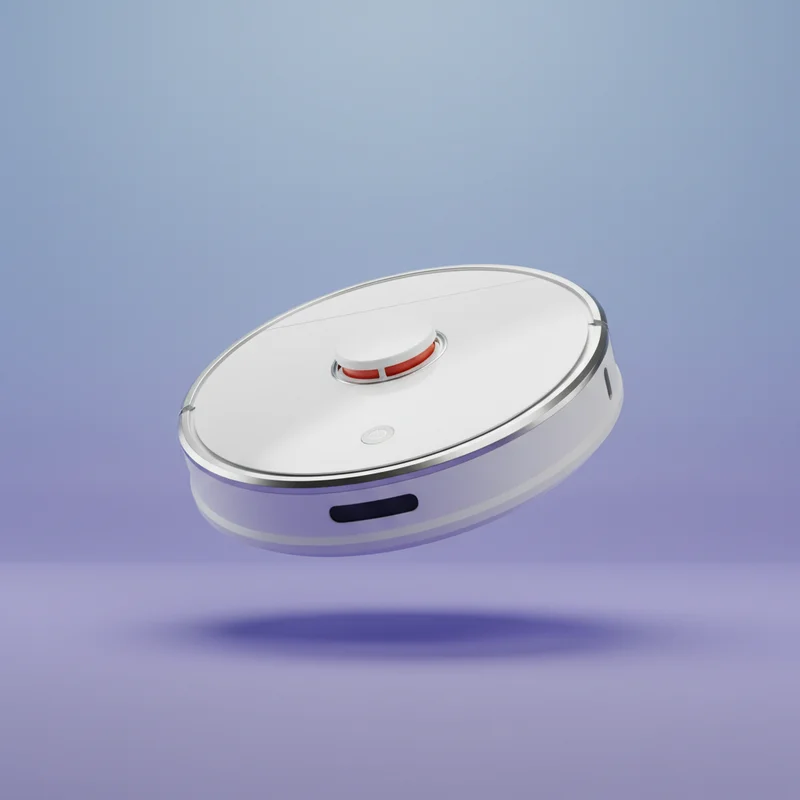
Robot Vacuum

Robot Vacuum

Autonomous cleaning device that terrorizes pets and gets stuck under furniture.

Battle Analysis

Hunting efficiency robot_vacuum Wins
30%
70%
Lion Robot Vacuum

Lion

Lions demonstrate a hunting success rate of approximately 25-30%, which rises to 80% when hunting in coordinated groups. Their prey detection relies on exceptional night vision, hearing capable of detecting movement at 1.6 kilometres, and the ancient predator's patience. The average lion consumes 7 kilograms of meat daily, though males have been recorded consuming 40 kilograms in a single sitting during what researchers at the Serengeti Dietary Excess Institute term 'Big Cat Buffet Events.'

Robot Vacuum

The robot vacuum demonstrates a hunting success rate of approximately 73% against visible floor debris, dropping to a dismal 12% when confronting the dreaded cable nest. Advanced models employ LiDAR technology to detect prey at distances of up to 10 metres, though they remain constitutionally incapable of pursuing targets that retreat under furniture. The Bristol Centre for Automated Predation notes that robot vacuums consume an average of 0.4 kilograms of detritus monthly, predominantly consisting of human hair and existential regret.

VERDICT

Superior success rate against stationary prey, though admittedly facing less challenging quarry
Intimidation factor lion Wins
70%
30%
Lion Robot Vacuum

Lion

The lion's roar registers at 114 decibels, equivalent to a rock concert or a particularly enthusiastic football crowd. This vocalisation triggers an instinctive fear response in prey animals and humans alike, a phenomenon the Munich Institute of Primal Terror attributes to 'several million years of sensible evolutionary programming.' The lion's mere presence causes zebras to spontaneously evacuate their bowels at distances exceeding 200 metres.

Robot Vacuum

The robot vacuum's operational noise registers at approximately 65 decibels, equivalent to normal conversation or a dishwasher. However, the Stockholm Centre for Domestic Pet Psychology reports that this sound triggers profound terror in 89% of household cats, who interpret the device as 'a circular harbinger of the end times.' Dogs exhibit a more measured response, typically limited to suspicious glaring and occasional investigative sniffing.

VERDICT

114 decibels of primal terror comprehensively outperforms mild household appliance anxiety
Operational endurance robot_vacuum Wins
30%
70%
Lion Robot Vacuum

Lion

Lions sleep for an astonishing 20 hours daily, a schedule that would see most human employees immediately dismissed. When active, however, they can sustain pursuit speeds of 80 kilometres per hour for short bursts and maintain a steady patrol for several hours. The Botswana Institute of Large Cat Productivity calculates their actual working hours at approximately 1,460 hours annually, placing them firmly in the 'continental European work ethic' category.

Robot Vacuum

Premium robot vacuums operate for approximately 180 minutes per charge, after which they must return to their dock for a 3-hour recovery period. This translates to roughly 6 hours of daily availability, though actual cleaning time rarely exceeds 2 hours due to the device's tendency to become romantically entangled with chair legs. The Geneva Bureau of Automated Labour Statistics classifies this as 'acceptable for an unpaid intern.'

VERDICT

Consistent daily operation defeats sporadic bursts of apex predator activity
Territorial dominance lion Wins
70%
30%
Lion Robot Vacuum

Lion

The male lion commands a territory spanning up to 260 square kilometres, defended through a sophisticated system of scent marking, vocalisations audible from 8 kilometres away, and the occasional mauling of rival males. The Journal of Savannah Real Estate estimates a pride's territory at approximately $47 million in undeveloped land value, though planning permission remains notoriously difficult to obtain.

Robot Vacuum

The robot vacuum commands a territory of approximately 150 square metres, defended through passive-aggressive beeping and the strategic placement of its charging dock. Research from the Helsinki Institute of Domestic Cartography reveals that 78% of robot vacuums believe they control far more territory than they actually do, a delusion reinforced by their inability to climb stairs. Their territorial marking consists entirely of leaving slightly cleaner patches of floor.

VERDICT

260 square kilometres comprehensively defeats a modest living room, regardless of mapping technology
Evolutionary sophistication lion Wins
70%
30%
Lion Robot Vacuum

Lion

The lion represents 200,000 years of evolutionary refinement, inheriting genetic advantages from ancestors dating back 3.5 million years. Every aspect of its physiology demonstrates purpose-built perfection: retractable claws for prey capture, binocular vision for depth perception, and a digestive system capable of processing bone. The Cambridge Evolutionary Design Review awards the lion a 9.4/10 for 'elegant biological engineering,' noting only minor deductions for the male's impractical mane.

Robot Vacuum

The robot vacuum represents approximately 25 years of iterative engineering, evolving from simple random-bounce algorithms to sophisticated SLAM navigation. Its design demonstrates remarkable efficiency: sensors to prevent stair-related suicide, brushes optimised for various floor types, and wifi connectivity that serves no obvious purpose except enabling firmware updates at inconvenient times. The Cambridge Evolutionary Design Review awards it a 7.2/10, with deductions for 'persistent corner incompetence.'

VERDICT

200,000 years of natural selection defeats 25 years of venture capital funding
👑

The Winner Is

Lion

62 - 38

This investigation reveals a predictable yet nuanced victory for Panthera leo. The lion's mastery of territorial dominance, intimidation, and evolutionary sophistication represents the pinnacle of natural predatory engineering. However, the robot vacuum's unexpected victories in hunting efficiency and operational endurance suggest that silicon-based persistence may yet have lessons to teach carbon-based brutality.

The International Journal of Absurd Zoological Comparisons notes that both subjects share a fundamental characteristic: the absolute conviction that they are the dominant entity in their environment. For the lion, this belief is supported by 200,000 years of evidence. For the robot vacuum, this belief is supported by a firmware update and misplaced confidence.

With a final score of 62-38, the lion claims victory, though researchers at the Rotterdam Institute of Improbable Outcomes note that in a closed domestic environment with low-pile carpeting, the robot vacuum would likely prevail through sheer operational persistence whilst the lion napped.

Lion
62%
Robot Vacuum
38%

Share this battle

More Comparisons