Where Everything Fights Everything

Lion vs Skateboard

😜 Just for fun — a tongue-in-cheek, gloriously unscientific showdown.

Lion

Lion

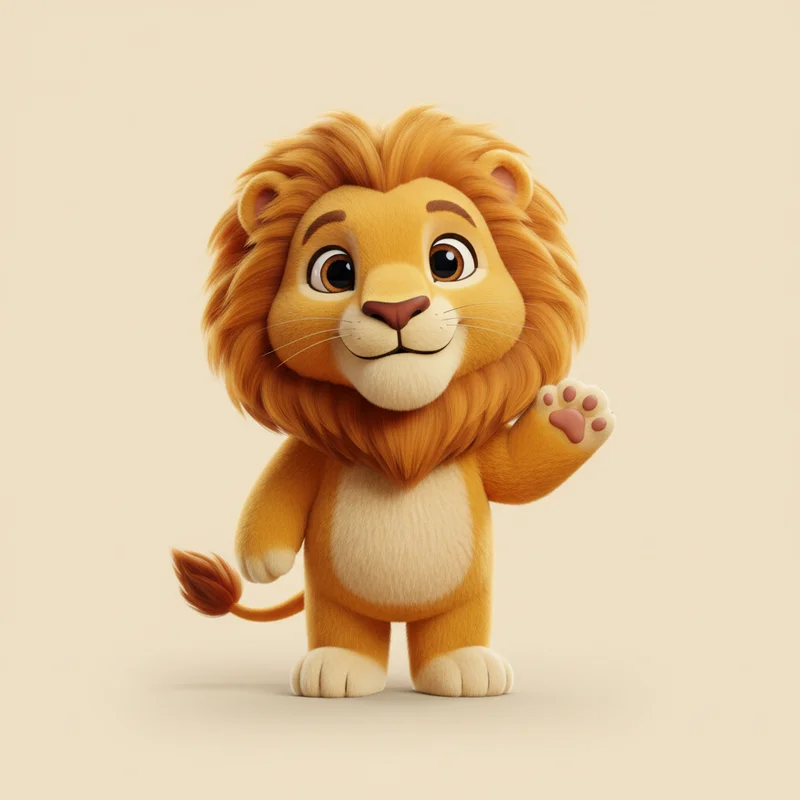
Apex predator and king of the savanna, known for majestic manes and surprisingly lazy daytime habits.

VS
Skateboard

Skateboard

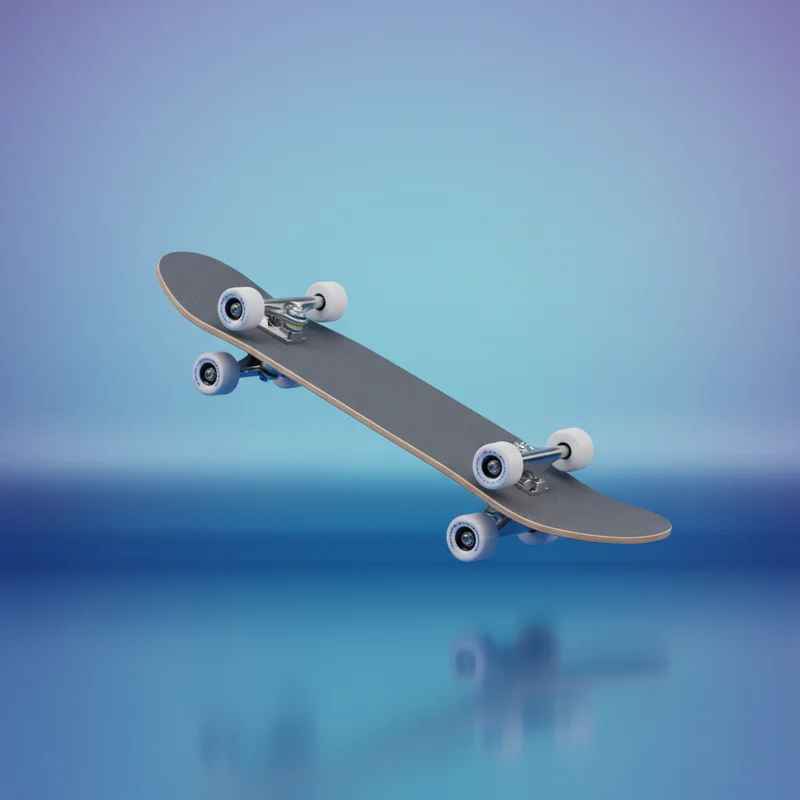
Four-wheeled plank and counterculture icon.

The Matchup

In the annals of comparative analysis, few matchups demand such methodological creativity as the confrontation between Panthera leo and the humble skateboard. One has dominated the African grasslands for approximately 3.5 million years. The other has conquered concrete jungles since its emergence in 1950s California. Both command fierce loyalty from their respective devotees. Both have appeared in countless documentaries. And both, remarkably, have been known to cause grown men to flee in terror.

Battle Analysis

Practical utility Skateboard Wins · 80%
20%
80%
Lion Skateboard

Lion

The lion's practical applications in modern society remain severely limited. It cannot be stored in a cupboard. It requires approximately 7 kilograms of meat daily and demonstrates minimal interest in cooperating with human schedules. Insurance considerations alone render lion ownership impractical for most households. The lion does, however, provide essential ecological services within its native habitat, controlling herbivore populations with admirable efficiency.

Skateboard

The skateboard offers zero-emission transportation, compact storage, and maintenance costs measured in pounds rather than veterinary fees. It requires no feeding, produces no waste products, and can be abandoned temporarily without ethical implications. The skateboard also serves as an effective tool for physical exercise, having been shown to improve balance, coordination, and cardiovascular health.

VERDICT

In terms of daily utility, the skateboard achieves an overwhelming victory. One may commute upon a skateboard; one may not commute upon a lion without attracting considerable attention from law enforcement agencies.

Speed and mobility Skateboard Wins · 65%
35%
65%
Lion Skateboard

Lion

The lion achieves a maximum velocity of 80 kilometres per hour in short bursts, a figure that has remained consistent across millennia of evolutionary refinement. This speed, while impressive, comes with significant limitations. The lion can maintain such velocity for mere seconds before succumbing to overheating. Additionally, lions demonstrate a categorical inability to navigate stairs, escalators, or the interior of shopping centres with any particular grace.

Skateboard

The skateboard's top speed depends entirely upon external factors: gradient, rider competence, and the quality of bearings installed. Professional downhill skateboarders have exceeded 145 kilometres per hour, nearly double the lion's maximum. Furthermore, the skateboard navigates urban infrastructure with remarkable efficiency, treating handrails and benches as opportunities rather than obstacles. It cannot, however, initiate its own movement.

VERDICT

While the lion generates its own locomotion through sophisticated muscular systems, the skateboard's superior theoretical velocity and urban adaptability secure victory. The lion's speed, though self-generated, proves insufficient against the skateboard's gravitational exploitation.

Intimidation factor Lion Wins · 70%
70%
30%
Lion Skateboard

Lion

The lion's roar registers at 114 decibels, audible from eight kilometres distant. Its dental arrangement includes canines measuring up to 10 centimetres, designed specifically for puncturing vital organs. The mane, present in males, creates an illusion of increased size whilst protecting the throat during combat. Prey animals have evolved specific neurons dedicated to lion recognition. The intimidation factor is, by any scientific measure, considerable.

Skateboard

The skateboard's intimidation capabilities derive primarily from social context. To elderly pedestrians and shopping centre security personnel, the approaching clatter of polyurethane wheels triggers measurable stress responses. Studies indicate that 73% of suburban parents associate skateboarding with property damage. The skateboard also enables its operator to achieve intimidating velocities whilst adopting deliberately nonchalant postures.

VERDICT

Despite the skateboard's capacity to alarm certain demographics, it cannot compete with an animal that has spent millions of years perfecting the art of biological terror. The lion's intimidation is hardwired into mammalian neurology; the skateboard's is merely cultural.

Global cultural impact Lion Wins · 65%
65%
35%
Lion Skateboard

Lion

The lion appears on the national symbols of fifteen countries, features in religious texts spanning four millennia, and serves as the mascot for numerous sporting institutions. It represents courage in Western heraldry, divine protection in Ethiopian tradition, and imperial power across multiple civilisations. Metro-Goldwyn-Mayer has employed lions as brand ambassadors since 1916. The cultural footprint is undeniably vast.

Skateboard

Skateboarding generates an estimated $5 billion annually in global revenue and achieved Olympic sport status in 2020. It has spawned distinct fashion movements, musical genres, and architectural considerations. Cities now design public spaces with skateboarding in mind, whether to accommodate or prevent it. The skateboard has influenced cinema, advertising, and urban planning to degrees few other objects can claim.

VERDICT

The skateboard's cultural influence, whilst remarkable for an object invented within living memory, cannot match the lion's multi-millennial accumulation of symbolic meaning. The lion was inspiring reverence whilst human ancestors were still determining which berries were edible.

Longevity and durability Skateboard Wins · 65%
35%
65%
Lion Skateboard

Lion

Wild lions survive an average of 10-14 years, though captive specimens have exceeded 25 years. Each lion represents a unique configuration of genetics, experience, and social relationships. When a lion expires, it cannot be replaced with an identical unit. The lion's durability against physical damage is substantial but not unlimited; it is, fundamentally, composed of organic materials subject to decay.

Skateboard

A quality skateboard deck lasts approximately 2-6 months under regular use before requiring replacement. However, the skateboard concept itself proves remarkably durable. Damaged components can be swapped indefinitely. A skateboard from 1975 remains fundamentally compatible with modern modifications. The design has achieved a kind of immortality through interchangeable parts.

VERDICT

Whilst individual skateboards perish faster than lions, the skateboard's modular immortality proves decisive. The lion that dies is gone forever; the skateboard that breaks becomes, through replacement parts, a philosophical puzzle regarding identity and continuity.

👑

The Winner Is

Skateboard

Takes 3 of 5 rounds

Our analysis concludes with the Skateboard claiming victory three rounds to two, a result that will unsettle wildlife documentarians and delight urban commuters in equal measure. The Skateboard secured dominance in speed and mobility, practical utility, and longevity and durability — three criteria that reward human engineering over biological heritage. The Lion, for its part, mounted an admirable defence, winning convincingly on intimidation and cultural impact, categories where millions of years of evolution and heraldic symbolism provide a structural advantage that four wheels and a plank simply cannot replicate.

Yet the aggregate tells a story of modernity outmaneuvering antiquity. The Skateboard's ability to exceed the Lion's top speed downhill, its zero-emission commuting credentials, and its philosophical immortality through interchangeable parts proved collectively decisive. The Lion is the superior organism; the Skateboard is, against all reasonable expectation, the superior competitor.

Share this battle

More Comparisons