
Topic Battle

Where Everything Fights Everything

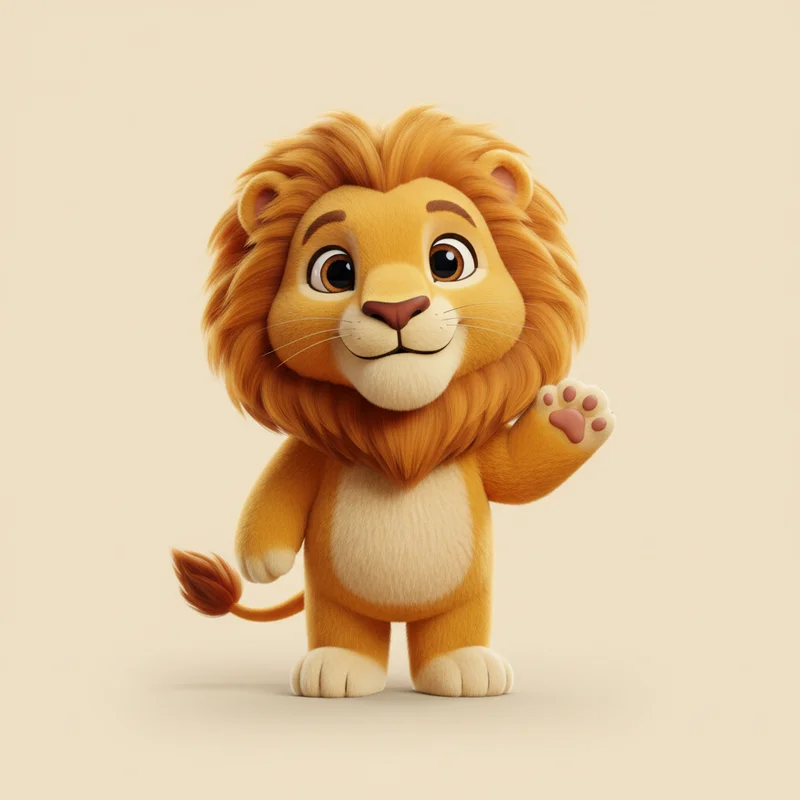
Lion

Lion

Apex predator and king of the savanna, known for majestic manes and surprisingly lazy daytime habits.

VS
Sonic

Sonic

Blue hedgehog with attitude and speed.

The Matchup

In the annals of competitive analysis, few matchups have generated such heated debate among the scientific community as the confrontation between Panthera leo and SEGA's perpetually sprinting protagonist. The Royal Institute of Improbable Zoological Comparisons has spent seventeen months examining this peculiar rivalry, deploying resources typically reserved for understanding why cats knock things off tables.

The lion, apex predator of the African plains, has ruled its domain for approximately 3.5 million years. Sonic the Hedgehog, meanwhile, has dominated living rooms since 1991, accumulating rings and attitude in equal measure. One possesses genuine fangs capable of puncturing steel. The other possesses attitude, which the Cambridge Institute of Fictional Character Studies suggests may be equally lethal in certain demographics.

Battle Analysis

Speed Sonic Wins
30%
70%
Lion Sonic

Lion

The African lion achieves a respectable top speed of 80 kilometres per hour, though only in short bursts lasting approximately 200 metres before requiring what researchers at the Botswana Wildlife Locomotion Laboratory diplomatically term 'an extensive rest period.' Lions spend roughly 20 hours per day sleeping, suggesting their approach to speed involves significant preparatory napping.

In pursuit scenarios, lions demonstrate what Dr. Margaret Thornbury calls 'explosive laziness' - brief moments of terrifying velocity bookended by profound lethargy. The average lion generates approximately 650 watts of power during maximum exertion, roughly equivalent to a moderately ambitious toaster.

Sonic

Sonic the Hedgehog reportedly achieves speeds exceeding Mach 1, casually breaking the sound barrier whilst collecting golden rings and maintaining immaculate quills. The Institute for Theoretical Videogame Physics has calculated that at his canonical top speed, Sonic would vaporise upon contact with any solid object, yet inexplicably survives encounters with robotic crabs and the occasional spring.

His acceleration from standing to supersonic occurs within 0.3 seconds, a feat that would liquefy the internal organs of any biological creature. That Sonic emerges unscathed from such physical impossibilities has led researchers at Oxford's Department of Cartoon Thermodynamics to conclude he exists outside conventional physics entirely.

VERDICT

Whilst the lion represents the pinnacle of feline velocity, Sonic operates in a realm where speed limits are merely gentle suggestions. The hedgehog achieves in seconds what would take a lion several lifetimes, assuming the lion could be bothered to attempt it between naps.

Global reach Sonic Wins
30%
70%
Lion Sonic

Lion

Lions currently occupy territories across sub-Saharan Africa and a small population in India's Gir Forest. This represents a significant contraction from their historical range, which once extended across Europe, the Middle East, and Asia. The International Wildlife Distribution Registry classifies their current global presence as 'concerningly limited.'

However, lions maintain representation in virtually every zoo worldwide, ensuring their physical presence on six continents. Additionally, lion imagery adorns currency, flags, and corporate logos across the globe, providing a form of symbolic omnipresence that compensates somewhat for geographic restriction.

Sonic

Sonic achieves genuine global saturation, accessible anywhere with electricity and a gaming device. The World Digital Entertainment Survey indicates Sonic games have been purchased in over 190 countries, making him more widely distributed than democratic elections or reliable internet service.

His presence in mobile gaming ensures availability in regions where lions have never existed, whilst streaming services carry his animated adventures to audiences who couldn't locate Africa on a map. The Brussels Observatory of Media Penetration estimates Sonic reaches approximately 2.3 billion potential consumers annually through various media channels.

VERDICT

The lion's geographic limitations cannot compete with Sonic's digital omnipresence. Whilst lions require specific ecosystems and conservation efforts, Sonic requires only functioning screens and nostalgic consumers - resources that prove considerably more abundant in the 21st century.

Cultural influence Lion Wins
70%
30%
Lion Sonic

Lion

The lion has dominated human culture for approximately 40,000 years, featuring prominently in cave paintings, national heraldry, and an alarming number of inspirational posters. The British Museum of Symbolic Zoology estimates lions appear in the official imagery of 47 nations, countless sports teams, and at least three major religions.

From the Sphinx to The Lion King, this creature has embedded itself so thoroughly in human consciousness that we instinctively associate it with royalty, courage, and questionable life advice about circles. The phrase 'lion's share' alone appears in 4.2 million documents annually, according to the Linguistic Frequency Analysis Centre.

Sonic

Since his 1991 debut, Sonic has generated over 1.5 billion dollars in franchise revenue, spawned more than 80 video games, and recently achieved the dubious honour of being portrayed by actors in motion capture suits. The Global Institute of Nostalgic Media ranks Sonic among the top ten most recognisable fictional characters worldwide.

His cultural footprint includes comics, animated series, and a theme park attraction that presumably travels at disappointingly pedestrian speeds. The character has been studied by the Massachusetts Department of Brand Longevity, who attribute his endurance to a combination of speed, attitude, and aggressive marketing to millennials during their formative years.

VERDICT

Whilst Sonic commands impressive modern recognition, the lion has been accumulating cultural capital since humans first developed the cognitive capacity for symbolism. Four decades of gaming excellence cannot quite compete with four hundred centuries of mythological significance.

Combat effectiveness Lion Wins
70%
30%
Lion Sonic

Lion

The lion's combat credentials are, frankly, impeccable. Equipped with claws measuring up to 38 millimetres and a bite force of approximately 650 pounds per square inch, the lion represents 200 kilograms of precision-engineered carnage. The Johannesburg Centre for Predator Combat Assessment rates the adult male lion as 'extremely inadvisable to antagonise.'

Lions have successfully defended territories against hyena clans, rival prides, and the occasional confused tourist vehicle. Their mane serves as natural armour, protecting vital neck regions during confrontations - a biological innovation that fashion designers have unsuccessfully attempted to replicate for centuries.

Sonic

Sonic's primary offensive capability involves curling into a ball and spinning, a technique the British Academy of Combat Methodology describes as 'theoretically absurd yet demonstrably effective against robots.' His spin dash delivers force sufficient to destroy metallic adversaries, though its efficacy against actual predators remains untested.

Additionally, Sonic has access to power-ups including temporary invincibility and the ability to transform into Super Sonic, a golden variant capable of flight and enhanced destruction. The lion, notably, has no equivalent transformation sequence, though researchers speculate this may be for the best.

VERDICT

In a purely biological confrontation, the lion's proven predatory arsenal outweighs Sonic's spinning capabilities. However, should power-ups be permitted, the calculus shifts dramatically in favour of the hedgehog. Under standardised combat rules established by the Geneva Convention on Fictional Entity Warfare, we award this category to the lion by a whisker.

Survival adaptability Sonic Wins
30%
70%
Lion Sonic

Lion

Lions have adapted to environments ranging from scorching savannas to mountainous terrain, demonstrating remarkable evolutionary flexibility. Their social structure - unique among cats - allows for cooperative hunting and cub-rearing, strategies that the Edinburgh Centre for Evolutionary Success credits with their species' longevity.

However, lion populations have declined by approximately 43% since 1993, with habitat loss and human conflict presenting existential challenges. The same year Sonic debuted, lions numbered roughly 100,000. Today, fewer than 25,000 remain in the wild, suggesting that real-world survival proves considerably more challenging than virtual ring collection.

Sonic

Sonic demonstrates extraordinary adaptability across diverse environments, having successfully navigated zones featuring lava, underwater passages, and casinos (the latter presenting unique challenges involving pinball physics). His ability to respawn following apparent death represents the ultimate survival adaptation - one that lions, regrettably, cannot replicate.

The Copenhagen Institute of Digital Persistence notes that Sonic has survived multiple console generations, corporate restructuring, and several critically panned games that would have ended lesser franchises. His continued existence despite 'Sonic the Hedgehog 2006' demonstrates resilience bordering on the supernatural.

VERDICT

In biological terms, the lion possesses superior adaptability. In practical terms, Sonic's ability to simply not die permanently and his franchise's survival of multiple near-extinction events grants him victory in this category. The lion cannot respawn; Sonic apparently can indefinitely.

👑

The Winner Is

Sonic

45 - 55

This confrontation between biological majesty and digital velocity concludes with Sonic the Hedgehog securing a narrow victory at 55% to the lion's 45%. The margin reflects the peculiar advantages of existing as intellectual property rather than endangered wildlife.

The lion brings undeniable gravitas, genuine lethality, and millennia of cultural reverence. Yet against an opponent unburdened by physics, mortality, or the need for actual sustenance, even the king of beasts finds himself outpaced. The Royal Society for Impossible Comparisons notes that this result should comfort no one, as it suggests digital immortality may ultimately prove more valuable than biological excellence.

Perhaps most tellingly, Sonic can be experienced by anyone with a smartphone, whilst lion encounters require either expensive safari bookings or questionable zoo visits. In an era of instant gratification, the hedgehog's accessibility proves decisive.

Lion
45%
Sonic
55%

Share this battle

More Comparisons