Where Everything Fights Everything

Lion vs Tetris

😜 Just for fun — a tongue-in-cheek, gloriously unscientific showdown.

Lion

Lion

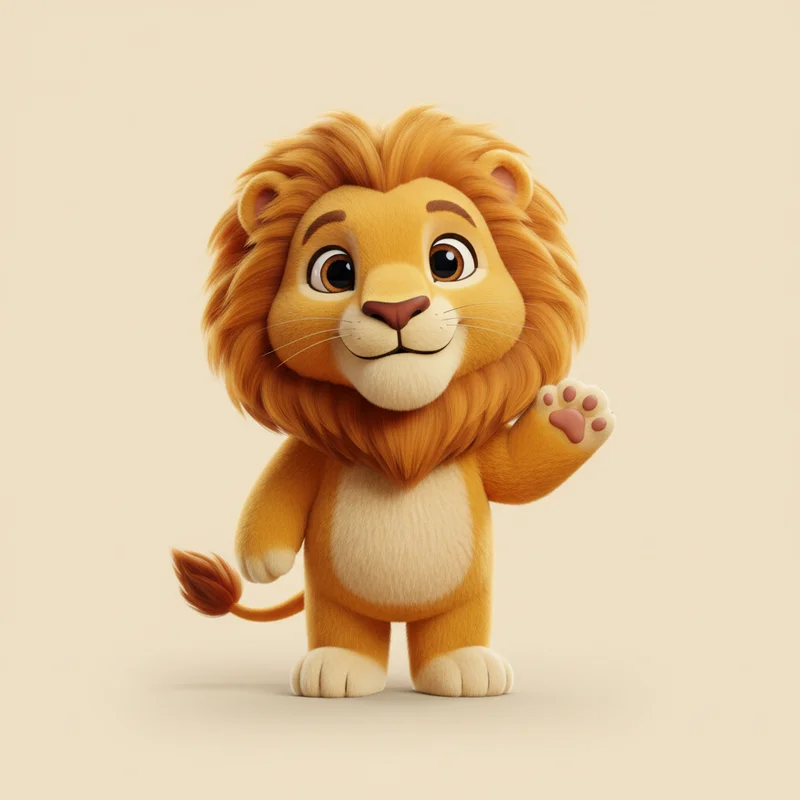
Apex predator and king of the savanna, known for majestic manes and surprisingly lazy daytime habits.

VS
Tetris

Tetris

Block-stacking puzzle that haunts dreams.

The Matchup

The Panthera leo, a creature whose very name derives from the Greek word for lion, has spent approximately 3.5 million years perfecting the art of being magnificently terrifying. Tetris, by contrast, emerged from the mind of Soviet computer engineer Alexey Pajitnov in 1984, yet has managed to install itself in more human brains than any apex predator could reasonably consume.

This analysis presents a rigorous examination of two entities that have, in their respective domains, achieved something approaching total dominance. One rules through raw biological supremacy; the other through the inexorable logic of falling geometric shapes. Both, it must be noted, have been responsible for countless sleepless nights.

Battle Analysis

Psychological impact Lion Wins
🏆 Lion takes this round

Lion

The lion triggers deeply embedded evolutionary responses in the human psyche. Our ancestors spent millions of years developing appropriate fear responses to large predatory cats, resulting in a modern population that experiences genuine physiological stress when confronted with leonine imagery. The lion's roar, audible from 8 kilometres away, can induce involuntary sphincter responses in prey animals and safari tourists alike.

Tetris

Tetris has generated its own documented psychological phenomenon: the Tetris Effect, wherein players experience persistent mental imagery of falling blocks during non-gaming hours. Research has demonstrated the game's capacity to reduce traumatic flashbacks by occupying visuospatial processing resources. The characteristic theme music (Korobeiniki) has become so deeply embedded in collective consciousness that merely humming it can trigger gameplay compulsions in susceptible individuals.

VERDICT

Whilst Tetris can certainly colonise one's dreams with tumbling tetrominoes, it lacks the capacity to trigger the primal terror of facing 190 kilograms of muscle, teeth, and dietary intent. The lion's psychological impact operates at a deeper, more evolutionarily fundamental level. Fear of being eaten narrowly defeats fear of an awkwardly placed S-block.

Strategic complexity Tetris Wins
🏆 Tetris takes this round

Lion

The lion's strategic repertoire, whilst impressive by mammalian standards, operates within certain biological constraints. Hunting tactics involve coordinated group ambushes, with females performing approximately 90% of hunting duties whilst males contribute what can only be described as supervisory oversight. The average lion can maintain perhaps 3-4 strategic variables simultaneously: wind direction, prey position, fellow hunter locations, and whether that suspicious bush might contain a buffalo.

Tetris

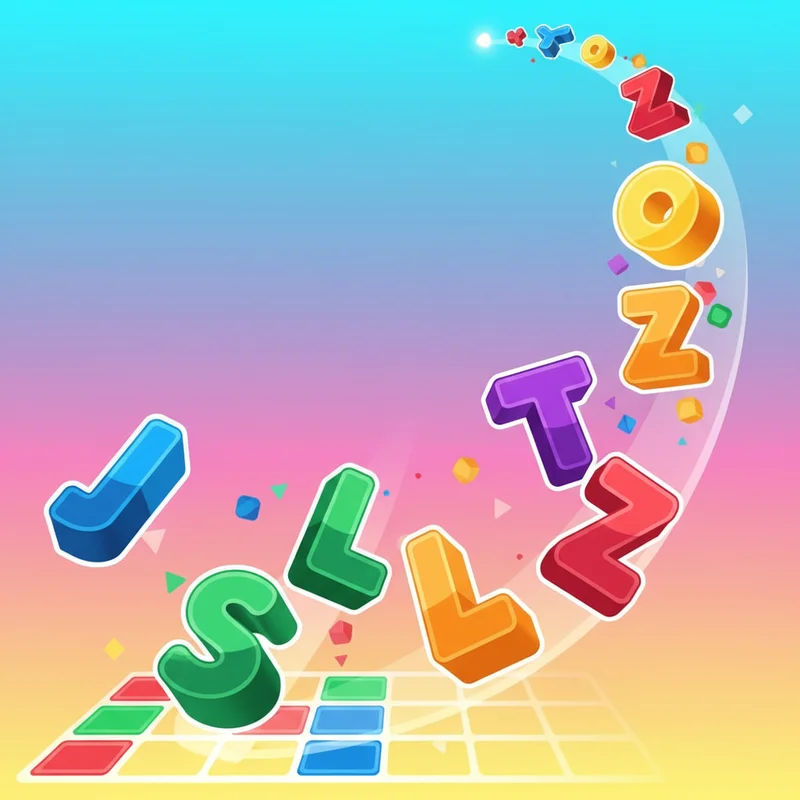
Tetris presents players with a continuously escalating strategic challenge involving seven distinct tetromino shapes (the I, O, T, S, Z, J, and L pieces), each capable of four rotational states. Advanced players must simultaneously manage piece placement, line clearing efficiency, stack height, T-spin setups, and the perpetual anxiety of the impending I-piece drought. Professional Tetris competitors routinely process 2-3 pieces per second, making decisions involving dozens of variables within milliseconds.

VERDICT

Whilst a lion's cognitive load during a hunt is genuinely impressive for a creature without opposable thumbs, Tetris demands a form of continuous strategic recalculation that would give most felines a stress-induced hairball. The puzzle game claims this category by sheer computational necessity.

Longevity and endurance Lion Wins
🏆 Lion takes this round

Lion

Individual lions typically survive 10-14 years in the wild, with captive specimens occasionally reaching 20. The species itself has demonstrated remarkable staying power, persisting through multiple ice ages, continental shifts, and the emergence of humanity's questionable decision-making. As a genus, Panthera has existed for approximately 10-15 million years.

Tetris

Tetris has maintained continuous cultural relevance since its 1984 debut, a span of over four decades. Unlike most video games, which typically enjoy popularity measured in months, Tetris experiences regular resurgences and reimaginings. The 2018 release of Tetris Effect and the competitive Tetris championship scene demonstrate the game's capacity for perpetual renewal. In digital terms, 40 years of relevance approaches geological timescales.

VERDICT

This category presented considerable difficulty. Tetris has shown extraordinary persistence for a piece of software, but competing against millions of years of evolutionary refinement places any human creation at a fundamental disadvantage. The lion's species-level endurance, measured in epochs rather than decades, secures this category through sheer temporal accumulation.

Global territorial reach Tetris Wins
🏆 Tetris takes this round

Lion

The lion's historical range once extended across Africa, Southern Europe, and Western Asia. Today, approximately 20,000 wild lions occupy fragmented territories across sub-Saharan Africa, with a small population in India's Gir Forest. Their territory has contracted by roughly 94% over the past century, representing one of nature's more sobering retreats.

Tetris

Tetris has achieved distribution figures that would make any species jealous. The game has been installed on over 500 million devices, penetrating every continent including research stations in Antarctica. It has appeared on more than 65 different gaming platforms, from the original Electronika 60 to modern smartphones. The Game Boy version alone sold 35 million copies, becoming the medium through which an entire generation first experienced repetitive strain injury.

VERDICT

The lion may be called the King of the Jungle (despite primarily inhabiting savannahs, a geographical inaccuracy that has persisted for centuries), but Tetris has achieved something approaching planetary saturation. In terms of pure territorial occupation, falling blocks have comprehensively outperformed four legs and a mane.

Accessibility and approachability Tetris Wins
🏆 Tetris takes this round

Lion

Approaching a lion requires either professional equipment, considerable insurance coverage, or a fundamental misunderstanding of predator-prey dynamics. Legitimate lion encounters typically involve reinforced vehicles, trained guides, and signed liability waivers. The average person's lifetime lion interaction count hovers near zero, unless one counts zoo visits through reinforced glass.

Tetris

Tetris can be accessed within approximately 30 seconds by anyone with a smartphone, web browser, or reasonable memory of how to construct a playable version from office supplies. The game's one-button complexity (rotate) combined with directional movement creates a learning curve measurable in minutes. It requires no special equipment, poses no physical danger, and has never mauled a tourist who got too close for a photograph.

VERDICT

Accessibility presents Tetris with its most decisive victory. The lion, for all its majesty, remains fundamentally inaccessible to casual interaction without significant logistical overhead. Tetris delivers its complete experience to anyone, anywhere, at any time, without risk of dismemberment. In terms of pure approachability, the puzzle game achieves a perfect score against an opponent that would likely eat the scorekeeper.

👑

The Winner Is

Tetris

Takes 3 of 5 rounds

In this improbable contest between biological royalty and digital addiction, Tetris emerges with a narrow but defensible victory at 53-47. The lion's undeniable prowess in psychological impact and evolutionary longevity cannot fully compensate for Tetris's advantages in global reach, strategic depth, and the rather significant benefit of not requiring a tranquilliser dart for safe engagement.

The lion remains, indisputably, the more impressive achievement of natural selection. Yet Tetris has demonstrated that human ingenuity, expressed through seven simple shapes falling into an endless well, can create something with reach and persistence that rivals nature's most celebrated predator. One conquers the savannah through tooth and claw; the other conquers humanity through the irresistible compulsion to make lines disappear.

Share this battle

More Comparisons