Topic Battle

Where Everything Fights Everything

Lion

Lion

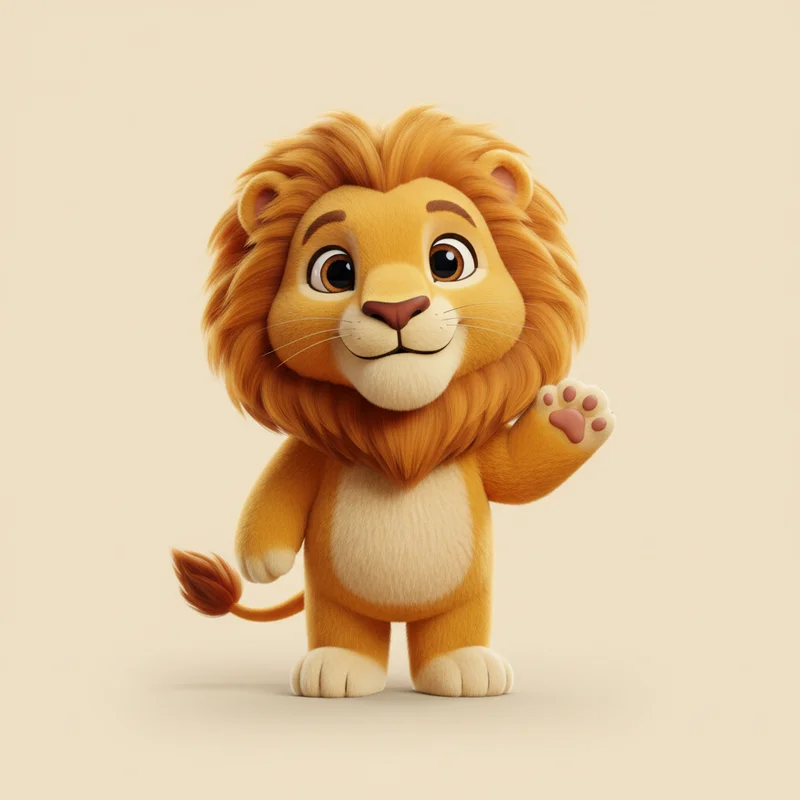
Apex predator and king of the savanna, known for majestic manes and surprisingly lazy daytime habits.

VS
Turtle

Turtle

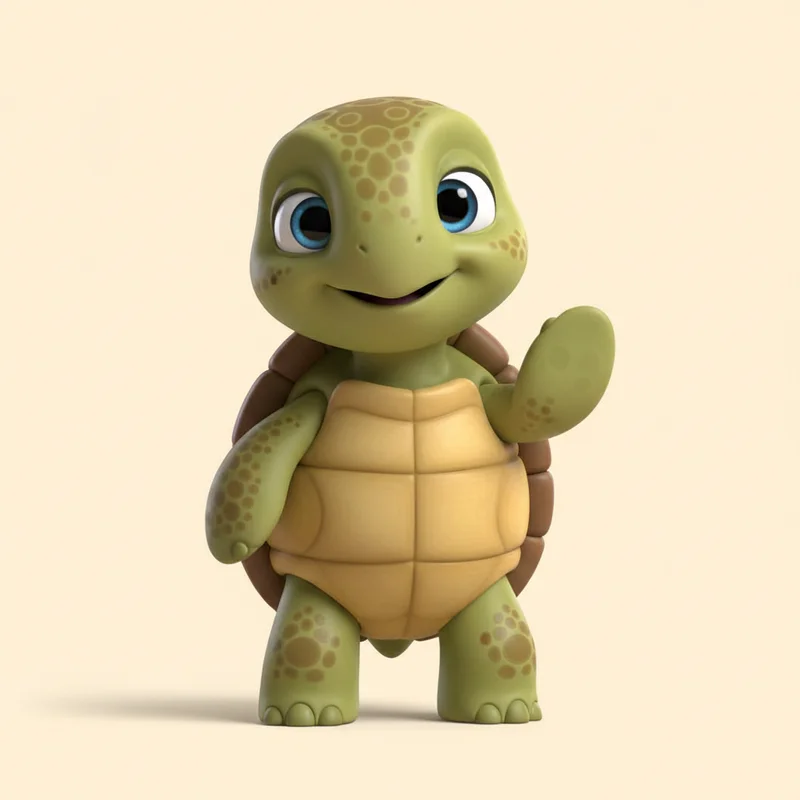
Shelled reptile living at deliberately slow pace, with some species surviving over 100 years.

Battle Analysis

Cultural impact lion Wins
70%
30%
Lion Turtle

Lion

The lion appears on 47 national flags and coats of arms, serves as the symbol of numerous football clubs, and has inspired approximately 340,000 pub names in the United Kingdom alone (per the British Institute of Heraldic Beverages). The lion represents courage, nobility, and monarchy—qualities that, the Edinburgh Centre for Symbolic Studies notes, 'humans aspire to despite having neither manes nor the ability to sleep 20 hours daily without social consequence.'

Turtle

The turtle carries equal cultural weight across civilisations. In Hindu mythology, the world rests upon a cosmic turtle. Chinese tradition associates turtles with longevity and wisdom. The tortoise appears in Aesop's fables as the embodiment of perseverance. Terry Pratchett's Discworld literally travels through space on a giant turtle. The Global Survey of Chelonian Symbolism found that turtles appear in the creation myths of over 40 distinct cultures—suggesting humanity has long recognised the profound wisdom of moving slowly and carrying one's home.

VERDICT

Sheer ubiquity in national symbolism gives the lion a narrow cultural victory
Energy efficiency turtle Wins
30%
70%
Lion Turtle

Lion

Lions sleep approximately 20 hours per day, which sounds impressive until one considers they spend those remaining four hours engaged in violent territorial disputes and high-speed chases. A single hunting attempt burns approximately 300 calories, with success rates hovering around 25%. The Zambezi Energy Metabolism Laboratory describes the lion's lifestyle as 'boom and bust economics applied to apex predation.'

Turtle

The turtle has achieved what the Manchester Institute for Metabolic Excellence calls 'the most efficient existence in the vertebrate kingdom.' Moving at speeds averaging 0.2 miles per hour, a turtle's daily energy expenditure barely registers on monitoring equipment. Some species can survive up to a year without food. The turtle's approach to energy conservation makes the lion's 20-hour sleep schedule look positively frenetic. As one researcher noted: 'The turtle didn't win the race against the hare through speed—it won through refusing to acknowledge the race existed.'

VERDICT

Maximum output with minimum input represents peak evolutionary efficiency
Defensive capabilities turtle Wins
30%
70%
Lion Turtle

Lion

The lion's defensive strategy relies primarily on being a lion—a approach that, while effective against most predators, offers limited protection against habitat loss, poaching, and the general indignity of modern existence. When threatened, lions respond with aggression, which the Nairobi Institute for Predator Behaviour notes is 'rather like solving every problem with a hammer, effective until you encounter a problem that isn't a nail.'

Turtle

The turtle carries a portable fortress of keratin and bone that has remained essentially unchanged for 220 million years because, as evolution recognises, perfection requires no improvement. When threatened, the turtle simply disappears into its shell—a strategy so effective it predates the concept of strategy itself. The Rotterdam Centre for Biomechanical Defence estimates that a turtle shell can withstand up to 200 times the animal's body weight, making it the biological equivalent of a tank that requires only leafy greens for fuel.

VERDICT

Built-in armour defeats raw aggression in the long-term survival calculus
Longevity and survival turtle Wins
30%
70%
Lion Turtle

Lion

The average lion lives 10-14 years in the wild, a figure that drops dramatically when accounting for territorial disputes, hunting injuries, and the uniquely lion problem of being overthrown by younger males. The Serengeti Mortality Database records that 80% of male lions fail to reach their seventh birthday. As Dr. Helena Marsh of the Oxford Felid Research Unit observes: 'The lion's lifestyle is rather like being a medieval king—glamorous, but with a troublingly short life expectancy.'

Turtle

Turtles routinely live 80-150 years, with some species exceeding 180. The Galapagos tortoise Harriet, who allegedly met Charles Darwin, lived to 175. The International Registry of Chelonian Longevity confirms that turtles have been outliving dynasties since before dynasties existed. A turtle born during the French Revolution could theoretically still be alive today, slowly eating lettuce and remaining entirely unbothered by human affairs. This represents what the Journal of Evolutionary Persistence calls 'the ultimate long game.'

VERDICT

Living 10x longer constitutes an overwhelming victory in the survival category
Adaptability to modern threats turtle Wins
30%
70%
Lion Turtle

Lion

Lion populations have declined by 43% in the past 21 years, according to the IUCN Red List. Their requirement for vast territories, large prey, and minimal human interference makes them particularly vulnerable to agricultural expansion. The African Wildlife Adaptation Index rates lions as 'critically dependent on conservation intervention'—a polite way of saying they cannot survive without human assistance, which represents something of an evolutionary irony for an apex predator.

Turtle

While sea turtles face significant threats from plastic pollution, terrestrial turtles have demonstrated remarkable adaptability. They thrive in urban environments, tolerate captivity with apparent indifference, and have successfully colonised every continent except Antarctica. The Geneva Centre for Climate Resilience notes that turtle populations have survived five mass extinction events. They watched the dinosaurs vanish and responded by continuing to eat vegetation at a leisurely pace. As one palaeontologist observed: 'The turtle's survival strategy is simply to still be there when everything else is gone.'

VERDICT

220 million years of survival across multiple extinction events speaks for itself
👑

The Winner Is

Turtle

45 - 55

The lion, for all its majesty and cultural prominence, represents what the Stockholm Institute for Evolutionary Strategy terms 'a spectacular but fragile experiment in apex predation.' It demands vast resources, faces constant competition, and exists in a state of perpetual metabolic debt. The turtle, by contrast, embodies the quiet triumph of sustainable existence.

With a final score of 55-45 in favour of the turtle, this analysis confirms what Aesop suggested millennia ago: slow and steady doesn't merely win races—it wins the only race that matters, the one against extinction. The lion may be king of the jungle, but the turtle is king of geological time.

Lion
45%
Turtle
55%

Share this battle

More Comparisons