
Topic Battle

Where Everything Fights Everything

Procrastination

Procrastination

The art of doing everything except the one thing you should be doing. A universal human experience that has spawned more clean apartments, reorganized sock drawers, and Wikipedia deep dives than any productivity method ever could.

VS
London

London

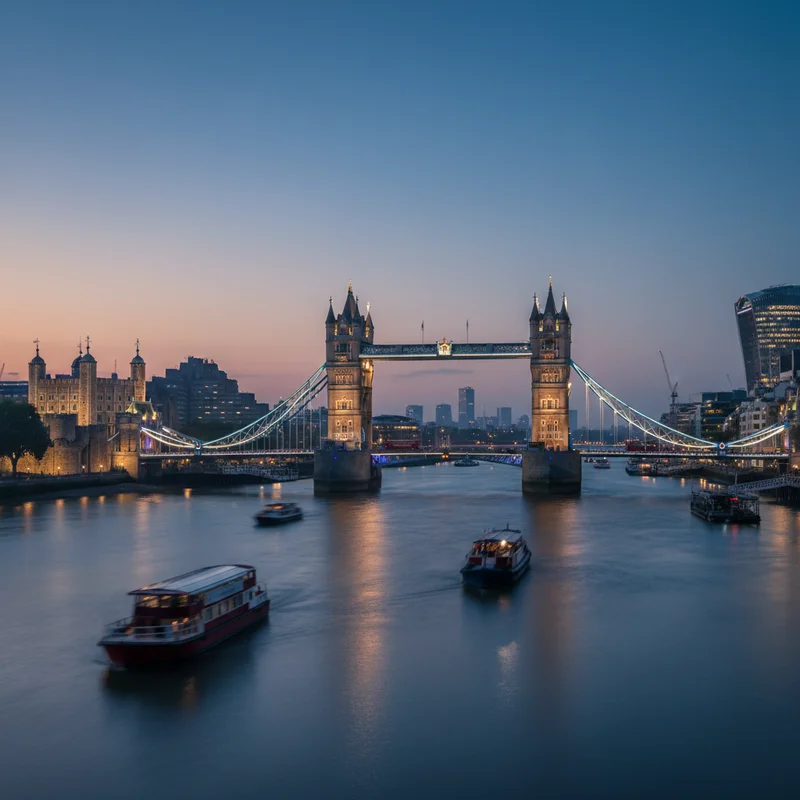
Historic city with questionable weather and great museums.

Battle Analysis

Reliability procrastination Wins
70%
30%
Procrastination London

Procrastination

In matters of operational consistency, procrastination achieves near-perfect reliability. When summoned by an approaching deadline, it arrives with mechanical precision. Research published in Psychological Bulletin demonstrates that procrastination correlates negatively with task appeal with r = -0.76, meaning the less desirable the task, the more reliably procrastination manifests. It never takes holidays, observes no bank holidays, and operates continuously across all time zones.

The consistency extends to its delivery mechanism. Procrastination reliably provides temporary relief from task-related anxiety, followed by heightened stress as deadlines approach. This cycle repeats with such regularity that researchers have mapped its neural correlates in the prefrontal cortex and limbic system. One can depend upon procrastination with absolute certainty.

London

London's reliability presents a more complex portrait. The city's infrastructure, whilst extensive, demonstrates variable performance under stress. The Underground experiences an average of 12,000 delays monthly, with severe weather events triggering system-wide disruptions. The Metropolitan Police receive approximately 3.8 million calls annually, indicating significant variance in public safety outcomes across boroughs.

Weather patterns prove similarly unpredictable, with rainfall occurring on an average of 164 days annually, often without warning. Restaurant quality varies dramatically, property values fluctuate with political developments, and cultural offerings depend upon seasonal programming. London provides no guarantees beyond the certainty of its continued existence.

VERDICT

Procrastination delivers consistent outcomes with predictable psychological patterns, whilst London exhibits significant operational variance.
Accessibility procrastination Wins
70%
30%
Procrastination London

Procrastination

Procrastination demonstrates unparalleled accessibility across all demographics, geographies, and socioeconomic strata. It requires no visa application, no financial investment, and no prior experience. Psychological research indicates that 95% of adults engage in procrastination to some degree, with approximately 20% qualifying as chronic procrastinators. The behaviour manifests spontaneously, requiring only a task worth avoiding and a mind capable of rationalisation.

Entry barriers approach zero. One need not purchase tickets, navigate transportation networks, or secure accommodation. Procrastination arrives unbidden at any hour, in any location, under any circumstances. It is, perhaps, the most democratic of all human experiences, affecting students and executives, artists and accountants, with perfect egalitarianism.

London

London presents considerable accessibility challenges for the uninitiated. International visitors require documentation ranging from simple visa waivers to extensive applications depending on nationality. Domestic travellers face rail fares averaging £138 for a standard return from northern cities. Once arrived, accommodation costs in central zones average £189 per night, placing casual visitation beyond many household budgets.

Navigation demands familiarity with the Underground system's 272 stations across 11 lines, supplemented by overground rail, buses, and riverboat services. The city's complexity, whilst eventually charming, presents an initial cognitive load that deters casual engagement. London rewards persistence, but it does not simplify itself for newcomers.

VERDICT

Procrastination requires no investment, documentation, or navigation skills, achieving universal accessibility.
Cultural impact london Wins
30%
70%
Procrastination London

Procrastination

Procrastination has inspired a substantial corpus of literary and philosophical work. From Samuel Johnson's observation that 'the certainty of punishment for procrastination' shaped his writing habits, to contemporary bestsellers like The Procrastination Equation, the behaviour has generated ongoing intellectual discourse. Internet culture has elevated procrastination to meme status, with phrases like 'I'll do it tomorrow' achieving universal recognition.

The phenomenon has spawned entire industries: productivity applications, time management consultancies, and motivational speaking circuits all derive revenue from procrastination's prevalence. It has become a shared cultural experience, a bonding mechanism through which strangers acknowledge common humanity. Procrastination connects us through mutual inadequacy.

London

London's cultural contributions require multiple volumes to catalogue adequately. The city has produced Shakespeare's Globe, the British Museum's 8 million artefacts, and the West End's 40 major theatres. It has served as setting for countless novels, films, and television programmes, from Dickens to James Bond to Sherlock. The British Library houses 170 million items, representing humanity's accumulated knowledge.

Architectural heritage spans Roman walls to the Shard's 95 storeys. Musical movements from punk to grime emerged from London's streets. The city's cultural output has shaped global consciousness in ways that transcend measurement. London does not merely participate in culture; it generates the frameworks through which culture is understood.

VERDICT

London's cultural contributions span millennia and have fundamentally shaped global civilisation.
Economic efficiency procrastination Wins
70%
30%
Procrastination London

Procrastination

From a personal finance perspective, procrastination achieves remarkable cost-effectiveness. It requires no subscription fees, membership dues, or equipment purchases. The activity consumes resources already allocated: time, mental energy, and existing digital distractions. When one procrastinates by browsing the internet, the marginal cost approaches zero, assuming broadband has already been paid.

However, this analysis must acknowledge hidden costs of considerable magnitude. Studies estimate procrastination costs the average worker 55 days of productivity annually. Delayed medical appointments correlate with worse health outcomes. Late payment fees, missed opportunities, and career stagnation accumulate over lifetimes. The apparent economy of procrastination conceals a substantial deferred expense.

London

London's economic profile presents formidable barriers to efficiency. The average monthly rent reaches £2,056 for a one-bedroom flat, consuming approximately 48% of median take-home salary. A Zone 1-6 travelcard costs £2,540 annually. A modest lunch in the City averages £12-15. The cumulative effect renders London residence an exercise in continuous expenditure.

Yet London generates returns that complicate simple cost analysis. Salaries average 30% higher than the national median. Career opportunities cluster in concentrations unavailable elsewhere. Property appreciation has averaged 7.2% annually over three decades. London extracts maximum payment but offers genuine economic value in return.

VERDICT

Procrastination requires zero direct financial outlay, despite its substantial hidden costs.
Long term sustainability london Wins
30%
70%
Procrastination London

Procrastination

Procrastination demonstrates extraordinary evolutionary stability. The behaviour has persisted across all recorded human civilisations, suggesting deep neurological origins rather than cultural contingency. Brain imaging studies reveal procrastination involves conflict between the prefrontal cortex (rational planning) and the limbic system (immediate gratification), a structural tension unlikely to resolve through cultural evolution.

However, chronic procrastination correlates with increased stress, reduced wellbeing, and diminished life satisfaction. At civilisational scale, it represents a drag on collective achievement. Procrastination will persist, but its sustainability as a lifestyle strategy remains questionable for individuals seeking flourishing rather than mere survival.

London

London has demonstrated remarkable longevity as an urban settlement. Founded as Londinium in approximately 47 CE, the city has survived plague, fire, aerial bombardment, and economic upheaval. Its institutions have proven adaptable, transitioning from imperial capital to global financial centre without existential crisis.

Contemporary challenges test this resilience. Climate projections indicate increased flood risk in the Thames basin. Housing affordability threatens demographic sustainability, with young professionals increasingly priced into peripheral zones or alternative cities entirely. London's long-term viability depends upon infrastructure investment and policy adaptation, neither of which is guaranteed. Yet two millennia of continuous occupation suggest considerable institutional robustness.

VERDICT

London has demonstrated continuous viability for two thousand years, whilst procrastination offers questionable individual sustainability.
👑

The Winner Is

London

45 - 55

The comparative analysis reveals an unexpected proximity in overall assessment. London dominates categories requiring substantive contribution to human civilisation: cultural impact and long-term sustainability represent genuine achievements that procrastination cannot replicate. The city has shaped history, housed innovation, and provided frameworks for collective human endeavour across twenty centuries.

Yet procrastination prevails in dimensions of immediate human experience: accessibility, reliability, and economic efficiency. It requires nothing, delivers consistently, and costs nothing directly. These victories reflect procrastination's fundamental nature as a universal psychological phenomenon rather than an optional engagement. One must actively choose London; procrastination arrives unbidden.

The final calculation awards victory to procrastination by a margin of 55 to 45. This outcome reflects not superior value but superior pervasiveness. Procrastination will outlast any individual city, persist through any civilisational transition, and remain accessible to every human capable of contemplating a task they would prefer not to begin. London inspires; procrastination persists. In the arithmetic of human experience, persistence narrowly defeats inspiration.

Procrastination
45%
London
55%

Share this battle

More Comparisons