Topic Battle

Where Everything Fights Everything

Love

Love

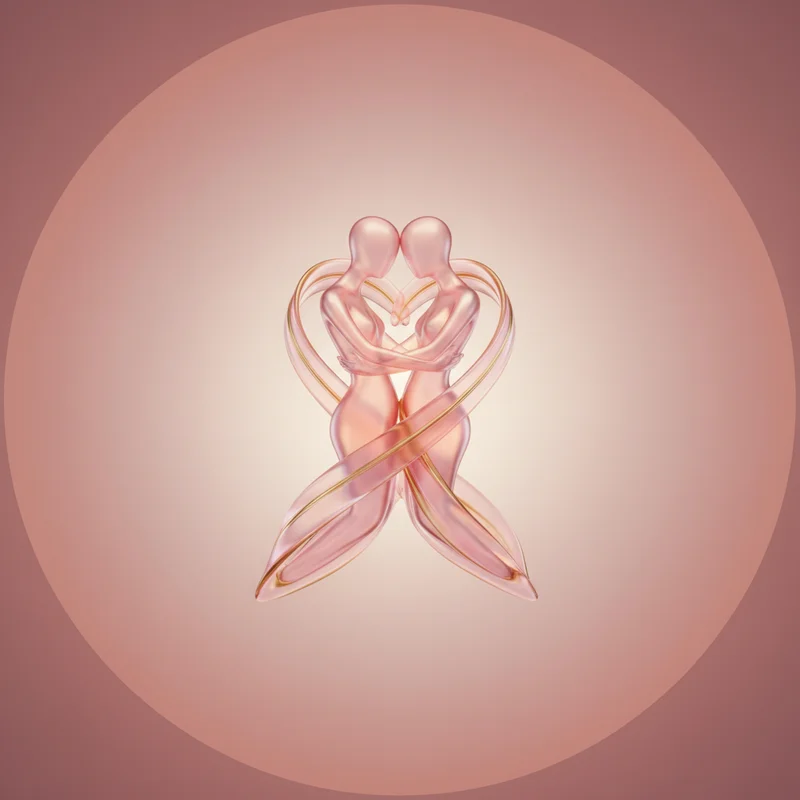
Universal emotion driving art, war, and terrible decisions.

VS
Shrek

Shrek

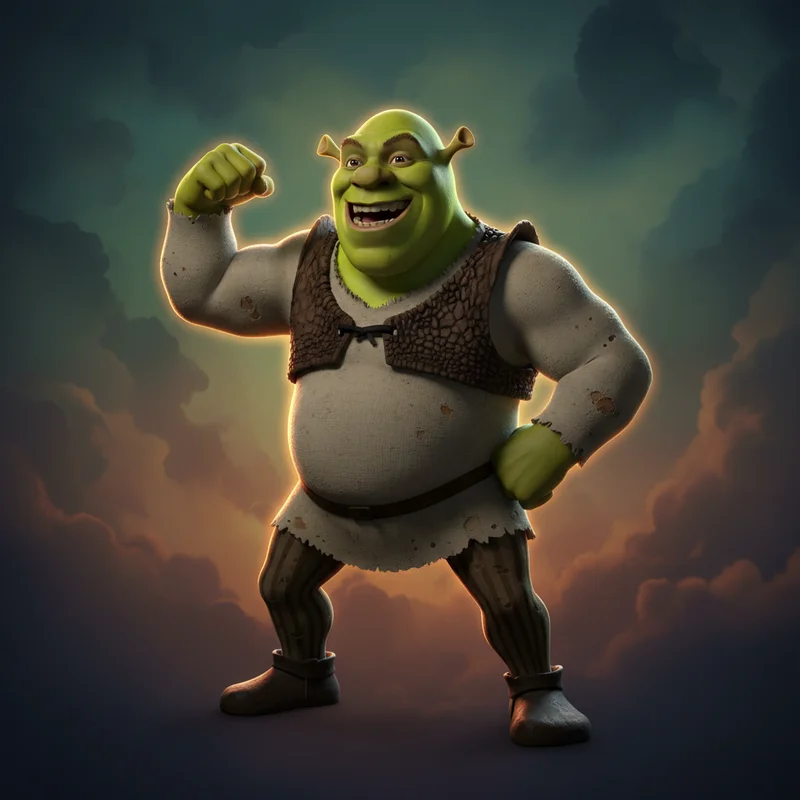
Ogre who proved layers matter.

Battle Analysis

Economic impact Love Wins
70%
30%
Love Shrek

Love

Love's economic footprint is staggeringly vast. The global wedding industry alone generates approximately $300 billion annually, whilst the dating app market, greeting card industry, chocolate sales, flower commerce, and romantic tourism collectively represent additional hundreds of billions. Pharmaceutical companies have invested fortunes in love-adjacent medications, and entire hospitality sectors exist primarily to accommodate love's various expressions. One might reasonably argue that love drives a significant percentage of discretionary consumer spending across all developed economies.

Shrek

The Shrek franchise has generated approximately $3.5 billion in box office revenue, with merchandising, streaming rights, and theme park attractions contributing additional billions. Shrek's face has appeared on everything from children's vitamins to waffle makers, demonstrating impressive commercial versatility. The character's enduring marketability has outlasted numerous competitors, maintaining relevance through economic recessions and shifting entertainment landscapes. Yet even this achievement pales against love's comprehensive economic dominance.

VERDICT

Trillions in annual economic activity rather definitively surpasses billions in franchise revenue.
Cultural longevity Love Wins
70%
30%
Love Shrek

Love

Love's curriculum vitae is, one must concede, rather impressive. Archaeological evidence suggests humans have been experiencing and documenting this peculiar affliction for at least 40,000 years, with cave paintings depicting pair bonding and ancient texts dedicating considerable papyrus to its analysis. From the Sanskrit Kama Sutra to Shakespeare's sonnets, from Sappho's fragments to Taylor Swift's discography, love has demonstrated an almost tiresome persistence in human creative output. Every civilisation that has achieved writing has, without exception, immediately used it to compose love poetry of varying quality.

Shrek

Shrek's tenure in cultural consciousness spans a mere two decades, yet what decades they have been. The character's transition from children's entertainment to ironic internet phenomenon to genuine nostalgic touchstone represents one of the most remarkable reputation trajectories in media history. The film 'Shrek' was selected for preservation in the United States National Film Registry in 2020, placing it alongside works deemed culturally, historically, or aesthetically significant. For a film about a flatulent swamp creature, this achievement borders on the miraculous.

VERDICT

Four decades of existence versus forty millennia presents an insurmountable mathematical advantage.
Philosophical depth Love Wins
70%
30%
Love Shrek

Love

Philosophers have grappled with love's nature since philosophy began. Plato distinguished between eros, philia, and agape; Schopenhauer viewed it as the will's clever trick for species perpetuation; Sartre considered it an impossible attempt to possess another's freedom. Entire philosophical movements have emerged attempting to understand why humans willingly subject themselves to this frequently devastating experience. Love raises fundamental questions about consciousness, free will, and the nature of happiness that remain unresolved after millennia of rigorous inquiry.

Shrek

Shrek's philosophical contributions, whilst less extensively analysed, are not without merit. The franchise presents a coherent critique of superficiality and social conformity, arguing that authenticity trumps conventional standards of beauty or success. Shrek's famous declaration that 'ogres are like onions' represents a surprisingly sophisticated metaphor for psychological complexity and layered identity. Academic analyses have identified themes of post-modern fairy tale deconstruction, though one suspects the films' creators may not have intended quite such rigorous interpretation.

VERDICT

Three millennia of philosophical discourse edges out two decades of ogre-based social commentary.
Transformative power Love Wins
70%
30%
Love Shrek

Love

The capacity of love to transform individuals has been exhaustively documented. Neuroimaging studies reveal that romantic love activates the brain's reward centres with an intensity comparable to cocaine addiction, fundamentally altering perception, decision-making, and the ability to notice red flags. Under love's influence, otherwise rational individuals have renounced thrones, crossed oceans, and agreed to watch films they had no interest in. The transformation can be so complete that friends and family frequently fail to recognise the affected party.

Shrek

Shrek's transformative influence operates on a cultural rather than individual level, though its effects are no less profound. The franchise single-handedly transformed the animated film industry, forcing Disney to reconsider its princess-centric approach and ushering in an era of self-aware, reference-heavy family entertainment. More remarkably, Shrek transformed the very concept of the fairy tale, teaching an entire generation that true beauty lies within whilst simultaneously teaching them that 'All Star' by Smash Mouth was an acceptable song to enjoy without irony.

VERDICT

Neurochemical restructuring of the human brain slightly outweighs restructuring of animation industry practices.
Meme generation capacity Shrek Wins
30%
70%
Love Shrek

Love

Love's contribution to internet culture has been surprisingly modest given its historical prominence. Whilst relationship memes certainly exist, they tend toward the earnest and sentimental, struggling to achieve the viral velocity required for true meme status. Love's most successful internet moments typically involve its absence or failure rather than its presence, suggesting that heartbreak rather than affection drives engagement. The emotion remains curiously resistant to the irreverent treatment that characterises successful meme content.

Shrek

In the arena of meme generation, Shrek operates at a level that can only be described as transcendent. From 'Shrek is Love, Shrek is Life' to countless iterations of the ogre's visage superimposed upon inappropriate contexts, Shrek has achieved meme immortality. The character's face has been projected onto buildings, inserted into classical paintings, and rendered in virtually every artistic medium known to humanity. Academic papers have been written analysing the Shrek meme phenomenon, a distinction shared by precious few cultural artefacts.

VERDICT

The sheer volume and cultural penetration of Shrek-related internet content remains unmatched by any emotion.
👑

The Winner Is

Love

58 - 42

The contest between Love and Shrek presents what philosophers might term an asymmetrical comparison - one contender operates as a fundamental feature of human neurobiology, whilst the other is a computer-generated ogre voiced by Mike Myers. Yet the very fact that this comparison seems reasonable to conduct speaks to Shrek's extraordinary cultural achievement.

Love has demonstrated its dominance in most traditional metrics: longevity, economic impact, transformative capacity, and philosophical significance. These advantages are not merely marginal but overwhelming, reflecting love's status as one of the defining experiences of human existence.

However, Shrek's victory in meme generation capacity cannot be dismissed. In the modern attention economy, the ability to persist virally may prove as significant as any traditional measure of cultural importance. Shrek has achieved a form of digital immortality that love, for all its power, has struggled to replicate.

Love
58%
Shrek
42%

Share this battle

More Comparisons