Topic Battle

Where Everything Fights Everything

Love

Love

Universal emotion driving art, war, and terrible decisions.

VS
The Moon

The Moon

Earth's natural satellite and space race destination.

Battle Analysis

Artistic inspiration Love Wins
70%
30%
Love The Moon

Love

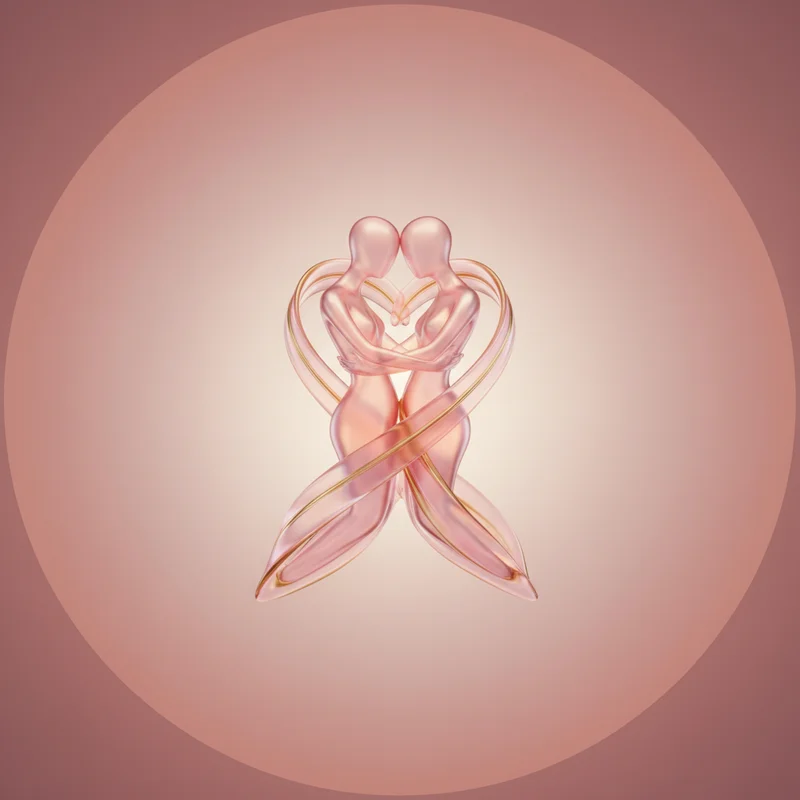
Love has generated more artistic output than any other single subject in human history. An estimated 87% of all popular music concerns itself with love in some form: its acquisition, its loss, or the complicated logistics of its maintenance. Literature from Romeo and Juliet to Pride and Prejudice to that novel your colleague insists you read has plumbed love's depths with varying degrees of success. The greeting card industry, worth approximately 31 billion dollars annually, exists solely because humans feel compelled to express romantic sentiments in rhyming couplets accompanied by illustrations of teddy bears.

The Moon

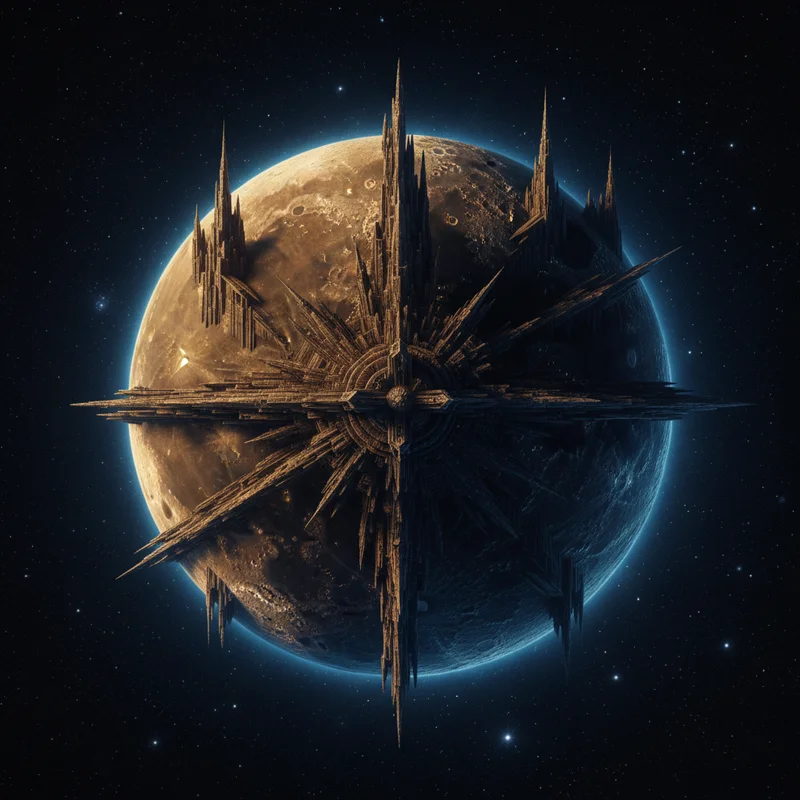
The Moon has inspired a respectable artistic portfolio, including Beethoven's Moonlight Sonata, countless nocturnes, and the entire genre of werewolf fiction. Van Gogh's Starry Night prominently features a luminous crescent, whilst poets from Li Bai to Pablo Neruda have addressed verses to its silvery face. The Moon landing of 1969 generated documentaries, films, and conspiracy theories that continue to proliferate. However, one struggles to identify a single chocolate box featuring lunar imagery, suggesting certain commercial limitations to moon-based artistic expression.

VERDICT

Love has fuelled more creative output than any phenomenon in human experience.
Scientific significance The Moon Wins
30%
70%
Love The Moon

Love

Love has attracted considerable scientific attention, particularly from neurologists and biochemists eager to reduce humanity's most celebrated emotion to a series of chemical reactions. Research has identified the roles of oxytocin, dopamine, and vasopressin in pair bonding, whilst evolutionary biologists have constructed elaborate theories about love's reproductive advantages. The study of love has, however, produced relatively few practical applications beyond the pharmaceutical industry's ongoing efforts to monetise loneliness and the occasional TED talk about attachment styles.

The Moon

The Moon represents one of humanity's greatest scientific achievements as a destination and object of study. Its exploration has yielded insights into planetary formation, the early solar system, and the engineering required to sustain human life beyond Earth. Lunar samples have been analysed, its gravitational effects precisely calculated, and its surface mapped to centimetre-level precision. The Moon serves as a stepping stone for future Mars missions, a potential source of helium-3 for fusion reactors, and continues to generate serious scientific inquiry rather than merely romantic speculation.

VERDICT

The Moon has advanced human knowledge and capability; love has advanced greeting card sales.
Longevity and permanence The Moon Wins
30%
70%
Love The Moon

Love

Individual instances of love display wildly variable durability. Some partnerships endure seven decades; others barely survive the duration of a hen party in Ibiza. The neurochemical intensity of romantic love typically peaks within the first two years before either deepening into lasting attachment or evaporating entirely, leaving behind only joint Netflix accounts and unresolved arguments about whose turn it was to empty the dishwasher. As a concept, however, love has persisted throughout human history, remaining remarkably consistent in its symptoms across cultures and centuries.

The Moon

The Moon has maintained its position for approximately 4.5 billion years, demonstrating a level of commitment that would shame even the most devoted spouse. It has witnessed every human love story ever told and will continue its faithful orbit long after our species has departed the cosmic stage. The Moon is, however, slowly drifting away from Earth at a rate of 3.8 centimetres per year, suggesting that even celestial bodies eventually need space. In roughly 50 billion years, it will have retreated far enough to cease causing total solar eclipses, though relationship counsellors will likely remain in business.

VERDICT

Four and a half billion years of orbital fidelity rather outperforms even the most celebrated love story.
Universality of experience Love Wins
70%
30%
Love The Moon

Love

Love claims near-universal human experience, documented across every known culture from isolated Amazonian tribes to metropolitan Tokyo. The emotion appears hardwired into human neurology, emerging reliably regardless of upbringing, education, or explicit attempts at avoidance. Even those who claim immunity to romantic love typically display fierce attachment to family, friends, or pets, suggesting the underlying neurological machinery remains operational even when romantic applications are declined. To be human is, with vanishingly rare exceptions, to be capable of love.

The Moon

The Moon presents itself to every human who has ever looked upward on a clear night, making it perhaps the most universally shared visual experience in human history. Every civilisation has observed the same Moon, incorporated it into calendars and mythologies, and wondered at its pale presence. However, the Moon offers identical presentation to all observers rather than the personalised experience love provides. One either sees the Moon or does not; one does not develop a unique relationship with it the way one does with love.

VERDICT

Love adapts to each individual; the Moon offers the same impersonal glow to all observers.
Influence on human behaviour Love Wins
70%
30%
Love The Moon

Love

Love's influence upon human behaviour constitutes nothing short of a complete neurological takeover. Under its sway, humans have abdicated thrones, forsaken fortunes, and written sonnets of such excruciating sincerity that their future selves would pay handsomely to destroy all copies. The condition activates dopamine pathways typically associated with addiction, explaining why the afflicted display classic dependency behaviours: obsessive thoughts, withdrawal symptoms upon separation, and a willingness to reorganise their entire existence around another person's schedule.

The Moon

The Moon's behavioural influence, whilst legendary, proves surprisingly difficult to verify scientifically. Emergency room staff worldwide insist that full moons bring chaos, yet rigorous studies consistently fail to correlate lunar phases with hospital admissions, crime rates, or psychiatric episodes. The Moon does, however, demonstrably influence tidal patterns, which in turn affect marine creatures, migratory birds, and the scheduling of coastal weddings. Its gravitational pull upon human behaviour appears more metaphorical than literal, operating through belief rather than physics.

VERDICT

Love rewires the brain directly; the Moon's influence operates primarily through superstition.
👑

The Winner Is

Love

54 - 46

This investigation has illuminated a profound cosmic truth: humanity exists precisely at the intersection of these two forces. Love operates from within, rewiring neural pathways and compelling behaviours that reason cannot explain. The Moon operates from without, governing tides and calendars whilst serving as humanity's most ancient nightlight and most ambitious destination.

The score of 54 to 46 in love's favour reflects its immediate, personal, and transformative presence in human experience. The Moon may be older, larger, and considerably more photogenic, but it cannot quicken a pulse or ruin an afternoon with a single unanswered text message.

Yet the Moon retains a quiet dignity that love often lacks. It does not embarrass itself at parties, does not require constant reassurance, and has never once checked whether its ex is seeing someone new. Perhaps the ideal human existence involves appreciating both: love for the intensity it brings to mortal life, and the Moon for the perspective it offers from 384,400 kilometres away.

Love
54%
The Moon
46%

Share this battle

More Comparisons