Where Everything Fights Everything

Mars vs Procrastination

😜 Just for fun — a tongue-in-cheek, gloriously unscientific showdown.

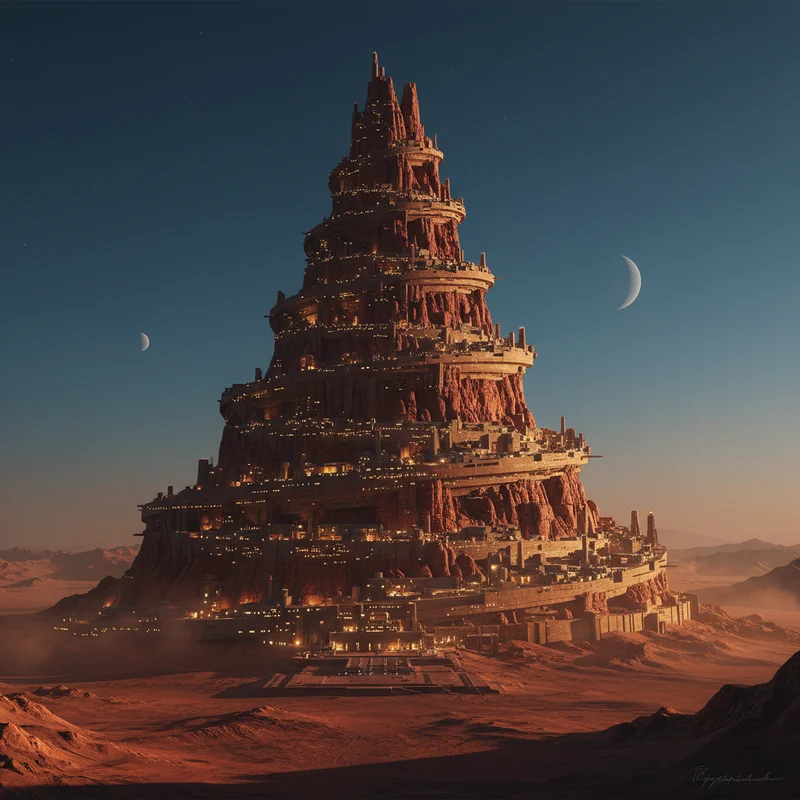
Mars

Mars

Red planet and humanity's next frontier.

VS
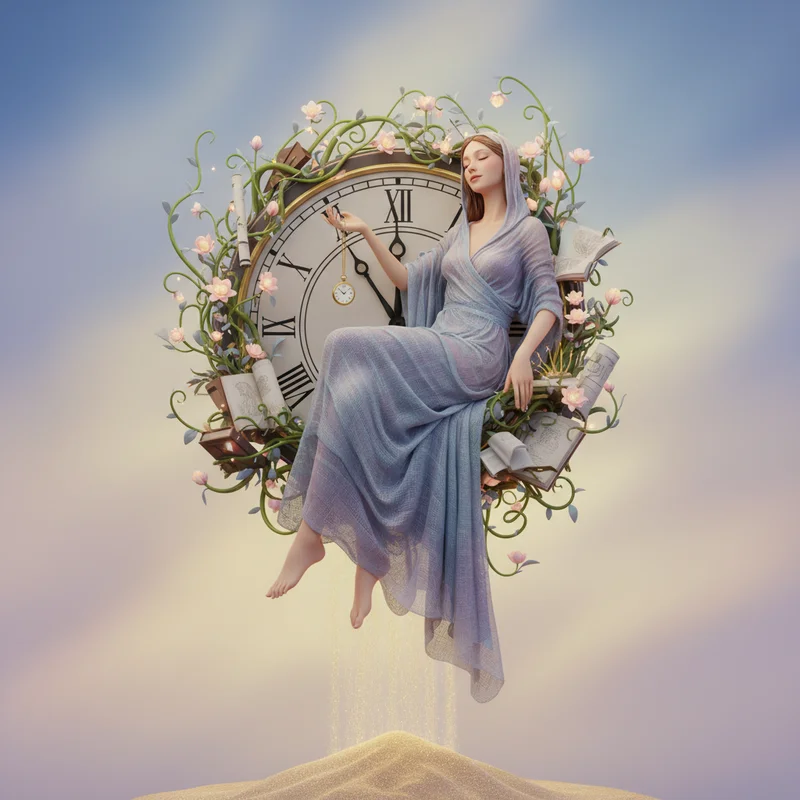
Procrastination

Procrastination

The art of doing everything except the one thing you should be doing. A universal human experience that has spawned more clean apartments, reorganized sock drawers, and Wikipedia deep dives than any productivity method ever could.

Battle Analysis

Longevity Mars Wins
🏆 Mars takes this round

Mars

Mars possesses longevity operating on scales that render human timekeeping virtually meaningless. The planet formed approximately 4.6 billion years ago from the same primordial disc that birthed our solar system. Its surface bears craters from impacts occurring hundreds of millions of years past, preserved by the near-absence of geological activity. Projections suggest Mars shall persist for billions of years hence, ultimately meeting its end only when our Sun expands into a red giant. Such temporal persistence dwarfs every human endeavour, every civilisation, every species that has walked our planet.

Procrastination

Procrastination, whilst lacking geological permanence, demonstrates remarkable durability within the human experience. Archaeological evidence suggests procrastinatory behaviour predates written language, with unfinished stone tools and abandoned construction projects littering prehistoric sites. The phenomenon has persisted through every advancement in productivity methodology, from the invention of the clock to digital task management systems. Indeed, each new tool designed to combat procrastination seems only to provide novel avenues for its expression. Its persistence suggests a fundamental quality embedded within human cognition.

VERDICT

Mars has existed for 4.6 billion years; procrastination merely for the duration of human consciousness.
Accessibility Procrastination Wins
🏆 Procrastination takes this round

Mars

Mars presents formidable accessibility challenges that have occupied humanity's finest engineering minds for decades. At its closest approach, the planet remains approximately fifty-five million kilometres distant, requiring spacecraft to endure seven months of interplanetary transit. Surface access demands spacecraft capable of surviving entry through a thin atmosphere, landing systems of extraordinary precision, and life support technologies not yet fully developed. To date, precisely zero humans have successfully accessed Mars, though several robotic emissaries have made the journey.

Procrastination

Procrastination demonstrates accessibility of an almost preternatural order. It requires no spacecraft, no funding, no governmental approval, and no particular expertise. Access may be achieved from any location on Earth at any moment, often without conscious intention. The phenomenon presents itself with such ease that many individuals report experiencing it involuntarily. One need only possess a task requiring completion to gain immediate and unfettered access to procrastination. The barriers to entry approach absolute zero, making it perhaps the most accessible phenomenon in human psychology.

VERDICT

Procrastination is immediately accessible to all humans, whilst Mars remains fifty-five million kilometres distant.
Stress impact Mars Wins
🏆 Mars takes this round

Mars

Mars exerts remarkably minimal stress upon the average human existence. For the overwhelming majority of Earth's population, the Red Planet remains a distant abstraction, a point of light occasionally glimpsed and promptly forgotten. Excepting the several hundred scientists and engineers engaged in Martian exploration, the planet generates no deadlines, creates no obligations, and demands no attention. One cannot be late for Mars, cannot disappoint Mars, cannot receive disappointed communications from Mars regarding unmet expectations. In this regard, Mars represents a paragon of low-stress celestial existence.

Procrastination

Procrastination generates stress levels of clinically significant magnitude. Research documents elevated cortisol levels, disrupted sleep patterns, and compromised immune function amongst chronic procrastinators. The phenomenon creates a distinctive temporal compression effect wherein tasks expand to fill all available time, then overflow into periods of acute panic. The guilt associated with procrastination often proves more debilitating than the avoided task itself, creating recursive loops of avoidance and distress. Mental health professionals cite procrastination as a contributing factor in anxiety disorders, depression, and generalised life dissatisfaction.

VERDICT

Mars imposes no psychological burden upon humanity, whilst procrastination actively degrades mental wellbeing.
Global recognition Mars Wins
🏆 Mars takes this round

Mars

Mars commands universal recognition across every human civilisation, past and present. The ancient Babylonians charted its wandering path across the heavens some four thousand years ago, naming it after their god of war and pestilence. Today, the Red Planet features in educational curricula from Tokyo to Toronto, serves as the setting for countless works of literature and cinema, and represents humanity's next great frontier. Every child who has gazed upward on a clear evening has witnessed its rusty glow, making Mars perhaps the most democratically observed celestial body after our own Moon.

Procrastination

Procrastination achieves a remarkable form of recognition through lived experience rather than observation. Whilst Mars must be explained to those unfamiliar with astronomy, procrastination requires no introduction whatsoever. The phenomenon transcends cultural and linguistic barriers with extraordinary efficiency. A student in Buenos Aires and a civil servant in Bangkok share an immediate, visceral understanding of its mechanisms. Indeed, research suggests that approximately ninety-five percent of adults acknowledge engaging in procrastinatory behaviour, making it one of the most universally experienced psychological phenomena in human existence.

VERDICT

Mars achieves recognition across millennia and civilisations, whilst procrastination merely achieves personal familiarity.
Historical significance Mars Wins
🏆 Mars takes this round

Mars

The historical significance of Mars extends across the full breadth of human civilisation. Ancient astronomers used its retrograde motion to develop early models of planetary mechanics. Kepler's laws of planetary motion, foundational to modern physics, emerged from painstaking observations of Mars. The planet has sparked international cooperation and competition alike, from the Space Race to contemporary joint missions. Mars has served as a canvas upon which humanity has projected its dreams of expansion, its fears of alien life, and its fundamental questions about our place in the cosmos.

Procrastination

Procrastination possesses a rather more subtle historical footprint, yet its influence proves no less profound. Scholars argue that the Library of Alexandria's delayed cataloguing contributed to irreplaceable knowledge loss. Wars have been lost through hesitation, empires have crumbled through deferred decisions. The phenomenon shaped philosophical discourse from Aristotle's concept of akrasia to modern behavioural economics. One might reasonably argue that procrastination has altered more individual human destinies than any planetary body, affecting career trajectories, relationships, and personal achievements across all epochs.

VERDICT

Mars fundamentally shaped humanity's understanding of the cosmos and our scientific frameworks.
👑

The Winner Is

Mars

Takes 4 of 5 rounds

Mars emerges victorious with a score of 54 to 46, though the margin perhaps understates procrastination's formidable showing. The Red Planet claims superiority through sheer existential weight, its billions of years of silent presence, its role in shaping human scientific understanding, and its function as a beacon for species-wide aspiration. Yet procrastination's performance deserves recognition. In accessibility, it achieved a decisive victory, being rather more convenient to experience than interplanetary travel. One might observe that Mars requires procrastination to be overcome before humanity can reach it, suggesting a relationship more symbiotic than competitive. The Red Planet wins not because procrastination lacks influence, but because Mars shall persist long after the last task is finally, reluctantly, completed.

Share this battle

More Comparisons