Where Everything Fights Everything

Mars vs Sloth

😜 Just for fun — a tongue-in-cheek, gloriously unscientific showdown.

Mars

Mars

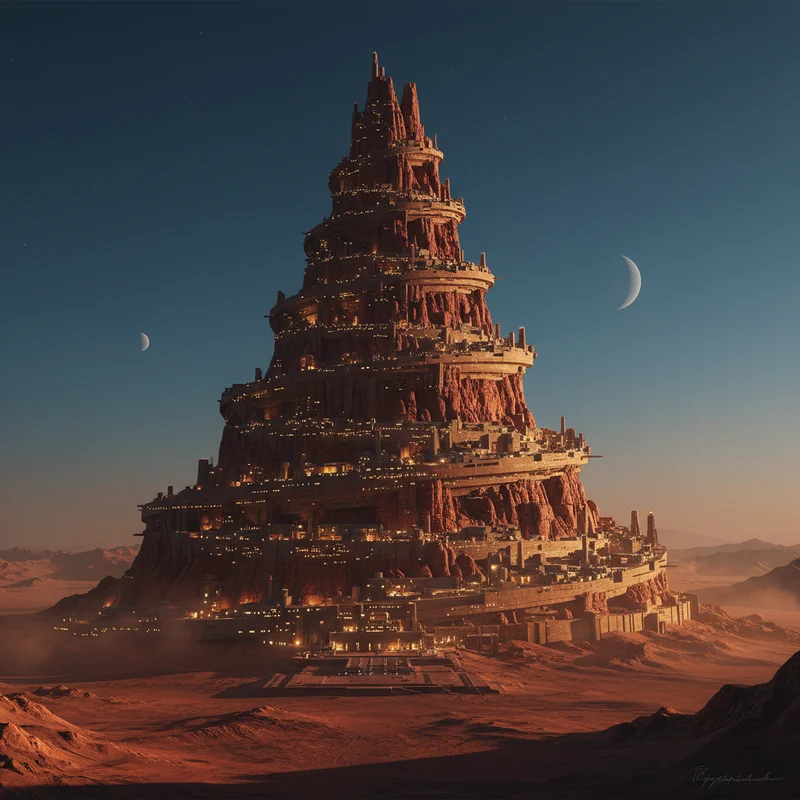
Red planet and humanity's next frontier.

VS
Sloth

Sloth

Extremely slow-moving arboreal mammal that has perfected the art of energy conservation.

Battle Analysis

0 Mars Wins
🏆 Mars takes this round

Mars

Mars hurtles through the cosmic void at approximately 24.077 kilometres per second, completing its orbital journey around the Sun in 687 Earth days. This velocity, whilst imperceptible to the naked eye from our terrestrial vantage point, represents a feat of celestial mechanics that has remained unchanged for approximately 4.5 billion years. The planet's surface winds can reach speeds of up to 100 kilometres per hour during dust storms, though the thin atmosphere renders these gusts rather less dramatic than their Earthly counterparts.

Sloth

The three-toed sloth achieves a maximum terrestrial velocity of 0.27 kilometres per hour, a pace that has proven remarkably successful for survival in the rainforest canopy. This deliberate locomotion is not a deficiency but rather an evolutionary masterwork of energy conservation. The sloth's metabolic rate operates at roughly 40 percent of what would be expected for a mammal of its size, allowing it to subsist on a diet of leaves that would leave other creatures wanting. Speed, for the sloth, is simply an unnecessary extravagance.

VERDICT

The planet's orbital velocity exceeds the sloth's by a factor of approximately 320 million.
1 Sloth Wins
🏆 Sloth takes this round

Mars

Mars presents an environment of profound hostility to life as we understand it. Surface temperatures plunge to minus 125 degrees Celsius at the poles, the atmosphere consists of 95 percent carbon dioxide, and the lack of a magnetic field permits solar radiation to bombard the surface unimpeded. Yet this very inhospitality has made Mars the focus of humanity's greatest scientific endeavours, inspiring billions in research funding and international cooperation unprecedented in the annals of space exploration.

Sloth

The sloth has cultivated one of nature's most sophisticated ecosystems within the confines of its own fur. This mobile biome hosts algae, fungi, moths, and beetles in a symbiotic arrangement that provides camouflage, nutrients, and habitat. A single sloth can support an entire community of organisms, making it a keystone species of remarkable ecological significance. The creature's weekly descent to defecate fertilises the trees upon which it depends, completing a nutrient cycle of elegant simplicity.

VERDICT

The sloth sustains life; Mars remains resolutely barren despite our fondest hopes.
2 Mars Wins
🏆 Mars takes this round

Mars

Mars has captivated human imagination since ancient Babylonian astronomers first tracked its ruddy wanderings across the night sky. Named for the Roman god of war, it has inspired countless mythologies, scientific treatises, and works of fiction. The planet serves as the primary focus of humanity's interplanetary ambitions, with multiple space agencies and private enterprises vying to establish a human presence on its surface. Few celestial objects command such universal recognition.

Sloth

The sloth has achieved remarkable cultural penetration in the modern era, ascending from obscure rainforest dweller to international symbol of deliberate living. Its visage adorns countless merchandise items, and 'sloth videos' constitute a significant category of internet content. The creature has become emblematic of the slow living movement, offering a philosophical counterpoint to the frenetic pace of contemporary existence. Recognition, however, remains largely confined to the post-internet generation.

VERDICT

Five millennia of documented human fascination outweighs two decades of internet celebrity.
3 Sloth Wins
🏆 Sloth takes this round

Mars

Mars has remained fundamentally unchanged for billions of years, its geological activity having largely ceased in the distant past. The planet cannot adapt; it merely endures. What once may have harboured liquid water and perhaps primitive life has become a frozen desert, unable to respond to changing solar conditions. Its adaptability, such as it is, lies only in humanity's potential to terraform its surface into something more hospitable over centuries of effort.

Sloth

The sloth represents 64 million years of successful evolutionary adaptation. Its ancestors once grew to the size of elephants, yet when circumstances demanded, the lineage pivoted to arboreal existence with remarkable success. The modern sloth has adapted its metabolism, muscle structure, and even organ placement to accommodate an inverted lifestyle. Its algae-covered fur changes colour with the seasons, providing camouflage that shifts as the environment demands. This is adaptation perfected.

VERDICT

Sixty-four million years of successful evolution versus four billion years of geological stagnation.
4 Mars Wins
🏆 Mars takes this round

Mars

Mars has existed for approximately 4.5 billion years and shall continue to orbit the Sun for billions more until our star's eventual expansion consumes the inner planets. On cosmic timescales, the planet is essentially eternal from any human perspective. It has witnessed the entire history of life on Earth from afar, a silent observer of biological evolution playing out on a neighbouring world. Its longevity is absolute within any meaningful frame of reference.

Sloth

Individual sloths achieve lifespans of 20 to 30 years in the wild, with some captive specimens exceeding 40 years. The sloth lineage itself has persisted for 64 million years, weathering mass extinctions and climate shifts that claimed countless other species. Yet this is but a moment compared to planetary timescales. The sloth's longevity is impressive for a mammal but remains firmly bounded by biological constraints that no planet need consider.

VERDICT

Geological time renders biological lifespans essentially instantaneous by comparison.
👑

The Winner Is

Mars

Takes 3 of 5 rounds

Mars emerges as the victor in this improbable contest, though one suspects the sloth would greet such news with characteristic indifference. The planet's advantages in speed, recognition, and longevity are simply inarguable when measured against biological limitations. Yet the sloth's triumphs in adaptability and environmental impact remind us that success admits of many definitions. Mars may endure for aeons, but it shall never know the simple satisfaction of digesting a leaf in the afternoon sun. The planet wins on points; the sloth wins at living.

Share this battle

More Comparisons