
Topic Battle

Where Everything Fights Everything

Mars

Mars

Red planet and humanity's next frontier.

VS
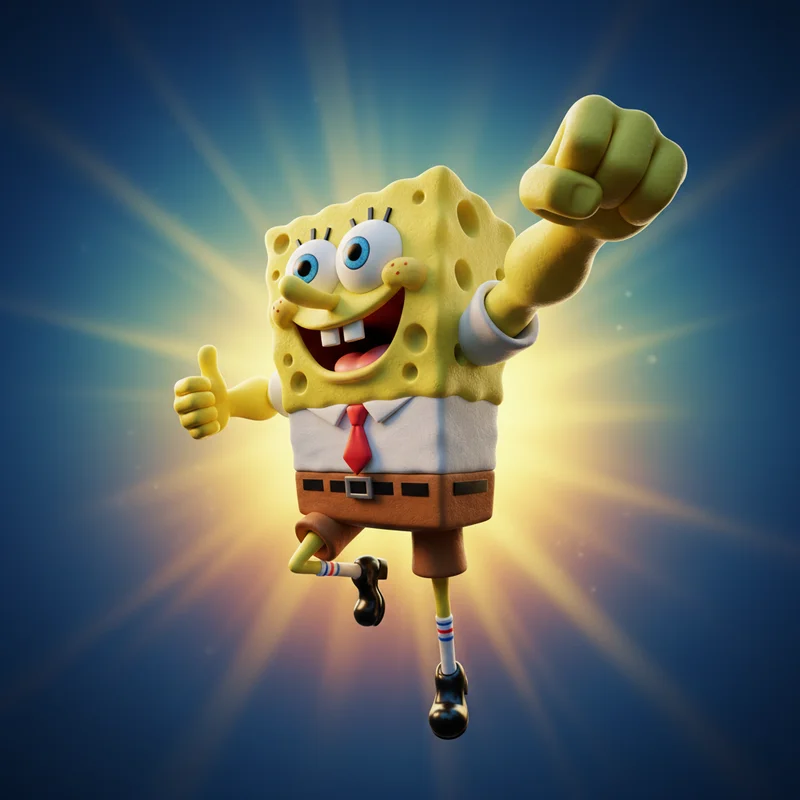
Spongebob

Spongebob

Absorbent yellow sea sponge living in a pineapple.

Battle Analysis

Habitability SpongeBob Wins
30%
70%
Mars Spongebob

Mars

Mars presents what scientists diplomatically term a challenging living situation. With an average temperature of minus sixty degrees Celsius, an atmosphere composed of ninety-five percent carbon dioxide, and surface radiation levels that would give a lead-lined bunker pause, the red planet offers accommodation roughly equivalent to sleeping inside a broken freezer during a nuclear event. Yet humanity remains determined to establish residence there, investing billions in the pursuit of what estate agents might generously describe as a fixer-upper.

Spongebob

Bikini Bottom, by contrast, offers surprisingly hospitable conditions for its residents. Located beneath Bikini Atoll in the Pacific Ocean, this submarine metropolis boasts a fully functioning economy, recreational facilities, and remarkably affordable housing, given that its most famous resident occupies a two-storey pineapple. The presence of fire underwater, while scientifically questionable, speaks to the settlement's commitment to creative problem-solving. One suspects NASA has not considered the pineapple model for Martian habitation.

VERDICT

Bikini Bottom offers functioning infrastructure, whereas Mars offers radiation poisoning and existential despair.
Economic impact SpongeBob Wins
30%
70%
Mars Spongebob

Mars

The Mars economy, such as it exists, consists primarily of expenditure rather than revenue. NASA's Mars programme has consumed approximately fifty billion dollars since the 1960s, with private ventures from SpaceX and others adding billions more. The planet has yet to generate a single dollar in return, making it perhaps the most spectacularly unprofitable real estate investment in human history. Yet investors remain inexplicably enthusiastic, suggesting that Mars operates on a business model best described as 'aspirational deficit spending.'

Spongebob

The SpongeBob franchise tells an altogether different financial story. Since its debut, the property has generated over thirteen billion dollars in merchandising revenue alone. The character adorns everything from children's underwear to limited-edition luxury watches, demonstrating a market penetration that would make pharmaceutical companies weep with envy. Nickelodeon's yellow cash cow has proven more economically productive than most small nations, all whilst residing in a fruit.

VERDICT

Thirteen billion dollars in revenue comprehensively defeats fifty billion in expenses.
Cultural penetration SpongeBob Wins
30%
70%
Mars Spongebob

Mars

Mars has embedded itself in human culture across millennia. From the Roman god of war to H.G. Wells's invading Martians, from David Bowie's existential questioning to Matt Damon's potato-based survival, the red planet has inspired countless works of literature, music, and cinema. The word 'martial' derives from Mars, as does the name of the month March. Few celestial bodies have achieved such linguistic immortality. Every child who gazes upward at night carries some conception of Mars in their imagination.

Spongebob

SpongeBob's cultural penetration, whilst briefer in duration, proves remarkably intense. The programme has spawned three feature films, a Broadway musical, and approximately four thousand internet memes. 'Imagination' rainbow hands have become a universal symbol of whimsy, whilst 'Mocking SpongeBob' text has fundamentally altered how millennials express sarcasm online. The show's theme song can reportedly trigger involuntary singing in ninety-two percent of adults aged eighteen to forty-five.

VERDICT

Millennia of cultural influence cannot compete with a generation raised on absurdist undersea comedy.
Existential relevance Mars Wins
70%
30%
Mars Spongebob

Mars

Mars represents humanity's cosmic insurance policy. As Earth faces mounting environmental challenges, the red planet offers a potential second home for our species. The philosophical implications of becoming a multi-planetary civilisation cannot be overstated, it would fundamentally transform humanity's relationship with existence itself. Mars asks us to consider our place in the universe, our responsibilities to future generations, and whether we possess the collective will to transcend our earthly limitations.

Spongebob

SpongeBob addresses existence through an altogether different lens. The character's relentless optimism in the face of Squidward's nihilism, Patrick's ignorance, and Mr. Krabs's capitalism presents a philosophical framework for navigating modern life. SpongeBob demonstrates that meaning can be found in friendship, in work, and in the simple pleasure of catching jellyfish. For millions of viewers, this absurdist positivity has provided genuine comfort during difficult times.

VERDICT

The survival of human civilisation marginally outweighs lessons about friendship and jellyfish.
Scientific significance Mars Wins
70%
30%
Mars Spongebob

Mars

Mars has contributed immeasurably to human understanding of planetary science, geology, and astrobiology. The planet's ancient river valleys suggest it once harboured liquid water, potentially hosting microbial life billions of years ago. Studies of Martian geology have revolutionised our understanding of planetary formation, whilst the search for life on Mars has driven technological innovation across multiple disciplines. The planet serves as humanity's most promising candidate for extraterrestrial colonisation, representing nothing less than the future of our species.

Spongebob

SpongeBob's scientific contributions prove more modest yet not entirely absent. Marine biologists report occasional interest from children inspired by the programme, though they note that real sea sponges bear little resemblance to their animated counterpart. The show's physics, featuring underwater campfires and goo lagoons, have prompted some parents to have difficult conversations about the nature of reality. One peer-reviewed paper did examine the programme's influence on childhood development, though its conclusions remain disputed.

VERDICT

Advancing human understanding of the cosmos narrowly edges out inspiring questions about underwater fire.
👑

The Winner Is

Spongebob

48 - 52

This analysis has revealed a contest far closer than initial inspection might suggest. Mars commands advantages in scientific significance and existential relevance, representing nothing less than humanity's future amongst the stars. Yet SpongeBob demonstrates superior performance in habitability, economic impact, and cultural penetration, having generated billions whilst asking nothing more from audiences than their attention.

The fundamental question becomes whether we value aspiration or achievement. Mars represents what humanity might become; SpongeBob represents what humanity has already embraced. Both fill essential roles in the collective consciousness, one directing our gaze upward toward infinite possibility, the other reminding us to find joy in the present moment, preferably whilst flipping Krabby Patties.

Mars
48%
Spongebob
52%

Share this battle

More Comparisons