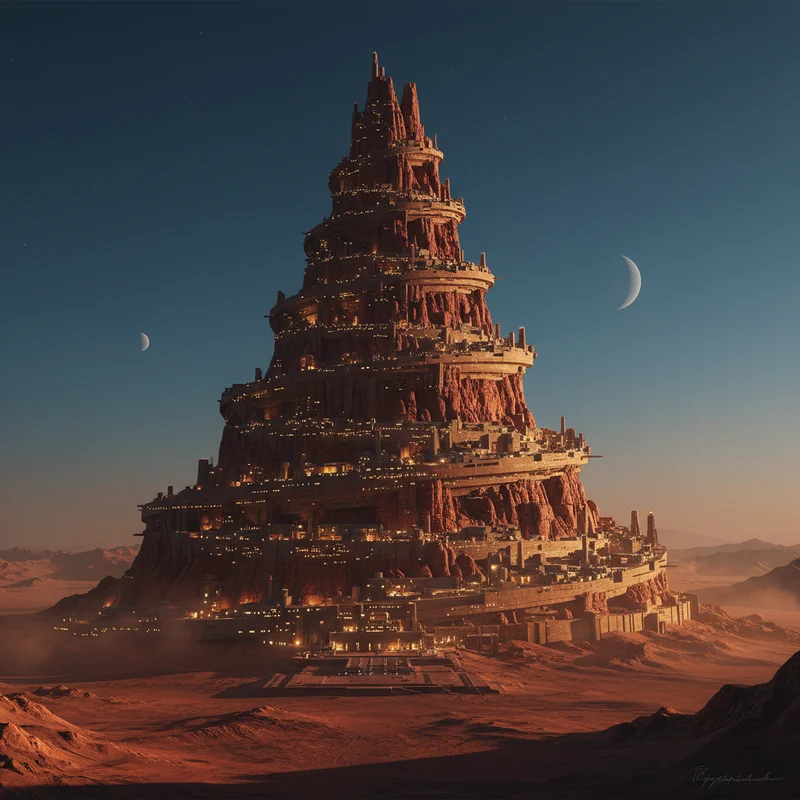
Mars
Mars has maintained its current form for approximately 4.6 billion years, having survived the Late Heavy Bombardment, the loss of its magnetic field, the evaporation of its ancient oceans, and countless other catastrophes that would have rendered any digital network permanently inoperable. The planet will persist for another five billion years until solar expansion renders such considerations moot.
This durability operates on timescales that reduce human endeavours to statistical noise. Mars was ancient when the first single-celled organisms emerged on Earth. It witnessed the rise and fall of the dinosaurs without registering any particular interest. The planet embodies permanence in a way that no human creation can approach.
The Internet
The Internet's oldest continuously operating components date to approximately 1969, making the network younger than many of its users' parents. Its infrastructure requires constant maintenance, periodic replacement, and the continued functioning of global civilisation to persist. A sufficiently severe solar storm could reduce decades of development to electromagnetic noise.
Individual websites demonstrate even less permanence—the average webpage survives roughly 100 days before modification or deletion. Digital preservation efforts struggle against technological obsolescence, format degradation, and corporate indifference. The Internet exists in a state of perpetual becoming, never achieving the stability that Mars takes for granted.