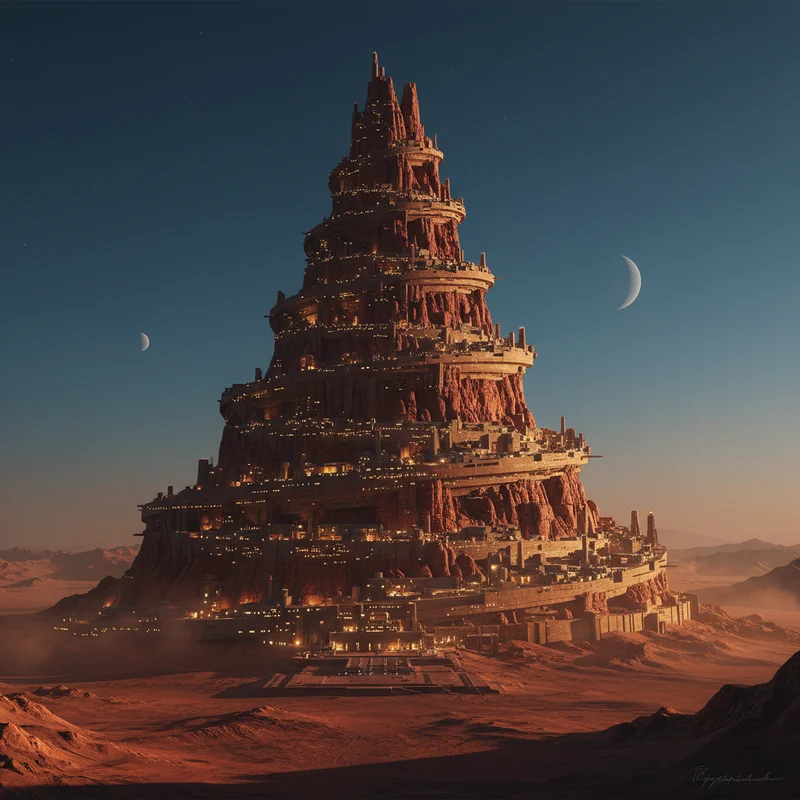
Topic Battle

Where Everything Fights Everything

Mars

Mars

Red planet and humanity's next frontier.

VS
Time

Time

Dimension that refuses to slow down when needed.

Battle Analysis

Accessibility Time Wins
30%
70%
Mars Time

Mars

Mars presents formidable accessibility challenges that have thus far defeated human ambition entirely. The planet orbits between 54.6 and 401 million kilometres from Earth, requiring launch windows that occur only every 26 months. A crewed mission demands technology not yet fully developed, life support systems capable of years-long operation, and solutions to radiation exposure that currently do not exist. The estimated cost exceeds 100 billion pounds. As of 2024, precisely zero humans have visited Mars. Our only emissaries are robotic rovers that cannot return, ambassadors to a world we have seen but never touched.

Time

Time achieves the remarkable feat of being maximally accessible yet completely ungovernable. Every conscious being experiences time continuously without interruption. No equipment is required, no special training necessary. Time streams through human awareness from the first moment of consciousness until the last. Yet this accessibility grants no control whatsoever. Humans cannot pause time, cannot reverse it, cannot store unused hours for later deployment. We experience time with complete intimacy whilst remaining utterly powerless to influence its flow. The most accessible phenomenon in existence is also the least controllable.

VERDICT

Mars requires billion-pound spacecraft; time requires only consciousness, yet neither can be mastered
Mystery and allure Time Wins
30%
70%
Mars Time

Mars

Mars presents genuinely compelling mysteries that have fuelled centuries of speculation. The planet's Valles Marineris canyon system stretches 4,000 kilometres, dwarfing Earth's Grand Canyon. Olympus Mons, at 21.9 kilometres in height, stands as the solar system's tallest volcano. Evidence suggests ancient Mars harboured liquid water, raising the tantalising question of whether microbial life once emerged on Martian shores. Percival Lowell's 19th-century canali observations, though mistaken, established Mars as the default setting for intelligent alien life in human imagination. The planet offers mysteries that future exploration might actually resolve.

Time

Time presents mysteries of an altogether more fundamental and disturbing character. Physics has demonstrated that time dilates at high velocities and in strong gravitational fields, yet cannot explain why time flows in one direction only. The arrow of time remains one of physics' deepest unsolved problems. What is the present moment? Does the future already exist? Is free will compatible with time's apparent determinism? These questions have occupied philosophers from Augustine to Heidegger without resolution. Unlike Mars, whose secrets might yield to robotic exploration, time's mysteries may prove fundamentally beyond human comprehension, woven into the very fabric of reality itself.

VERDICT

Mars conceals potentially answerable questions; time conceals the nature of existence itself
Survival prospects Mars Wins
70%
30%
Mars Time

Mars

Mars offers humanity something no abstract concept can provide: a potential second home. The planet possesses water ice at its poles, a 24.6-hour day remarkably similar to Earth's, and mineral resources sufficient for industrial civilisation. Terraforming proposals suggest that over centuries, Mars might be transformed into a habitable world. In existential risk calculations, Martian colonisation represents humanity's insurance policy against extinction-level events on Earth. A self-sustaining Martian colony would ensure human consciousness persists even should our home world face catastrophic asteroid impact, supervolcanic eruption, or nuclear annihilation. Mars is, quite literally, a survival option.

Time

Time offers no survival prospects whatsoever. Quite the opposite: time is the mechanism through which all things end. Every civilisation that has ever existed has fallen within time's passage. Every individual who has ever lived has succumbed to time's effects. Time grants no extensions, accepts no appeals, and shows no favouritism. The Second Law of Thermodynamics ensures that even the universe itself shall eventually reach maximum entropy, achieving heat death in approximately 10^100 years. Time is not a survival prospect; it is the very force against which survival must be constantly fought, the current carrying all existence toward dissolution.

VERDICT

Mars offers potential refuge from extinction; time guarantees eventual termination of all things
Cultural significance Time Wins
30%
70%
Mars Time

Mars

Mars has accumulated substantial cultural weight across human history. The Babylonians named it Nergal after their god of plague and war. Roman Mars lent his name to the month of March and the concept of martial prowess. Science fiction has generated over 1,000 works featuring Mars, from H.G. Wells' The War of the Worlds to Andy Weir's The Martian. David Bowie asked whether there was life on Mars; Holst composed orchestral suites for the Bringer of War. Mars has served as canvas for humanity's hopes and fears about what lies beyond our fragile blue world.

Time

Time's cultural significance transcends any individual cultural product because time is the medium through which all culture operates. Every narrative requires time for its unfolding; every piece of music exists as patterns distributed across temporal duration. Philosophy has grappled with time from Heraclitus to Bergson. Every religion addresses humanity's relationship with time, offering either eternal life beyond it or liberation from its cyclical nature. Art movements from Futurism to Slow Cinema have made time their explicit subject. Time does not merely influence culture; time is the stage upon which all culture performs, the canvas upon which all human expression is painted.

VERDICT

Mars inspires specific cultural works; time is the foundational medium of all cultural expression
Influence on human behaviour Time Wins
30%
70%
Mars Time

Mars

Mars exerts remarkable influence over a highly specific subset of humanity: aerospace engineers, planetary scientists, billionaires with cosmic ambitions, and science fiction enthusiasts. The planet has inspired over 49 space missions since 1960, representing cumulative expenditure exceeding 100 billion pounds. Elon Musk has devoted his considerable fortune to Martian colonisation, whilst NASA's Artemis programme positions lunar missions as stepping stones to the Red Planet. Mars shapes career trajectories, corporate strategies, and national space policies. However, the average human can proceed through an entire lifetime without Mars meaningfully altering a single decision.

Time

Time governs every conscious moment of human existence without exception. The awareness of time's passage underpins all scheduling, planning, and delayed gratification. Humans invented calendars, clocks, and deadlines specifically to impose order upon time's relentless flow. The fear of running out of time drives career anxiety, relationship decisions, and the global self-improvement industry valued at over 40 billion pounds annually. Time scarcity shapes economic behaviour, with consumers paying premium prices to save time. Unlike Mars, time cannot be ignored; it structures consciousness itself, transforming potential into actuality one irreversible moment at a time.

VERDICT

Mars influences space agencies and enthusiasts; time governs every decision made by every conscious being
👑

The Winner Is

Time

42 - 58

This comparison illuminates a fundamental asymmetry between spatial ambition and temporal reality. Mars, that rust-coloured beacon some 225 million kilometres distant, represents humanity's grandest expression of the pioneer spirit, the belief that frontiers exist to be conquered and that expansion is humanity's destiny. Time, by contrast, represents the inescapable context within which all pioneering occurs, the current that carries every mission, every ambition, every life toward its inevitable conclusion. With a final score of Mars 42, Time 58, the fourth dimension claims decisive victory over the fourth planet. This outcome reflects not Mars's inadequacy but Time's categorical superiority as a force shaping existence. Mars exists within time; time does not exist within Mars. Every Martian mission unfolds across time's passage; every colonist who might someday walk Olympus Mons shall do so as time's passenger, ageing with each Martian sunrise. Mars offers humanity a destination; time determines whether we arrive, how long we stay, and when we must inevitably depart.

Mars
42%
Time
58%

Share this battle

More Comparisons