Topic Battle

Where Everything Fights Everything

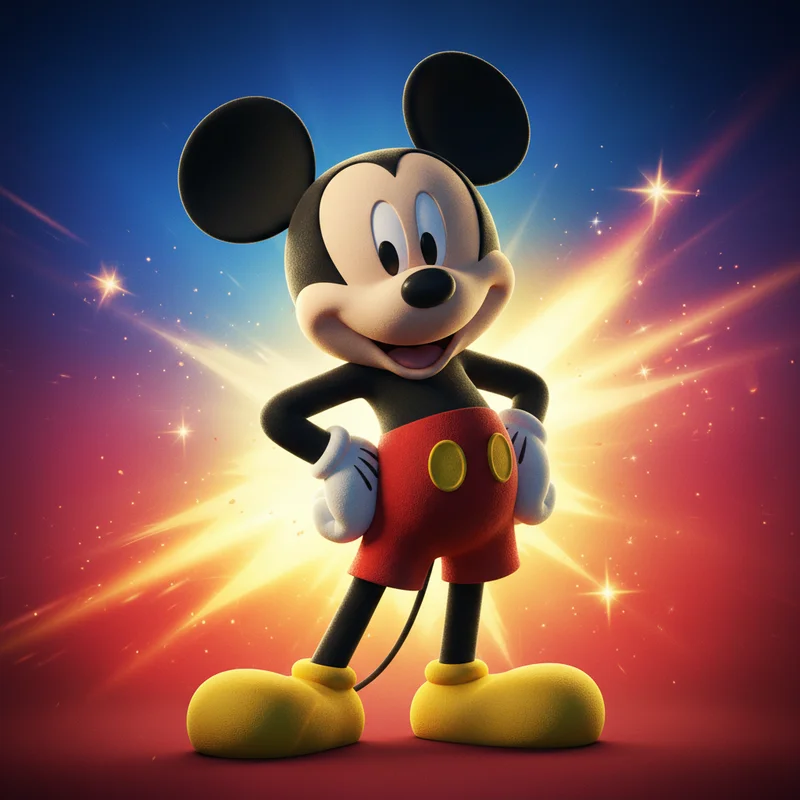
Mickey Mouse

Mickey Mouse

Disney's original mascot and corporate icon.

VS
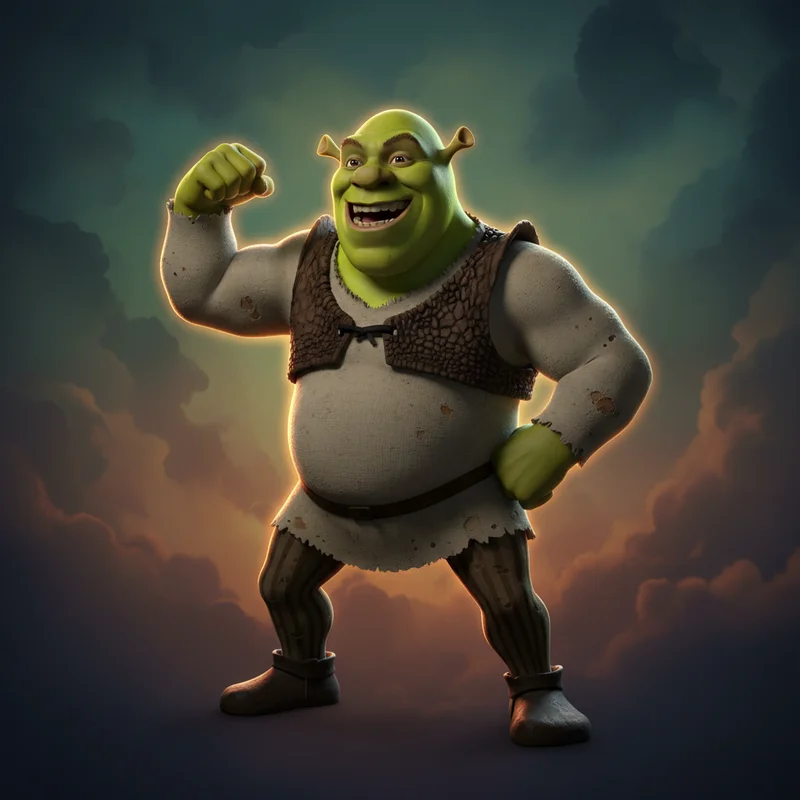
Shrek

Shrek

Ogre who proved layers matter.

Battle Analysis

Cultural longevity Mickey Mouse Wins
70%
30%
Mickey Mouse Shrek

Mickey Mouse

Mickey Mouse's cultural endurance defies rational explanation. Debuting in Steamboat Willie in 1928, this rodent has maintained continuous relevance for nearly a century—an achievement matched by virtually no other fictional character in human history. His image has appeared on every conceivable product category, from fine art collaborations with contemporary artists to the ears adorning approximately 30 million annual visitors to Disney theme parks worldwide.

The mouse's influence extends into legal precedent itself. The repeated extensions of United States copyright law have been colloquially termed 'The Mickey Mouse Protection Act,' demonstrating how a single animated character reshaped intellectual property legislation across the globe. His three-circled silhouette requires no context for instant recognition—a feat of brand penetration that marketing professionals study as aspirational benchmark.

Shrek

Shrek's cultural impact, whilst more temporally concentrated, achieved a particular depth that reshaped industry expectations. The original 2001 film's $484 million worldwide gross demonstrated that animated features could succeed whilst actively subverting Disney's storytelling monopoly. The franchise spawned not merely sequels but an entire genre of self-aware animated comedies that acknowledged their fairy tale predecessors only to undermine them.

However, Shrek's cultural presence has demonstrably waned since the franchise's conclusion. The character's internet immortality through meme culture—particularly the infamous 'Shrek is love, Shrek is life' phenomenon—represents both his greatest post-theatrical achievement and his limitation. Mickey remains a living brand; Shrek has become a nostalgic reference point, beloved but increasingly historical.

VERDICT

Nearly a century of uninterrupted cultural relevance surpasses Shrek's concentrated but fading two-decade impact.
Narrative subversion Shrek Wins
30%
70%
Mickey Mouse Shrek

Mickey Mouse

Mickey Mouse operates as perhaps the purest expression of narrative conservatism in animated entertainment. His stories reinforce rather than question established moral frameworks—good triumphs, love conquers, and villainy receives appropriate comeuppance. This approach has proven remarkably durable, providing reliable emotional satisfaction across generational boundaries without requiring contextual sophistication from audiences.

Yet this conservatism increasingly appears as limitation rather than strength. Modern audiences, raised on irony and media literacy, often find Mickey's earnestness difficult to engage with directly. Disney's own solution—deploying Mickey primarily as mascot rather than protagonist—suggests awareness that his narrative mode has aged beyond contemporary relevance. He remains beloved, but as symbol rather than storyteller.

Shrek

Shrek represents animated storytelling's postmodern turn crystallised into a single character. His very existence parodies the princess-rescue narratives that Disney perfected, whilst his character arc—from misanthropic isolation to genuine emotional connection—subverts the instant-love tropes those narratives typically employ. The franchise's willingness to mock fairy tale conventions whilst simultaneously crafting a satisfying fairy tale demonstrated sophisticated narrative awareness.

The ogre's influence on subsequent animation cannot be overstated. Films from Megamind to Wreck-It Ralph owe their subversive DNA directly to Shrek's proof-of-concept success. His famous 'layers' monologue has become shorthand for psychological complexity in popular discourse, demonstrating how effectively his narrative mode penetrated cultural consciousness.

VERDICT

Shrek's genre-redefining subversion actively reshaped animated storytelling; Mickey's conservatism now requires apologetics.
Emotional authenticity Shrek Wins
30%
70%
Mickey Mouse Shrek

Mickey Mouse

Mickey Mouse presents a curious case of emotional vacancy masked by perpetual enthusiasm. His characterisation has been so thoroughly sanded of potentially controversial edges that what remains is less personality than positioning statement. He is optimistic because optimism offends no one; he is helpful because helpfulness sells merchandise; he is brave because narratives require protagonists to exhibit bravery.

This emotional flatness has been officially acknowledged by Disney's own creative leadership. Walt Disney himself reportedly found Mickey increasingly difficult to deploy in narratives requiring genuine dramatic stakes. The mouse's transfer from protagonist to mascot reflects recognition that his predetermined positivity precludes the vulnerability audiences require for authentic emotional connection.

Shrek

Shrek's emotional journey constitutes perhaps animated cinema's most honest portrayal of defensive psychology. His initial misanthropy is explicitly framed as protective mechanism—he rejects others before they can reject him, having internalised society's negative response to his appearance. This psychological realism resonates with audiences who recognise their own defensive patterns in his behaviour.

His gradual opening to Donkey and eventual romantic vulnerability with Fiona traces an earned character arc that Mickey has never attempted. The famous 'ogres have layers' speech simultaneously functions as comic relief and genuine insight into human psychological complexity. Shrek feels authentic because his creators allowed him flaws worth overcoming rather than positioning him as aspirational from inception.

VERDICT

Shrek's psychological complexity and earned character growth achieve emotional authenticity Mickey's corporate optimism cannot replicate.
Merchandise versatility Mickey Mouse Wins
70%
30%
Mickey Mouse Shrek

Mickey Mouse

Mickey Mouse's merchandising empire operates at a scale that defies comprehensive documentation. Conservative estimates place annual licensing revenue exceeding $3 billion, deployed across product categories ranging from infant clothing to luxury Swiss timepieces. His design—simple enough for reproduction yet distinctive enough for instant recognition—represents perhaps the most commercially optimised character aesthetic in entertainment history.

The mouse's brand safety provides access to markets that characters with any edge cannot enter. Mickey appears on hospital equipment, educational materials, and government-adjacent programmes without controversy. This universal palatability constitutes both his commercial strength and his cultural limitation—he can be everywhere because he stands for nothing specific enough to offend anyone.

Shrek

Shrek's merchandising potential has always faced inherent constraints stemming from his deliberate aesthetic unattractiveness. Whilst plush toys and action figures achieved reasonable market penetration during the franchise's theatrical peak, his green complexion and earwax-oriented hygiene complicate deployment across product categories where visual appeal drives purchasing decisions. Parents readily purchase Mickey Mouse nursery accessories; Shrek-themed infant bedding presents a harder sell.

Furthermore, DreamWorks' licensing infrastructure never achieved Disney's global reach. Shrek merchandise remained primarily concentrated in English-speaking markets, whilst Mickey's three circles adorn products from Tokyo to Tanzania. The ogre's commercial ceiling was structurally determined by both character design and corporate capacity.

VERDICT

Mickey's optimised design and universal brand safety enable merchandising scale Shrek's deliberate grotesquerie cannot achieve.
Voice performance legacy Shrek Wins
30%
70%
Mickey Mouse Shrek

Mickey Mouse

Mickey Mouse's vocal history presents an unusual case of founder dependency. Walt Disney himself provided Mickey's voice from 1928 until 1947, establishing a high-pitched falsetto that subsequent performers have been required to replicate. This continuity constraint has limited vocal characterisation possibilities—each new voice actor must subordinate their interpretation to established precedent.

The mouse has been voiced by only four official performers across ninety-five years, reflecting Disney's extreme conservatism regarding the character's presentation. Whilst this consistency reinforces brand stability, it has prevented the kind of transformative vocal performances that might have refreshed the character for modern audiences. Mickey sounds the same because changing how Mickey sounds constitutes unacceptable brand risk.

Shrek

Mike Myers' performance as Shrek represents one of animation's most distinctive vocal characterisations. His decision to adopt a Scottish accent—reportedly implemented after initial recording sessions using a Canadian accent—created a voice so perfectly matched to character that separation is inconceivable. The performance's improvisational elements, including the famous 'onion' monologue, emerged from creative collaboration rather than corporate mandate.

Myers' Shrek demonstrates how vocal performance can define character rather than merely deliver dialogue. His comedic timing, accent work, and emotional range across four films created a performance that numerous imitators have attempted without success. The voice has become so iconic that 'doing a Shrek impression' constitutes a recognisable social phenomenon, testament to the performance's cultural penetration.

VERDICT

Myers' transformative vocal performance created an iconic characterisation; Mickey's voice remains constrained by institutional continuity requirements.
👑

The Winner Is

Mickey Mouse

53 - 47

After rigorous examination across cultural, narrative, commercial, emotional, and performative dimensions, we must declare Mickey Mouse the victor in this confrontation of animated icons—though the margin reflects genuine ambivalence about what victory in such a contest truly signifies.

Mickey's triumph rests primarily upon quantitative rather than qualitative metrics. His nearly century-long cultural presence, multi-billion-dollar merchandising empire, and universal recognition represent achievements of scale that Shrek's concentrated impact cannot match. The mouse has achieved something approaching immortality through sheer institutional persistence.

Yet this verdict obscures significant qualitative advantages residing with the ogre. Shrek's narrative innovation, emotional authenticity, and cultural subversion represent creative achievements Mickey has never attempted. The ogre's psychological complexity and earned character growth demonstrate storytelling sophistication that the mouse's predetermined positivity structurally precludes. In privileging longevity over depth, we acknowledge that endurance does not equal excellence.

Mickey Mouse
53%
Shrek
47%

Share this battle

More Comparisons