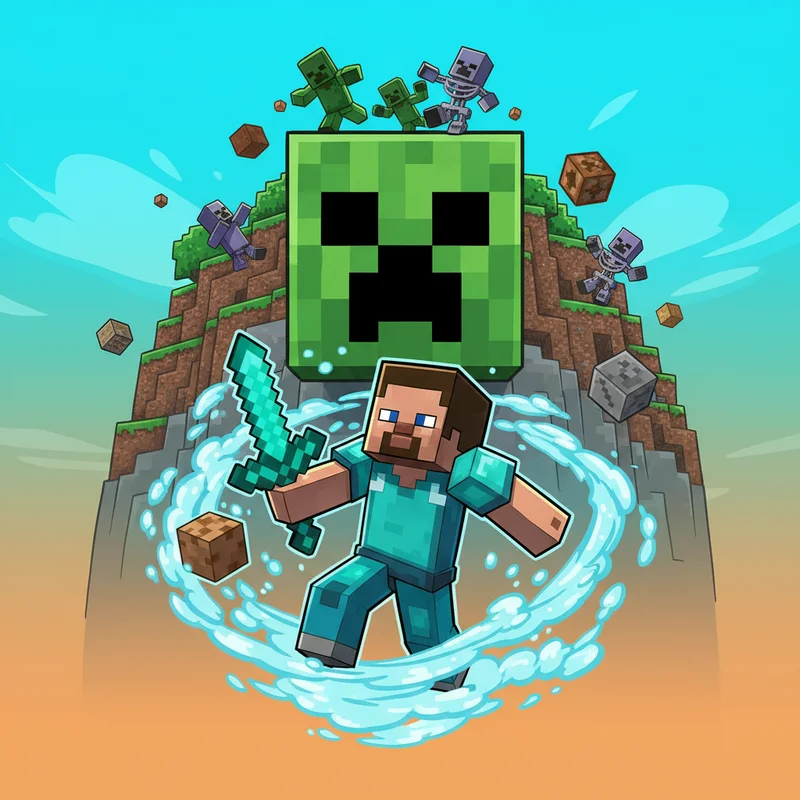

Minecraft
Minecraft has maintained cultural relevance for fifteen years, an eternity in video game terms. Microsoft's $2.5 billion acquisition in 2014 secured development resources that should sustain the platform for decades. The game has survived multiple generational transitions, with children who played at launch now introducing their own offspring to its blocky domains.
However, Minecraft remains dependent on technological infrastructure, corporate stewardship, and continued cultural interest. All digital products, regardless of their current dominance, face eventual obsolescence as platforms evolve beyond their adaptive capacity.
Procrastination
Procrastination has persisted, researchers estimate, for approximately 200,000 years of human existence. It survived the agricultural revolution, the industrial age, and the digital transformation, emerging from each transition stronger and more sophisticated. No external force has succeeded in eliminating or even substantially reducing its prevalence.
The phenomenon appears encoded at a fundamental neurological level, suggesting it will persist as long as humans possess the capacity for temporal reasoning about future obligations. This represents an evolutionary staying power that no entertainment product, regardless of cultural penetration, can approach.