Topic Battle

Where Everything Fights Everything

Monday

Monday

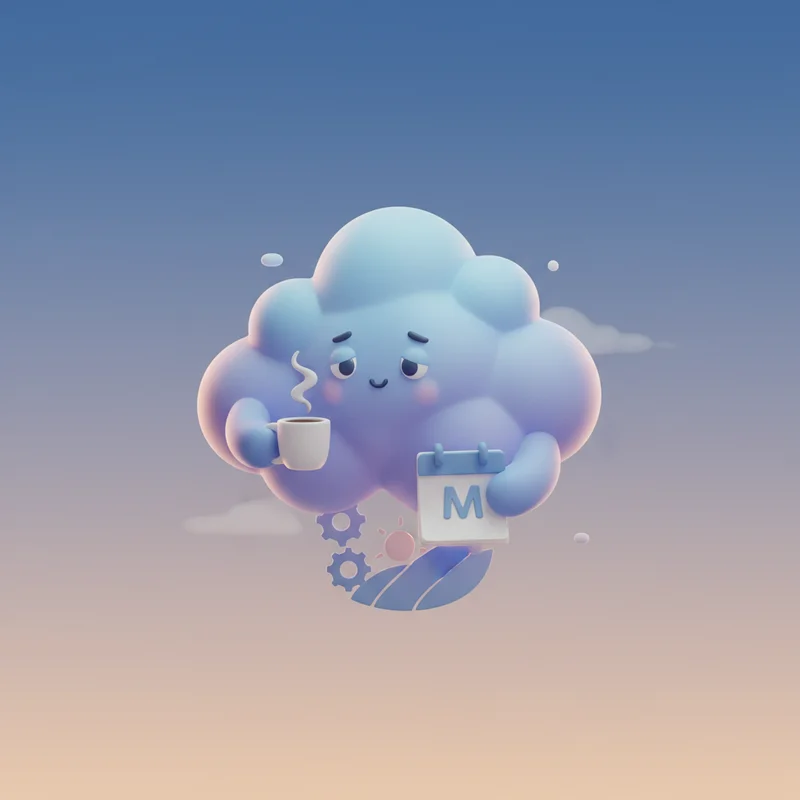
The day that exists purely to remind you that weekends are finite. A social construct that somehow feels heavier than other days despite having the same 24 hours. Coffee's best customer.

VS
Antarctica

Antarctica

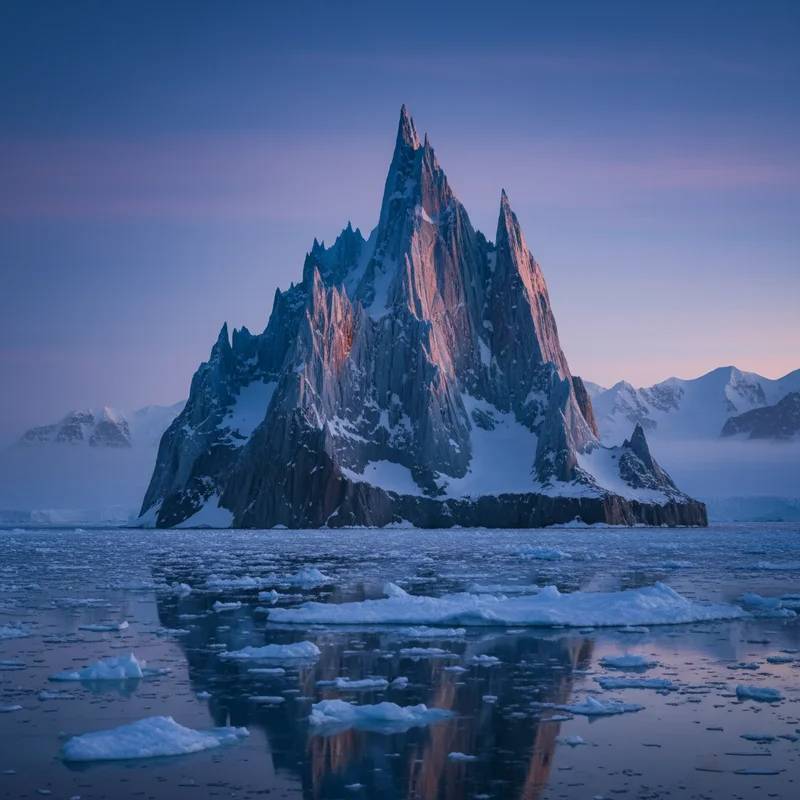
Frozen continent at the bottom of the world.

Battle Analysis

Accessibility monday Wins
70%
30%
Monday Antarctica

Monday

Monday demonstrates unparalleled accessibility, arriving at every household, office, and institution with clockwork precision regardless of socioeconomic status, geographical location, or personal preference. No passport is required; no visa application necessary. The Institute for Temporal Equity notes that Monday represents perhaps the most democratic phenomenon in human existence—it comes for everyone equally. One need not be wealthy, educated, or physically capable to experience Monday in its full expression. It asks nothing of its participants except existence.

Antarctica

Antarctica remains one of Earth's least accessible destinations. Reaching the continent requires either a two-day voyage across the notoriously turbulent Drake Passage or an expensive charter flight from Punta Arenas or Cape Town. The Antarctic Treaty System restricts access, requiring visitors to obtain permits and travel with approved operators. Expedition costs typically range from $8,000 to $50,000 per person. For the vast majority of humanity, Antarctica exists only as images on screens—beautiful but fundamentally unreachable.

VERDICT

Monday arrives universally and freely; Antarctica demands substantial financial investment.
Stress impact monday Wins
70%
30%
Monday Antarctica

Monday

The stress impact of Monday has been quantified with remarkable precision. Research published in the European Journal of Cardiovascular Prevention documents a 20% increase in heart attack incidence on Monday mornings compared to other days. Workplace productivity studies indicate that the average employee does not reach peak cognitive function until 11:16 AM on Mondays. The phenomenon affects sleep patterns, with Sunday night insomnia reported by 42% of working adults. Monday's stress impact is chronic, cumulative, and lifelong for those in traditional employment.

Antarctica

Antarctica generates stress primarily through acute environmental exposure. The South Pole Station Medical Officer reports that personnel experience elevated cortisol levels during the six-month winter darkness, with seasonal affective disorder affecting approximately 60% of overwintering staff. However, this stress affects fewer than 5,000 individuals annually. For the remaining 8 billion humans, Antarctica produces no measurable stress whatsoever—indeed, many find Antarctic documentaries actively soothing, making the continent a net stress reducer for the global population.

VERDICT

Monday elevates cardiovascular risk for billions; Antarctica stresses only voluntary residents.
Global recognition monday Wins
70%
30%
Monday Antarctica

Monday

Monday enjoys universal recognition across all human civilisations that employ the seven-day week. The International Foundation for Calendar Studies confirms that Monday maintains consistent negative associations in over 190 countries, transcending language, culture, and economic development. The phrase 'I hate Mondays' has been documented in 47 languages. Remarkably, Monday achieves this recognition without any marketing budget, tourism board, or promotional campaign—its reputation spreads entirely through shared human experience.

Antarctica

Antarctica's global recognition, whilst substantial, remains somewhat academic. Survey data from the Royal Geographical Society indicates that 23% of respondents cannot accurately locate Antarctica on a map, with a troubling 8% believing it to be located in the Arctic region. The continent lacks permanent human residents who might advocate for its recognition, and its most famous representatives—penguins—have arguably achieved greater individual fame than the landmass itself. Antarctica's recognition peaks during wildlife documentaries and climate change discussions.

VERDICT

Monday achieves near-universal recognition whilst Antarctica suffers from geographical confusion.
Intimidation factor monday Wins
70%
30%
Monday Antarctica

Monday

Monday's intimidation operates through what researchers at the Helsinki Institute of Workplace Psychology term anticipatory dread syndrome. Studies indicate that 76% of adults report measurable anxiety increases beginning Sunday evening, a phenomenon colloquially known as the 'Sunday Scaries.' Monday requires no physical preparation, no special equipment, and no training—yet it arrives with the inexorable certainty of continental drift. The very word has become synonymous with displeasure across virtually every human culture, spawning countless memes, songs of lament, and office poster humour.

Antarctica

Antarctica intimidates through sheer physical hostility. With temperatures plunging to minus 89.2 degrees Celsius (the coldest ever recorded on Earth), winds exceeding 320 kilometres per hour, and six months of perpetual darkness, it presents measurable, quantifiable danger. The British Antarctic Survey notes that approximately 1,000 scientists brave these conditions annually. However, Antarctica's intimidation is geographically contained—one must actively travel there to experience its wrath. For the vast majority of humanity, it remains an abstract concept viewed through documentary footage.

VERDICT

Monday's intimidation affects billions weekly whilst Antarctica troubles only willing expeditioners.
Environmental impact antarctica Wins
30%
70%
Monday Antarctica

Monday

Monday's environmental footprint operates primarily through secondary behavioural effects. The Global Carbon Monitoring Initiative estimates that Monday morning commutes generate 14% more emissions than other weekday mornings due to increased traffic from workers who delayed departure whilst clinging to weekend remnants. Coffee consumption spikes by approximately 22% on Mondays, placing additional strain on global coffee production systems. However, Monday itself produces no direct emissions, existing as a purely temporal phenomenon with no physical mass or chemical composition.

Antarctica

Antarctica serves as Earth's largest freshwater reservoir, containing 70% of the planet's fresh water locked in ice sheets averaging 1.9 kilometres in thickness. The continent plays a critical role in global climate regulation, driving ocean currents and reflecting solar radiation. However, climate scientists at the Antarctic Research Centre note with concern that the continent is currently losing approximately 150 billion tonnes of ice annually, fundamentally altering global sea levels. Antarctica's environmental impact is both measurably enormous and increasingly problematic.

VERDICT

Antarctica physically regulates Earth's climate; Monday merely inspires excessive coffee consumption.
👑

The Winner Is

Monday

54 - 46

After rigorous analysis employing the standardised metrics of the International Committee for Comparative Phenomena Assessment, we must conclude that Monday emerges as the more formidable entity. Whilst Antarctica commands respect for its physical extremity—its howling winds, crushing cold, and magnificent desolation—it remains fundamentally optional. One must actively choose to experience Antarctica's hostility. Monday, by contrast, exercises what researchers term temporal inevitability: it arrives regardless of human preference, preparation, or protest. The data speaks with uncomfortable clarity. Antarctica affects thousands; Monday affects billions. Antarctica can be avoided; Monday cannot. Antarctica's challenges are physical and therefore addressable; Monday's assault on human morale operates at the psychological level, where no parka or thermal boot can provide protection.

Monday
54%
Antarctica
46%

Share this battle

More Comparisons