Topic Battle

Where Everything Fights Everything

Monday

Monday

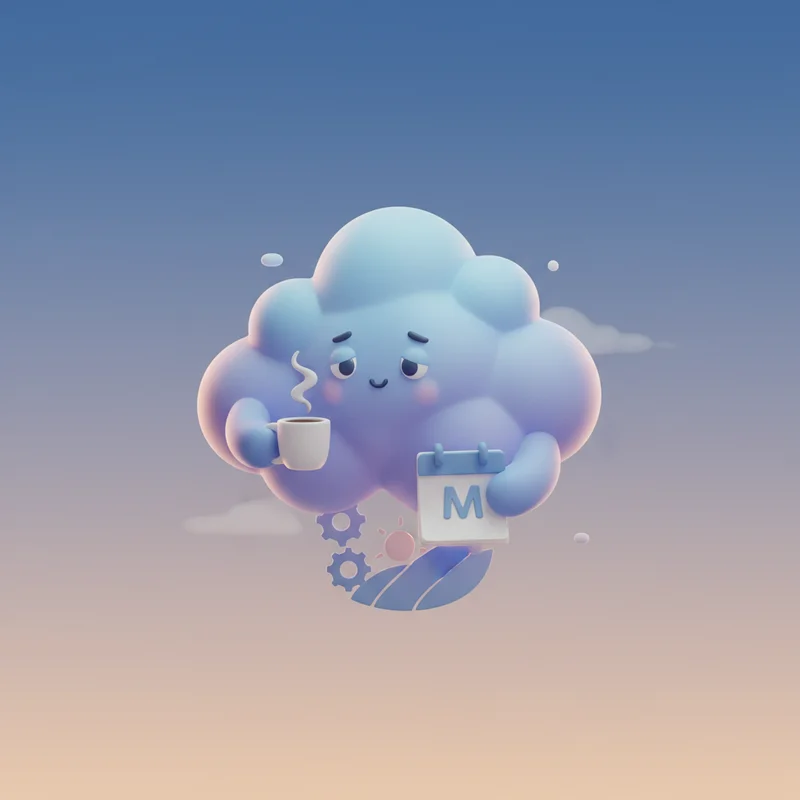
The day that exists purely to remind you that weekends are finite. A social construct that somehow feels heavier than other days despite having the same 24 hours. Coffee's best customer.

VS
Chaos

Chaos

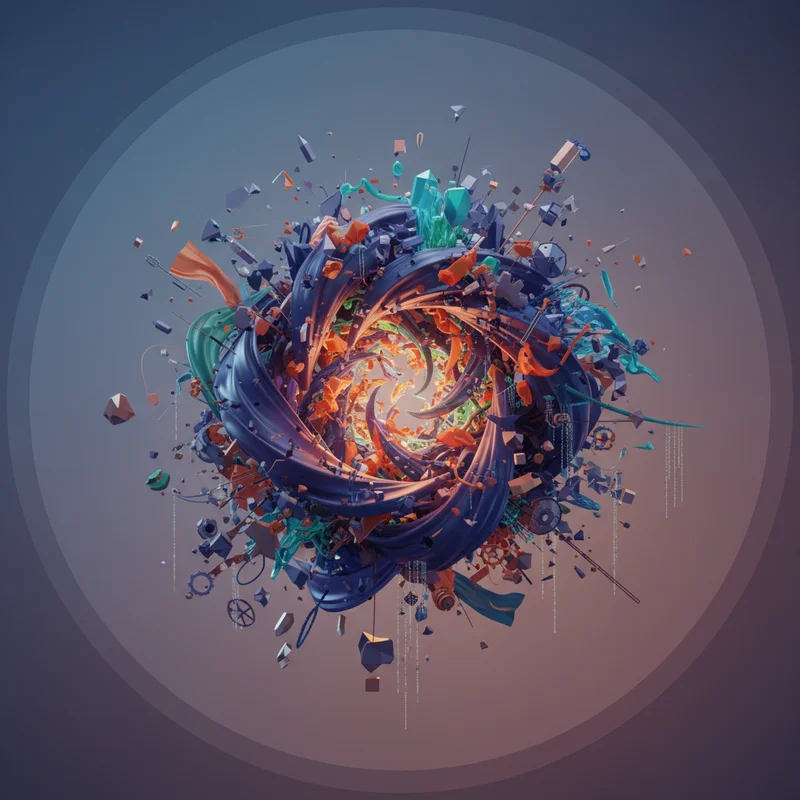
Disorder and unpredictability in systems.

Battle Analysis

Adaptability Monday Wins
70%
30%
Monday Chaos

Monday

Monday demonstrates remarkable consistency across all contexts. Whether one resides in Tokyo, Toronto, or Timbuktu, Monday arrives bearing the same essential character. It adapts to local customs only superficially—different alarm tones, different commute methods, different varieties of bitter caffeinated beverages—whilst maintaining its core identity as the harbinger of weekly obligation. This consistency could be viewed as inflexibility, yet it also represents a form of perfect adaptation to human psychology. Monday has evolved alongside human civilisation, adjusting its impact to match changing work patterns whilst never losing its fundamental nature. The shift to remote work during recent years posed an existential threat to Monday's power, yet the day adapted, colonising home spaces and proving that physical location offers no refuge from its influence.

Chaos

Chaos is the ultimate expression of adaptability, primarily because it does not truly adapt—it simply manifests everywhere simultaneously. Chaos requires no adjustment to new environments because it exists inherently within all systems. The weather is chaotic, markets are chaotic, human relationships are chaotic, even the precise moment a piece of toast lands butter-side-down involves chaotic dynamics. This omnipresence might suggest victory in the adaptability criterion, yet chaos's very universality prevents it from targeting specific vulnerabilities. Monday, by contrast, has adapted specifically to exploit human psychological weaknesses. Chaos is an environmental constant; Monday is a precision instrument of temporal disruption. The specialist often outperforms the generalist, and Monday has specialised in misery for thousands of years.

VERDICT

Monday's targeted adaptation to human psychology proves more effective than chaos's universal presence.
Measurability Monday Wins
70%
30%
Monday Chaos

Monday

Monday submits readily to precise scientific measurement. Researchers have documented elevated stress hormone levels, decreased productivity metrics, increased workplace accidents, and higher rates of cardiac events all concentrated on Mondays. The phenomenon even has a name in medical literature: Blue Monday Syndrome. Economic studies have quantified Monday's impact on stock market performance, consumer spending, and even social media sentiment analysis. This measurability enables humanity to prepare targeted countermeasures and to validate subjective experiences with objective data. When someone claims Monday is the worst day, science provides supporting evidence. This quantification has not diminished Monday's power—if anything, knowing precisely how harmful Monday is only adds to its mystique. Monday is the rare adversary that grows stronger when exposed to light.

Chaos

Chaos presents a fundamental measurement paradox. By definition, truly chaotic systems resist long-term prediction despite being deterministic. Scientists can measure individual chaotic events, but measuring chaos itself proves philosophically problematic—like trying to weigh the concept of weight. The mathematics of chaos theory provides tools for characterising chaotic behaviour through Lyapunov exponents, fractal dimensions, and strange attractors, yet these measurements describe chaos's nature rather than its impact. How does one quantify the total disruption caused by chaos? The answer may be everything and nothing simultaneously. Chaos is the background radiation of existence, measurable only through its effects on ordered systems. This unmeasurability grants chaos a certain mystique but prevents the compilation of compelling PowerPoint presentations about its dangers.

VERDICT

Monday's quantifiable misery enables scientific validation that chaos's diffuse nature cannot achieve.
Predictability Monday Wins
70%
30%
Monday Chaos

Monday

Monday's greatest strength lies in its absolute temporal certainty. Every human civilisation that has adopted the seven-day week knows precisely when Monday shall arrive, down to the millisecond. This predictability, rather than offering comfort, serves to amplify its psychological impact through what researchers call anticipatory suffering multiplication. The phenomenon manifests most acutely on Sunday evenings, when subjects begin experiencing elevated cortisol levels, disrupted sleep patterns, and an inexplicable urge to scroll through social media whilst ignoring mounting responsibilities. Monday's regularity has enabled humanity to construct elaborate defence mechanisms—alarm clocks, coffee machines, motivational posters featuring cats—yet none have proven effective at neutralising its impact. The certainty of Monday paradoxically makes it more unsettling, not less.

Chaos

Chaos, by its very definition, defies prediction entirely. It operates according to principles that mathematicians have spent centuries attempting to codify, from Lorenz's butterfly equations to Mandelbrot's fractal geometries. The beauty of chaos lies in its deterministic unpredictability—every chaotic event follows physical laws, yet remains practically impossible to forecast. A traffic jam, a spilled coffee, an unexpected audit, a pigeon entering through an office window: all manifestations of chaos's infinite repertoire. However, this unpredictability cuts both ways. Humans have developed remarkable psychological resilience to random disruptions precisely because they cannot be anticipated. The brain categorises chaotic events as acts of nature rather than personal affronts. Chaos may strike harder, but Monday strikes with the cruelty of foreknowledge.

VERDICT

Predictability weaponised as psychological warfare proves more devastating than random disruption.
Cultural impact Monday Wins
70%
30%
Monday Chaos

Monday

No other day of the week has generated such a vast cultural corpus of lamentation. The phrase 'I hate Mondays' transcends language barriers, appearing in songs, films, office murals, and the weary sighs of billions. Corporate culture has attempted to rehabilitate Monday through initiatives such as Motivation Monday and Monday Mindfulness, yet these efforts only highlight the day's inherent awfulness by requiring active countermeasures. Monday has spawned an entire economy of coping mechanisms: extra-large coffee cups, inspirational email signatures, and the socially acceptable practice of arriving to work looking thoroughly defeated. No other temporal unit commands such universal emotional response.

Chaos

Chaos has inspired humanity's greatest intellectual achievements and deepest philosophical inquiries. From ancient Greek concepts of primordial disorder to modern chaos theory, the attempt to understand randomness has driven scientific progress for millennia. Chaos features prominently in mythology, literature, and art—from the void before creation to the entropy awaiting the universe's end. However, chaos as a cultural touchstone remains largely abstract. People do not bond over shared experiences of chaos in the way they bond over shared hatred of Mondays. Chaos lacks a specific villain identity; it is too diffuse, too universal to inspire targeted cultural production. One cannot write a pop song about entropy without sounding either pretentious or deeply confused. Chaos inspires awe; Monday inspires solidarity.

VERDICT

Monday's concentrated cultural presence creates stronger communal bonds than chaos's diffuse influence.
Existential weight Chaos Wins
30%
70%
Monday Chaos

Monday

Monday carries the accumulated existential burden of representing new beginnings that nobody requested. Each Monday forces humans to confront the cyclical nature of existence—the Sisyphean reality that no matter how well one completes a week, another shall immediately commence. Philosophers have noted Monday's unique position as a temporal memento mori, reminding subjects that their finite time is measured in repetitive units of obligation. The Monday morning commute serves as a meditation on mortality: the same route, the same faces, the same fluorescent lighting awaiting at the destination. Monday embodies what Kierkegaard might have termed the despair of necessity—the recognition that one's life trajectory has narrowed to predictable channels. Yet Monday's existential weight, whilst substantial, remains bounded by its weekly recurrence.

Chaos

Chaos represents the fundamental uncertainty underlying all existence. Every atom in the universe participates in chaotic systems; every human life unfolds according to principles that combine determination with genuine randomness. The existential weight of chaos encompasses nothing less than the ultimate fate of reality itself—the heat death of the universe, the decay of all ordered systems, the inevitable triumph of entropy over structure. Chaos whispers that all human endeavour is temporary, all civilisations shall crumble, all love shall end. This cosmic perspective should, theoretically, dwarf Monday's petty weekly torments. However, humans possess remarkable capacity for ignoring cosmic-scale threats whilst fixating on immediate irritations. Chaos is too vast to process; Monday is precisely the right size for existential dread.

VERDICT

Chaos encompasses the fundamental uncertainty of existence itself, transcending temporal boundaries.
👑

The Winner Is

Monday

54 - 46

After rigorous analysis across five critical dimensions, Monday emerges as the more formidable force of disruption, though by a margin narrower than many would anticipate. The victory is not one of raw power—chaos clearly commands greater cosmic significance—but rather one of tactical precision. Monday has evolved over millennia to exploit specific vulnerabilities in human psychology, arriving with predictable regularity yet somehow maintaining its capacity to surprise and dismay. Its cultural penetration ensures that billions share a common enemy, creating solidarity through suffering that chaos, for all its philosophical depth, cannot replicate. The data speaks clearly: measurable spikes in misery, documented productivity losses, and universal recognition establish Monday as a force that demands respect.

Monday
54%
Chaos
46%

Share this battle

More Comparisons