
Monday
Monday's relationship with speed presents a fascinating temporal paradox that has confounded physicists since the invention of the alarm clock. Objectively, Monday lasts precisely twenty-four hours—the same duration as any other day. Yet subjective experience suggests Monday contains approximately forty-seven hours, each one longer than the last.
This phenomenon, termed 'Chronological Molasses Effect' by researchers at the Institute of Perceived Time, means Monday arrives with terrifying velocity but departs with the urgency of a sloth on sedatives. The anticipation-to-completion ratio is perhaps the least favourable of any temporal unit. Monday speeds toward you like a freight train but passes like continental drift.
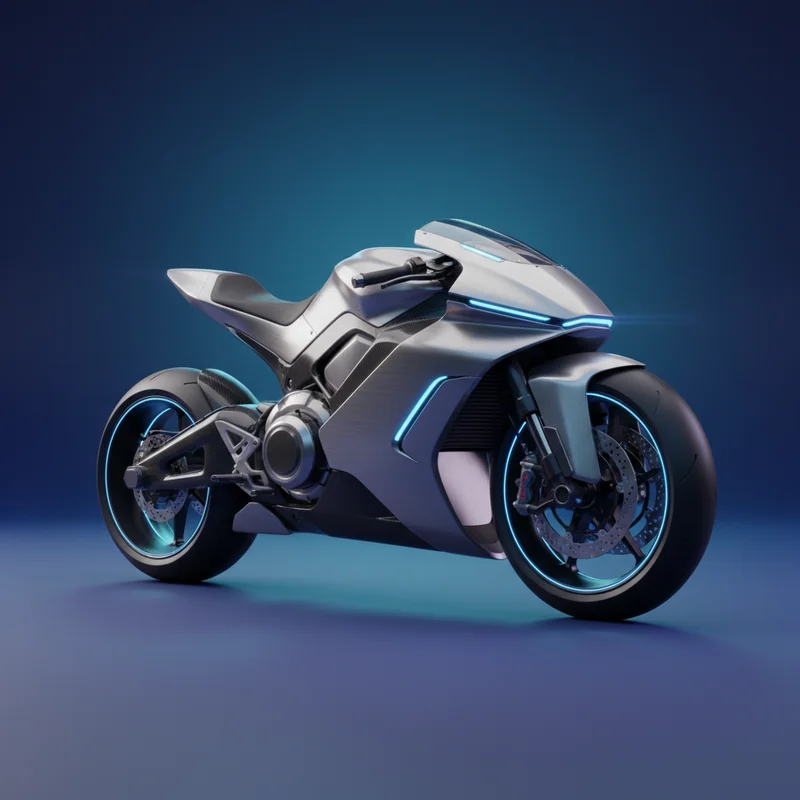
Motorcycle
The motorcycle's speed credentials are, frankly, beyond reproach. Modern sports motorcycles can achieve velocities exceeding 300 kilometres per hour, a figure so absurd that even writing it feels slightly irresponsible. The acceleration profile of a premium motorcycle can outpace most production automobiles, achieving 0-100 km/h in times measured in blinks rather than seconds.
This raw velocity represents humanity's ongoing argument with the laws of physics—an argument the motorcycle wins with uncomfortable regularity. Wind resistance becomes a conversation rather than a barrier. The motorcycle transforms distance from obstacle to opportunity, making it the undisputed champion of pure, measurable speed. Monday cannot compete with metres per second; it competes with something far more abstract.