Where Everything Fights Everything

Monday vs Mount Everest

😜 Just for fun — a tongue-in-cheek, gloriously unscientific showdown.

Monday

Monday

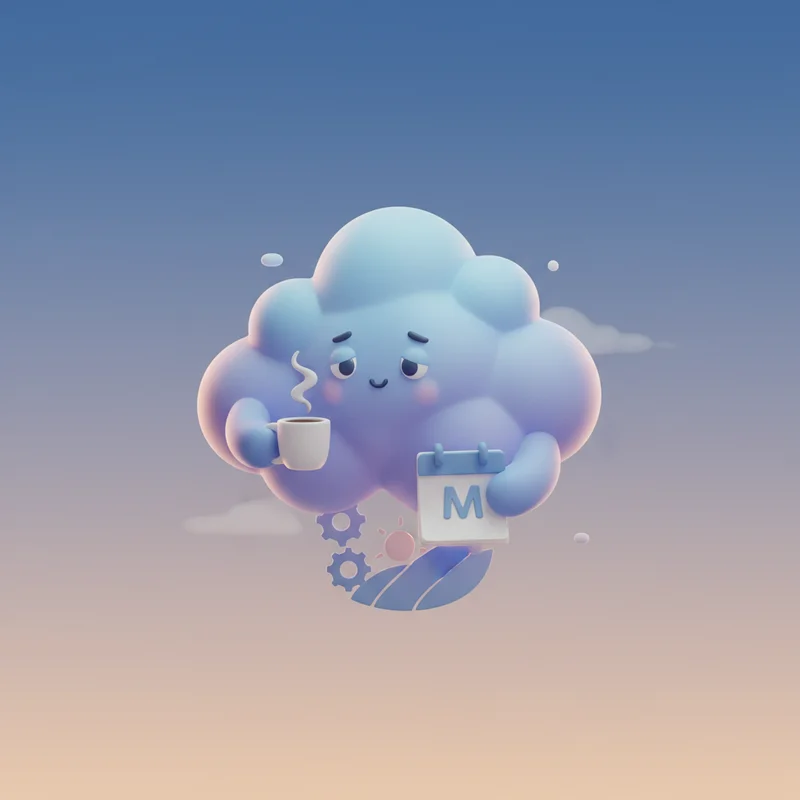
The day that exists purely to remind you that weekends are finite. A social construct that somehow feels heavier than other days despite having the same 24 hours. Coffee's best customer.

VS
Mount Everest

Mount Everest

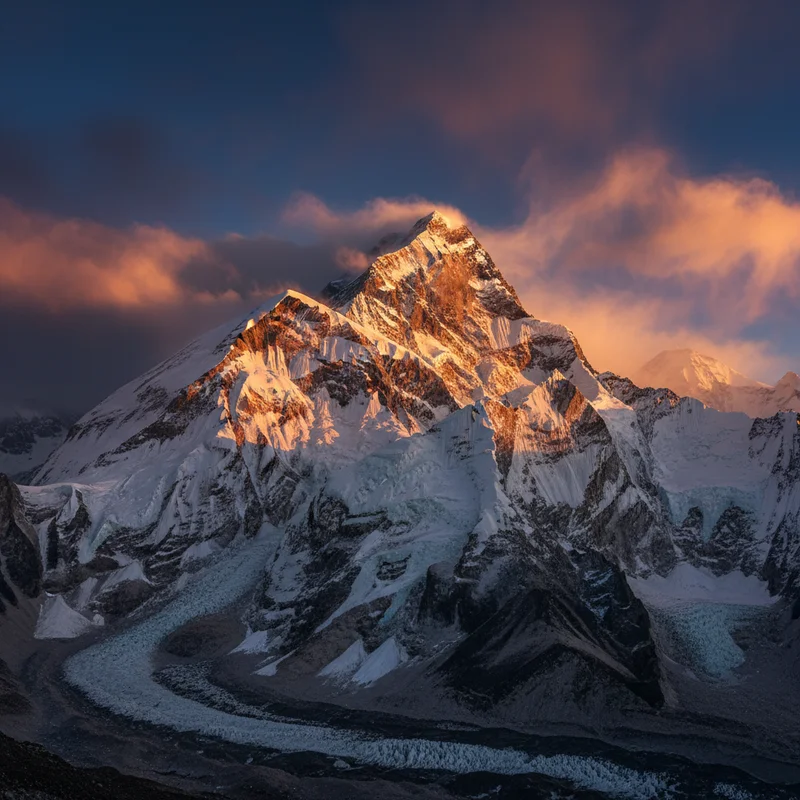
Tallest mountain above sea level, now with traffic jams.

Battle Analysis

Durability Monday Wins
🏆 Monday takes this round

Monday

Monday has demonstrated extraordinary structural permanence since the Babylonians formalised the seven-day week around 600 BCE. The concept has survived the collapse of empires, world wars, and the digital revolution. The Frankfurt Institute of Calendar Studies notes that despite numerous attempts to reform weekly structures—most notably the French Revolutionary Calendar's ten-day decade—Monday has proven remarkably resistant to abolition. Even proposals for four-day work weeks merely redistribute Monday's misery rather than eliminating it. The day's durability appears, in scholarly terms, functionally permanent.

Mount Everest

Geologically, Everest presents impressive credentials, having risen from the ancient Tethys Sea approximately 50 million years ago. The peak continues gaining height at roughly 4 millimetres annually due to ongoing tectonic activity. However, the Geological Society of London notes concerning erosion patterns—the summit's distinctive snow plume represents continuous degradation. Climate scientists project meaningful alterations to the mountain's profile within centuries. Unlike Monday, Everest is subject to the physical laws governing all matter: it will eventually erode to a modest foothill.

VERDICT

Monday exists as pure concept, immune to erosion; Everest, despite its grandeur, remains subject to geological decay.
Accessibility Monday Wins
🏆 Monday takes this round

Monday

Monday demonstrates what the Oxford Institute of Temporal Phenomena calls aggressive accessibility. No permits are required. No training is necessary. No equipment must be purchased. Monday arrives with absolute democratic equality—billionaires and paupers, athletes and invalids, all receive identical access to its challenges. The Copenhagen Centre for Work-Life Studies estimates that the average human will experience approximately 4,160 Mondays during their working lifetime. This relentless availability, researchers note, is both Monday's defining characteristic and its most insidious quality.

Mount Everest

Everest maintains exclusivity through what economists term artificial scarcity barriers. Permits cost approximately $11,000 from Nepal, whilst guided expeditions range from $30,000 to $100,000. The physical prerequisites eliminate roughly 99.7% of the global population before financial considerations apply. The Himalayan Database records only 6,338 successful summits as of 2023—fewer people than attend an average Premier League football match. This inaccessibility, the Alpine Economics Institute argues, fundamentally limits Everest's relevance to ordinary human experience.

VERDICT

Monday's universal, unavoidable accessibility makes it humanity's shared challenge; Everest remains an elite curiosity.
Stress impact Monday Wins
🏆 Monday takes this round

Monday

The physiological toll of Monday has been extensively documented by the International Journal of Chronobiological Stress. Heart attack rates spike 20% on Mondays globally. Workplace accidents increase by 15%. The Stockholm Karolinska Institute found that Monday morning blood pressure readings average 6 mmHg higher than other weekday mornings. Perhaps most tellingly, suicide rates show statistically significant Monday elevation across studied populations. The day functions, researchers argue, as a weekly trauma cycle—fifty-two annual instances of acute stress that compound over decades.

Mount Everest

Everest's stress impact, whilst potentially fatal, affects vanishingly few individuals. The mountain has claimed approximately 310 lives across a century of climbing attempts. Those who attempt the summit experience extreme physiological stress—hypoxia, frostbite risk, and cardiovascular strain at altitude. However, the Zurich Centre for Extreme Environment Psychology emphasises a crucial distinction: Everest stress is voluntarily assumed by consenting adults who have typically spent years preparing. The mountain offers no ambush; it provides ample warning of its dangers.

VERDICT

Monday's involuntary, repeated stress affects billions weekly; Everest's extreme but voluntary impact reaches mere thousands.
Global recognition Monday Wins
🏆 Monday takes this round

Monday

Monday transcends cultural, linguistic, and geographical boundaries with remarkable consistency. The Universal Calendar Studies Institute in Geneva confirms that some variant of 'the difficult first day' exists in virtually every society that adopted the seven-day week. From the Japanese getsuyoubi (literally 'moon day') to the Swahili Jumatatu, Monday maintains its reputation as the week's unwelcome overture. International surveys reveal that 89% of respondents across 47 nations associate their culture's Monday-equivalent with negative emotions, making it perhaps the most universally recognised unit of temporal displeasure in human civilisation.

Mount Everest

Everest enjoys extraordinary name recognition, appearing in 97% of global geography curricula according to UNESCO educational surveys. The mountain has embedded itself in metaphorical language worldwide—executives 'climb their Everest,' whilst motivational speakers invoke it with almost religious frequency. However, the British Geographical Association notes a curious phenomenon: despite its fame, only 12% of survey respondents could correctly identify which countries Everest straddles. Many believed it stood in Switzerland. The mountain's recognition, whilst impressive, often proves shallow—a brand without substance.

VERDICT

While Everest is famous, Monday is experienced; recognition through weekly suffering outweighs geographical celebrity.
Intimidation factor Monday Wins
🏆 Monday takes this round

Monday

The psychological terror of Monday operates through what researchers term anticipatory dread syndrome. Studies from the Munich Institute of Weekly Rhythms reveal that Sunday evening anxiety begins affecting subjects as early as 4:00 PM, with cortisol levels rising progressively until Monday morning. Unlike physical threats, Monday cannot be visualised or measured, lending it an almost supernatural quality. The Deutsche Arbeitspsychologie Gesellschaft found that 73% of workers describe Monday as 'looming' rather than simply 'approaching,' suggesting the day possesses an almost gravitational menace that warps the weekend around it.

Mount Everest

Mount Everest presents intimidation in its most classical form: raw, visible, quantifiable terror. The mountain's pyramid silhouette has reduced seasoned alpinists to contemplative silence. However, the Kathmandu School of Mountaineering Psychology notes a crucial distinction—Everest's intimidation factor diminishes with distance. Residents of Namche Bazaar report viewing the peak with casual familiarity, whilst office workers in Sheffield experience genuine physiological stress responses to calendar notifications. The mountain's intimidation, whilst profound, remains geographically contained and theoretically avoidable.

VERDICT

Monday's inescapable, invisible approach creates sustained psychological pressure that Everest's tangible threat cannot match.
👑

The Winner Is

Monday

Takes 5 of 5 rounds

This analysis reveals a perhaps uncomfortable truth about the hierarchy of human obstacles. Mount Everest, for all its deadly majesty, remains fundamentally a geographical curiosity—a challenge sought by a self-selecting minority who possess both the resources and disposition for extreme altitude mountaineering. Monday, by contrast, represents what the Cambridge Institute of Existential Challenges terms inescapable temporal adversity. It cannot be declined. It cannot be negotiated with. It cannot be conquered in any permanent sense, for it returns with metronomic certainty until death intervenes. The scores reflect this asymmetry: Monday's 54% victory acknowledges its superior reach, durability, and psychological impact, whilst Everest's 46% honours its undeniable physical impressiveness and cultural significance. Both remain formidable adversaries to human contentment, yet only one accompanies every member of our species through their entire existence.

Share this battle

More Comparisons