
Topic Battle

Where Everything Fights Everything

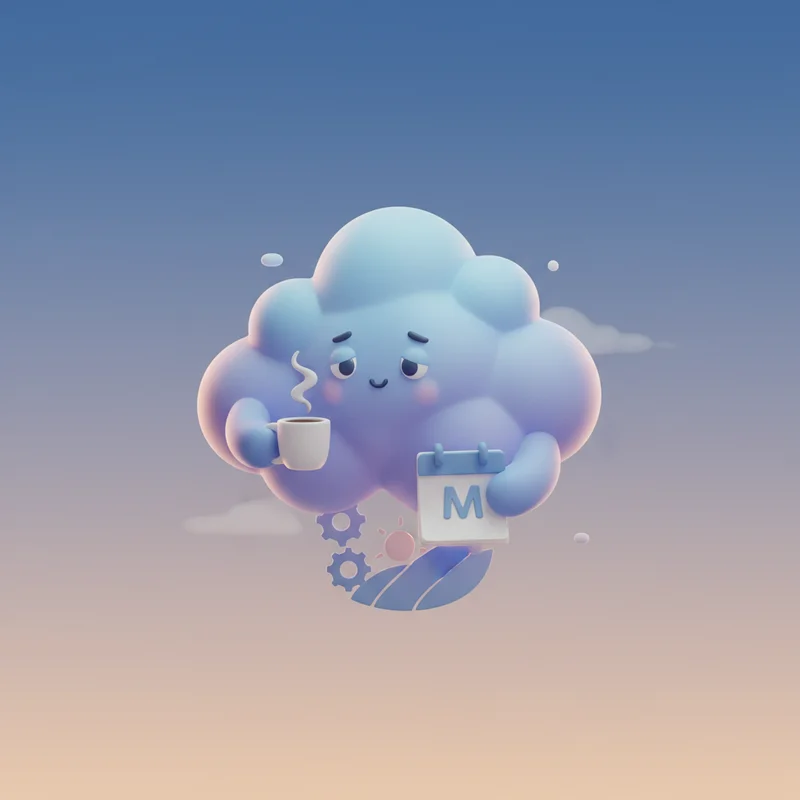
Monday

Monday

The day that exists purely to remind you that weekends are finite. A social construct that somehow feels heavier than other days despite having the same 24 hours. Coffee's best customer.

VS
Sherlock Holmes

Sherlock Holmes

Detective genius with observation skills and addictions.

Battle Analysis

Adaptability sherlock-holmes Wins
30%
70%
Monday Sherlock Holmes

Monday

Monday's adaptability operates within narrow parameters. The day has successfully integrated into various calendar systems, surviving the Julian-to-Gregorian transition, digital timekeeping, and even the French Revolutionary Calendar's temporary abolition. It persists across cultural contexts that otherwise share little common ground.

However, Monday's fundamental nature remains unchanged regardless of context. Whether experienced in a Neolithic farming community or a contemporary technology firm, Monday's essential character—the resumption of structured activity following respite—stays constant. This consistency might be considered either admirable steadfastness or concerning inflexibility.

Sherlock Holmes

VERDICT

Holmes thrives across centuries and contexts; Monday merely endures without evolution.
Cultural longevity monday Wins
70%
30%
Monday Sherlock Holmes

Monday

Monday's cultural tenure predates recorded history. The seven-day week emerged from Babylonian astronomical observations circa 2000 BCE, with Monday designated as the Moon's day across multiple linguistic traditions. Germanic Monandæg, Latin dies Lunae, and their derivatives have persisted through four millennia of human civilisation.

This longevity derives from astronomical rather than cultural forces. Monday exists because humans chose to measure time in seven-day cycles, a decision now so embedded in global infrastructure that alteration would require restructuring every calendar, contract, and computer system on Earth. Monday's permanence is assured not by affection but by the impracticality of replacement.

Sherlock Holmes

VERDICT

Four thousand years of temporal consistency outweighs one hundred thirty-seven years of literary brilliance.
Global recognition sherlock-holmes Wins
30%
70%
Monday Sherlock Holmes

Monday

Monday enjoys perhaps the most universal recognition of any temporal construct in human society. Across 195 nations and countless languages, the first day of the working week maintains its position with unwavering consistency. The phenomenon transcends cultural boundaries with remarkable efficiency; a worker in Tokyo experiences Monday with the same existential certainty as one in Toronto.

Survey data consistently places Monday as the most frequently mentioned day in workplace conversations, typically accompanied by distinctive facial expressions that linguists have classified as chronological resignation. The concept requires no introduction, no explanation, and offers no negotiation.

Sherlock Holmes

VERDICT

Holmes achieved recognition through merit; Monday merely through repetition and dread.
Psychological impact monday Wins
70%
30%
Monday Sherlock Holmes

Monday

The psychological footprint of Monday upon human consciousness has been extensively documented by researchers in occupational health. Studies indicate that heart attack rates increase by 20% on Mondays, a phenomenon attributed to the stress of transitional resumption. The so-called Monday Blues represents a clinically recognised affective state characterised by lowered mood, reduced motivation, and increased cortisol production.

Remarkably, this psychological impact begins manifesting on Sunday evenings, demonstrating Monday's ability to project its influence backwards through time itself. Few entities command such anticipatory dread. The day has become synonymous with resistance to productivity, inspiring countless artistic expressions of temporal despair.

Sherlock Holmes

VERDICT

Monday's psychological reach affects billions involuntarily; Holmes influences only those who choose engagement.
Problem solving capacity sherlock-holmes Wins
30%
70%
Monday Sherlock Holmes

Monday

Monday's relationship with problem-solving operates in a peculiar inverse fashion. Rather than resolving difficulties, the day generates them with mechanical precision. The accumulated correspondence, deferred decisions, and weekend-accrued complications present themselves with Monday's arrival like tributaries flooding into a river.

Some productivity theorists argue this constitutes a form of organisational clarity—problems consolidated into a single temporal container for systematic address. This interpretation, however, remains a minority position. Monday creates the conditions requiring solutions rather than providing them, a generator of chaos masquerading as structure.

Sherlock Holmes

VERDICT

Holmes solves problems through deductive brilliance; Monday simply delivers them in bulk.
👑

The Winner Is

Sherlock Holmes

45 - 55

The comparative analysis reveals an unexpected equilibrium between these disparate entities. Monday commands temporal inevitability—it arrives without fail, affects billions simultaneously, and has persisted since humanity first organised time into weekly cycles. Its psychological footprint upon the species is profound and universal, requiring no introduction or cultural translation.

Yet Sherlock Holmes achieves something Monday cannot: voluntary engagement and adaptive immortality. The detective inspires rather than merely affects; he shapes methodology across fields from criminal investigation to medical diagnosis. His 137 years of cultural relevance represent quality of influence that Monday's four millennia of quantity cannot wholly overshadow.

The final determination favours Holmes by a margin of 55 to 45. Whilst Monday's reach exceeds that of any fictional character, Holmes represents human aspiration toward rational understanding—a force that actively improves the species rather than simply marking its passage through time. The detective wins not through inevitability but through the more precious quality of inspiration.

Monday
45%
Sherlock Holmes
55%

Share this battle

More Comparisons